Tell us about the job
Takes about a minute. No obligation.
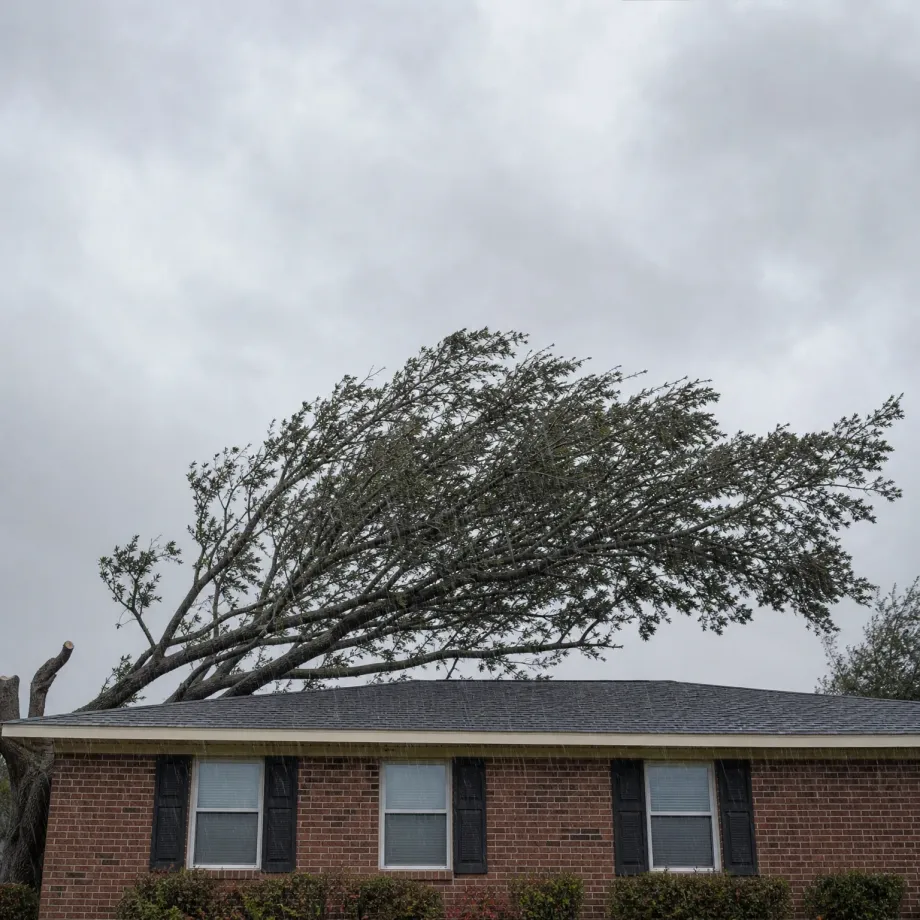
A contractor quoting central AC installation in Houston County has to account for what the system will actually run against, not just the square footage of the house. 137 severe weather events were recorded in Houston County, Georgia between 2015 and 2024. Severe weather at that rate is a standing condition, and it shapes what correct sizing looks like and how tightly the system needs to be sealed and supported. A unit that is slightly undersized or loosely installed in a quieter county will limp along for years; here, the gaps in an install become failures faster. That is what a contractor is solving for before they pull a permit.
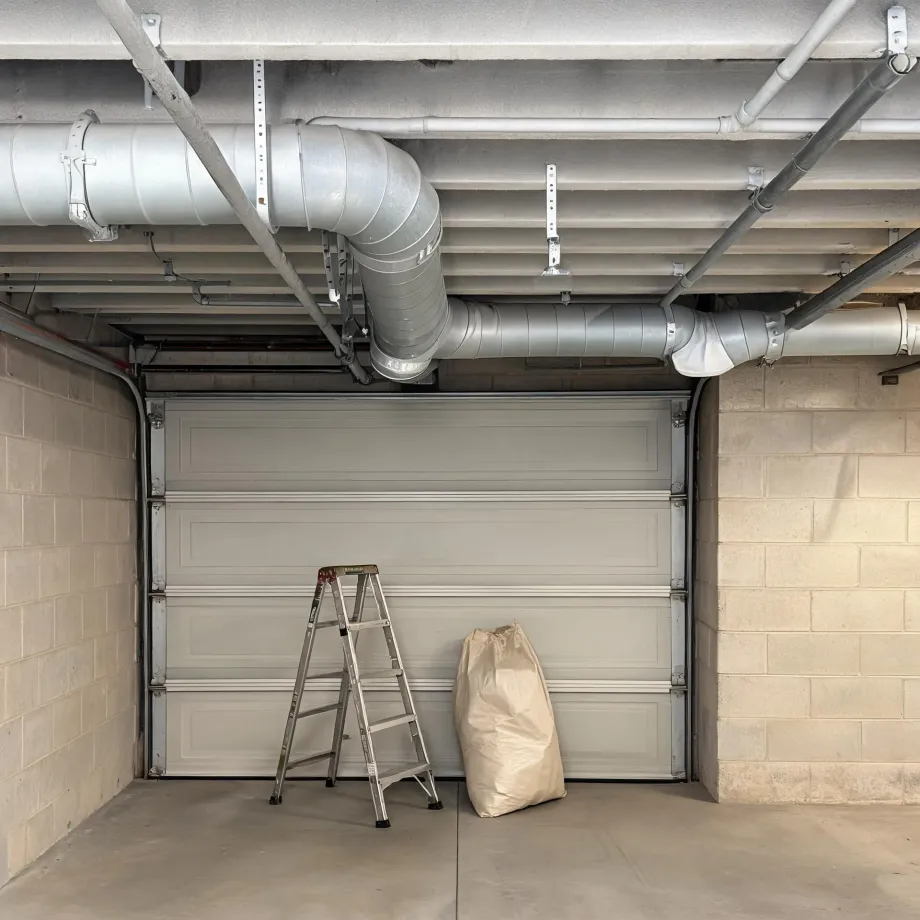
Existing ductwork is what a contractor has to account for before anything else on a central AC installation in Houston County. Half the homes in Houston County, Georgia were built in 1994 or earlier (2020-2024 ACS 5-year). That puts a large share of the housing stock at an age where the ducts were laid out for equipment with different airflow demands than what gets installed now. Whether those ducts move enough air, branch correctly, and seal well enough to carry a new system is what separates a clean installation from one that requires additional work before the unit ever runs.
What Gets Installed With a New Central AC
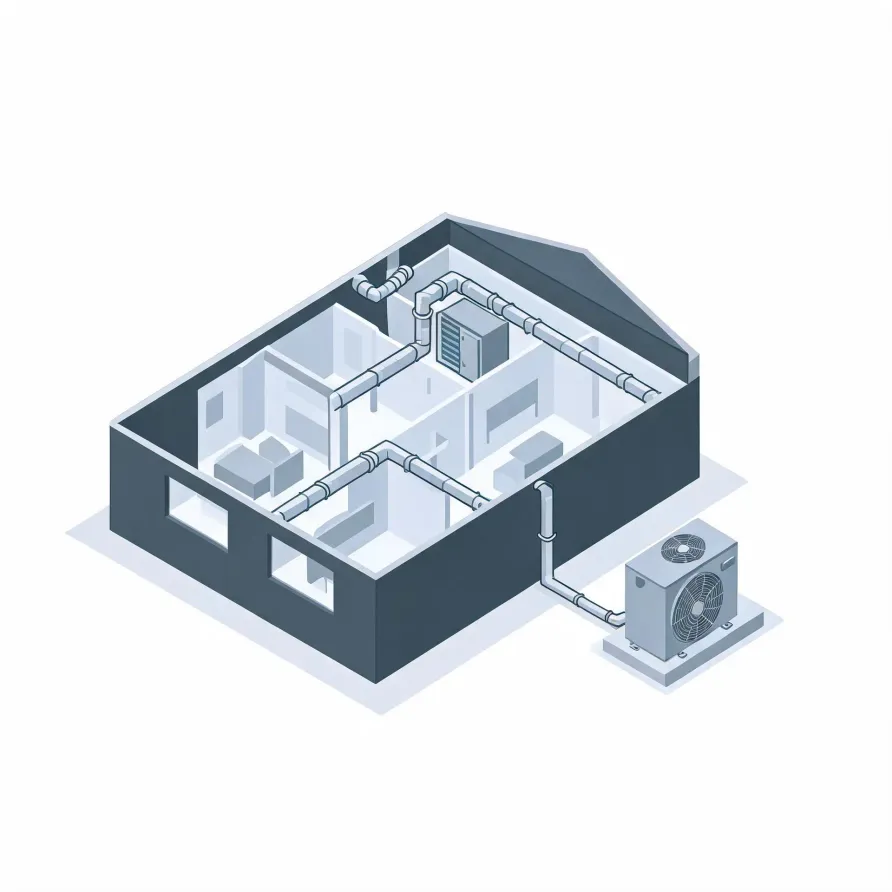
The outdoor condenser unit sits on a concrete pad beside the house and holds the compressor and condenser coil, which are the mechanical core of the system. Inside, the air handler mounts in a utility closet, attic, or basement and pushes conditioned air through the home. Between them, refrigerant lines run through the wall to connect the two.
The evaporator coil mounts directly above or below the air handler and is the point where the system pulls heat out of your indoor air. A thermostat goes on an interior wall and gives you control over the whole system. The condensate drain line runs from the air handler to a floor drain or outside, carrying away the moisture the coil pulls from the air.
The drawing shows a typical layout, and a licensed contractor determines what applies to your specific home.
Get matched in Houston CountyHouston County, Georgia, by the numbers
137 severe weather events were recorded in Houston County, Georgia between 2015 and 2024.
NOAA National Centers for Environmental Information, Storm Events Database, bulk CSV export, events 2015-01-01 through 2024-12-31.Half the homes in Houston County, Georgia were built in 1994 or earlier (2020-2024 ACS 5-year).
U.S. Census Bureau, 2020-2024 American Community Survey 5-Year EstimatesHouston County, Georgia holds 69,823 housing units (2020-2024 ACS 5-year).
U.S. Census Bureau, 2020-2024 American Community Survey 5-Year EstimatesOwners occupy 66.9% of the occupied homes in Houston County, Georgia (2020-2024 ACS 5-year).
U.S. Census Bureau, 2020-2024 American Community Survey 5-Year EstimatesRules & Standards Behind Central AC Installation in Houston County, Georgia8 sourced rules and standards
What HVAC Installation Looks Like in Houston County
Split-system central air conditioners rated below 45,000 Btu/h manufactured on or after January 1, 2023 must meet a federal minimum of 13.4 SEER2.
Split-system central air conditioners rated at or above 45,000 Btu/h manufactured on or after January 1, 2023 must meet a federal minimum of 13.4 SEER2.
Split-system central air conditioners manufactured between January 1, 2015 and December 31, 2022 had to meet 13 SEER, the metric that preceded SEER2.
Single-package central air conditioners manufactured on or after January 1, 2023 must meet a federal minimum of 13.4 SEER2.
Space-constrained central air conditioners manufactured on or after January 1, 2023 must meet a federal minimum of 11.7 SEER2.
Federal efficiency standards for split-system central air conditioners and heat pumps are set on each certified combination of outdoor unit and indoor coil rather than on the outdoor unit alone.
Residential and light commercial air conditioning and heat pump systems assembled in the field, including mini-splits and unitary systems, may not be installed on or after January 1, 2025 using a refrigerant with a global warming potential above 700.
A field-assembled system whose specified components were all manufactured or imported before January 1, 2025 carries no installation compliance date under the refrigerant restrictions and may still be installed.
Severe Weather Events in Houston County
Houston County's climate puts real demands on central AC equipment, and how hard a system works over its life is shaped in part by what the weather here does to it. Storm activity is part of that local load picture, which is why it belongs on a page about putting new equipment in the ground here.
137 severe weather events, 2015–2024. Source: NOAA National Centers for Environmental Information, Storm Events Database.