
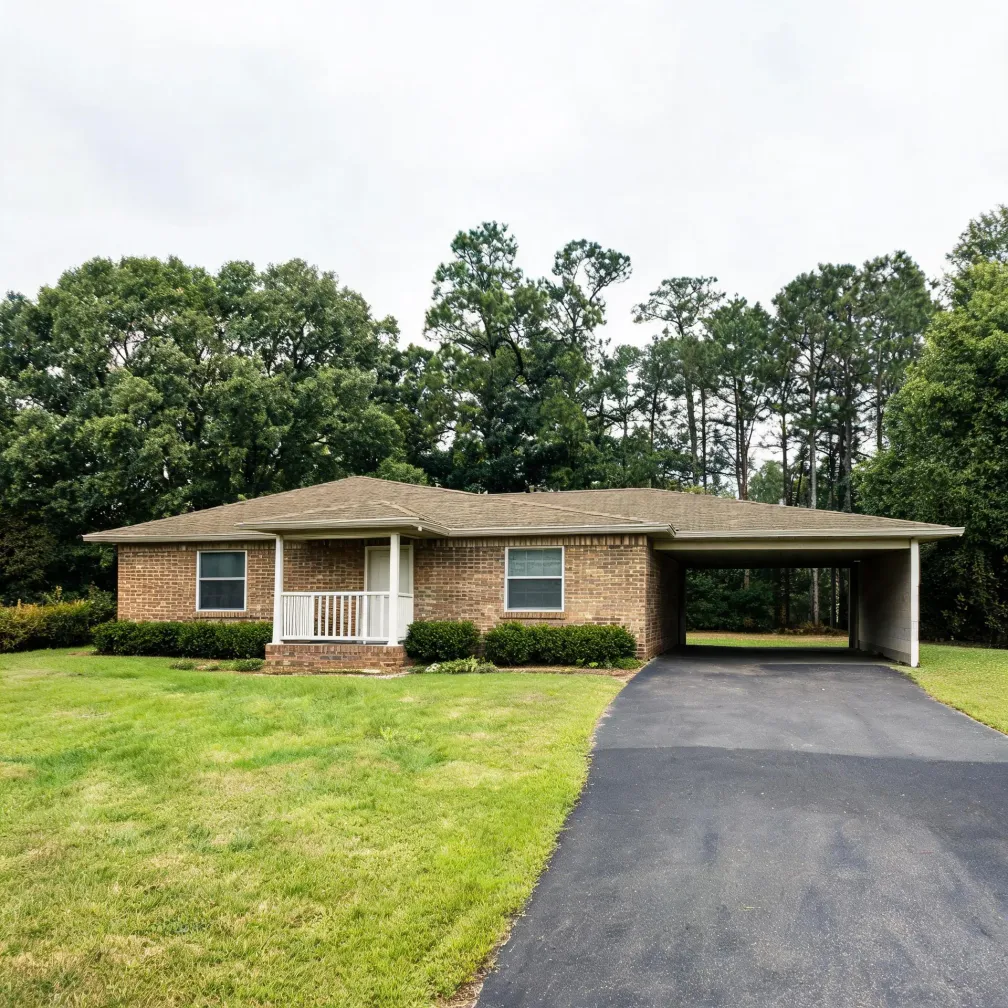
What Georgia homes are up against.
NOAA National Centers for Environmental Information, Storm Events Database, bulk CSV export, events 2015-01-01 through 2024-12-31. · U.S. Census Bureau, 2020-2024 American Community Survey 5-Year Estimates

A compressor that works through a short season has idle months to recover from a marginal install. Homes in Georgia run cooling about five months a year, from May through September. A season that long keeps the compressor cycling with little downtime, and a unit that was undersized or poorly matched to the house reaches its stress point years before a homeowner expects it to. That gap is what a contractor is accounting for when they pull load calculations before quoting, rather than working from the square footage alone.
A quote for new AC in Georgia starts with what is already in the house. Half the homes in Georgia were built in 1992 or earlier (2020-2024 ACS 5-year). That means ducts, wiring, and the electrical service panel in a large share of homes were sized and installed under standards that predate what modern equipment draws and moves. A contractor opening that system may find undersized return runs, a panel without room for a new circuit, or flex duct that has settled in ways that cut airflow. None of those problems show from the street, and none can be assumed away before the work begins.
Does your county put extra stress on HVAC equipment?
2015–2024 · Source: NOAA National Centers for Environmental Information, Storm Events Database.
A condenser sitting outside your home faces hail impact, wind-driven debris, ice loading, and prolonged heat that degrades refrigerant lines and electrical components over time. Where a county ranks reflects how often that equipment is tested by conditions it was not necessarily sized to handle. The contractor you are matched with knows how to spec and site equipment for what your address actually sees.
Georgia HVAC Contractor License Requirements
Georgia sets its own licensing rules for HVAC installation and repair work. The provisions below are drawn directly from state sources, not paraphrased.
Georgia licenses conditioned air contractors in two classes and the size of the equipment decides which one is needed: a Class I licence is restricted to systems no larger than 175,000 BTU of heating and 60,000 BTU of cooling, and a Class II licence is unrestricted.
A state license for this trade defines who is legally permitted to do the work on your home. Unlicensed contractors fall outside that permission, regardless of price or availability. Every contractor this site routes a request to holds the license these provisions describe, and no request goes further until that is confirmed.
Read the Source Provisions2 provisions
Georgia licenses conditioned air contractors in two classes and the size of the equipment decides which one is needed: a Class I licence is restricted to systems no larger than 175,000 BTU of heating and 60,000 BTU of cooling, and a Class II licence is unrestricted.
A Georgia conditioned air contractor licence is not granted on an application alone: the State Construction Industry Licensing Board requires documented field experience, a score of at least seventy on its examination, and its fees before it issues either class.