Tell us about the job
Takes about a minute. No obligation.
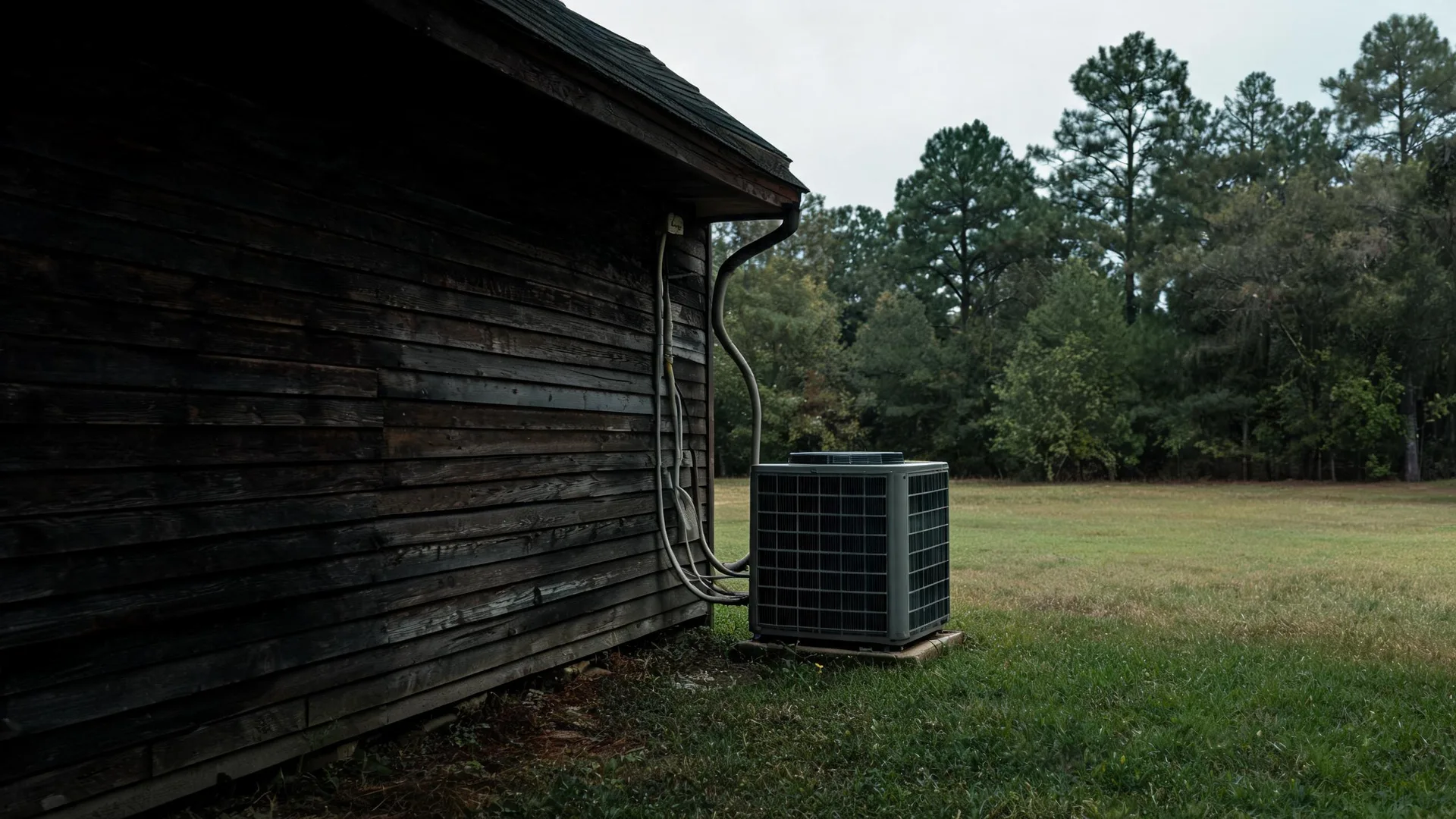
A contractor called out for a central AC repair in Clinch County has to separate what the weather did from what years of ordinary use did, and in most cases the answer lands on the latter. 67 severe weather events were recorded in Clinch County, Georgia between 2015 and 2024. At that rate, severe weather is something this county's equipment encounters now and then, not a sustained load that steadily wears components down. A compressor that has quit, a capacitor that has failed, refrigerant that has dropped low enough to matter: those outcomes follow neglected maintenance and aging parts more often than they follow storm exposure. A contractor here looks at the service history before blaming the sky.
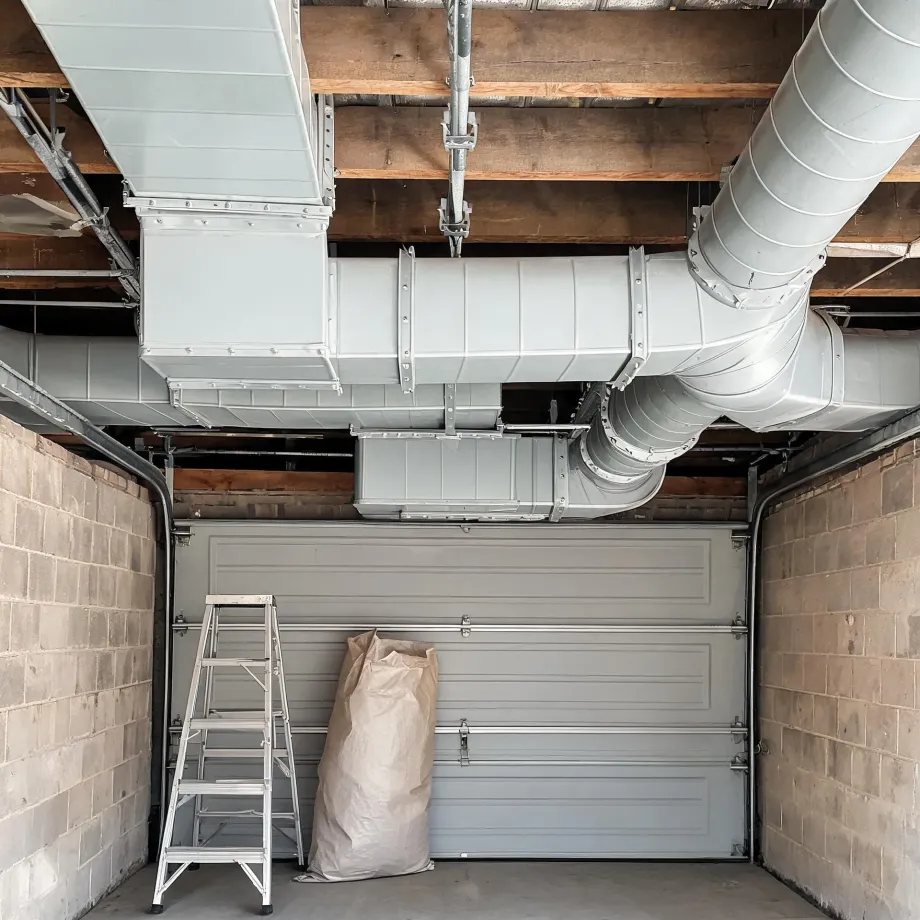
Ductwork in a house that has carried multiple generations of equipment accumulates more than dust. Seals fail at joints, insulation degrades, and flex sections collapse in ways that show up as cooling problems but trace back to the air delivery, not the unit. Half the homes in Clinch County, Georgia were built in 1980 or earlier (2020-2024 ACS 5-year). A repair on a system sitting inside that stock can turn up a compressor issue, or it can turn up a duct run that has been losing capacity for years and finally crossed the line where the equipment cannot compensate. The contractor has to open things before the repair scope is settled.
The Parts of a Central AC a Contractor Checks First
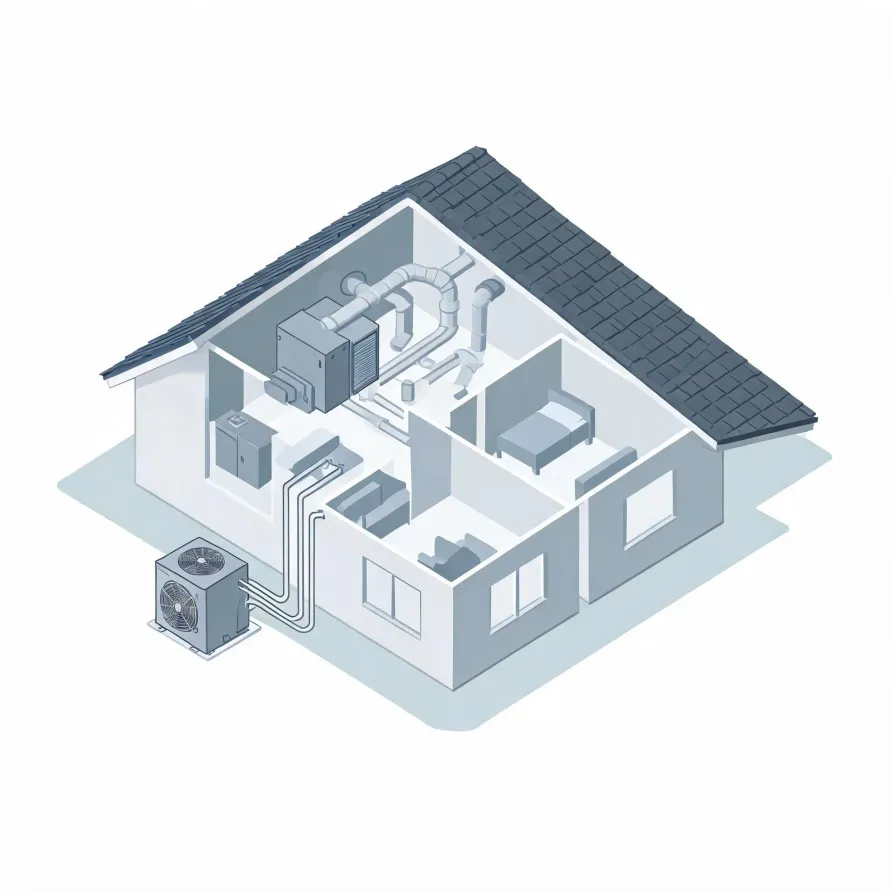
The outdoor condenser unit sits outside the house, usually on a concrete pad beside the foundation, and it holds the compressor and condenser coil. These are where most repairs start. A failing compressor may not start at all; a dirty or damaged coil forces the whole system to overwork.
Inside the house, the air handler or furnace cabinet holds the evaporator coil and the blower fan. The evaporator coil is where warm indoor air gives up its heat, and the blower moves conditioned air into the supply ducts. A clogged coil, a weak capacitor, or a failed blower motor each shows up as a different symptom.
The drawing shows the general layout of a central system, and a licensed contractor determines what applies to the specific equipment and configuration in your home.
Get matched in Clinch CountyClinch County, by the numbers
67 severe weather events were recorded in Clinch County, Georgia between 2015 and 2024.
NOAA National Centers for Environmental Information, Storm Events Database, bulk CSV export, events 2015-01-01 through 2024-12-31.Half the homes in Clinch County, Georgia were built in 1980 or earlier (2020-2024 ACS 5-year).
U.S. Census Bureau, 2020-2024 American Community Survey 5-Year EstimatesClinch County, Georgia holds 3,037 housing units (2020-2024 ACS 5-year).
U.S. Census Bureau, 2020-2024 American Community Survey 5-Year EstimatesOwners occupy 70.8% of the occupied homes in Clinch County, Georgia (2020-2024 ACS 5-year).
U.S. Census Bureau, 2020-2024 American Community Survey 5-Year EstimatesRules & Standards Behind AC Repair in Clinch County, Georgia8 sourced regulations and codes
What HVAC Repair Looks Like in Clinch County
Split-system central air conditioners rated below 45,000 Btu/h manufactured on or after January 1, 2023 must meet a federal minimum of 13.4 SEER2.
Split-system central air conditioners rated at or above 45,000 Btu/h manufactured on or after January 1, 2023 must meet a federal minimum of 13.4 SEER2.
Split-system central air conditioners manufactured between January 1, 2015 and December 31, 2022 had to meet 13 SEER, the metric that preceded SEER2.
Single-package central air conditioners manufactured on or after January 1, 2023 must meet a federal minimum of 13.4 SEER2.
Space-constrained central air conditioners manufactured on or after January 1, 2023 must meet a federal minimum of 11.7 SEER2.
Federal efficiency standards for split-system central air conditioners and heat pumps are set on each certified combination of outdoor unit and indoor coil rather than on the outdoor unit alone.
Residential and light commercial air conditioning and heat pump systems assembled in the field, including mini-splits and unitary systems, may not be installed on or after January 1, 2025 using a refrigerant with a global warming potential above 700.
A field-assembled system whose specified components were all manufactured or imported before January 1, 2025 carries no installation compliance date under the refrigerant restrictions and may still be installed.
Severe Weather Events in Clinch County
Extreme weather puts real strain on central AC systems, and Clinch County's climate is not a national average. How hard local equipment works, and how often it needs attention, is shaped by conditions right here.
67 severe weather events, 2015–2024. Source: NOAA National Centers for Environmental Information, Storm Events Database.