Tell us about the job
Takes about a minute. No obligation.
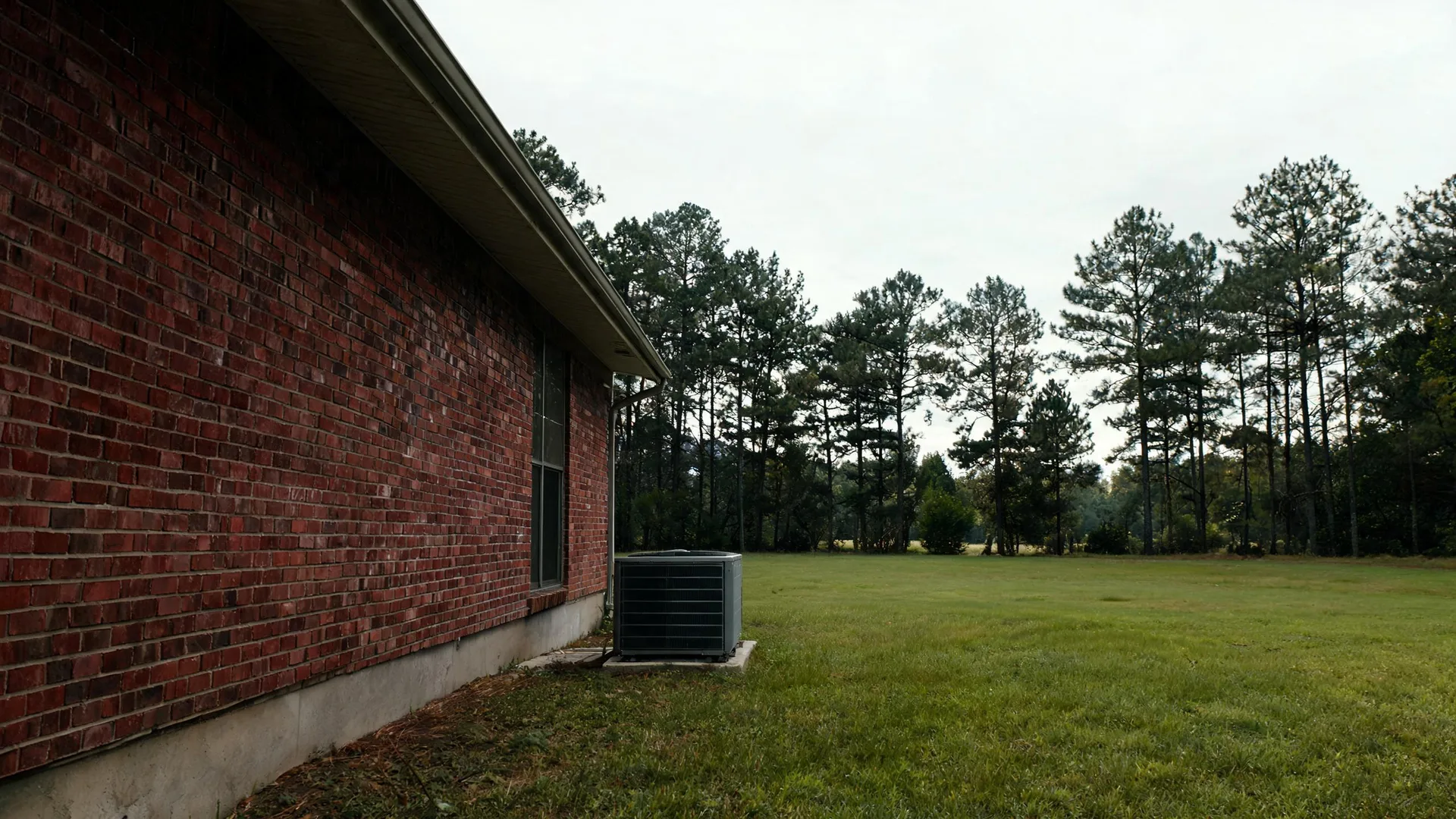
A contractor quoting a central AC repair in Wilkes County needs to establish why the system failed before they can say what fixing it costs. 32 severe weather events were recorded in Wilkes County, Georgia between 2015 and 2024. At that rate, severe weather is something equipment here encounters now and then, not a steady grind that wears components down ahead of their time. A compressor or capacitor that gives out in this county has almost certainly been pushed past its service life by age or by maintenance that slipped, and a contractor will look at both of those before they reach for any other explanation.
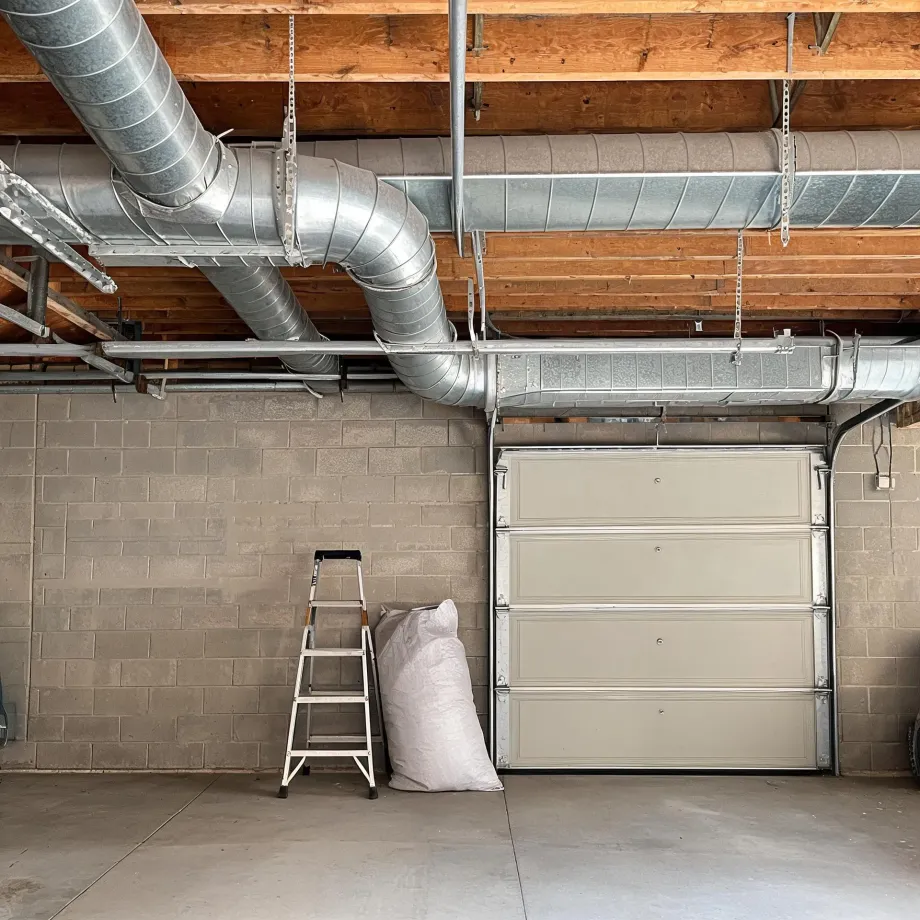
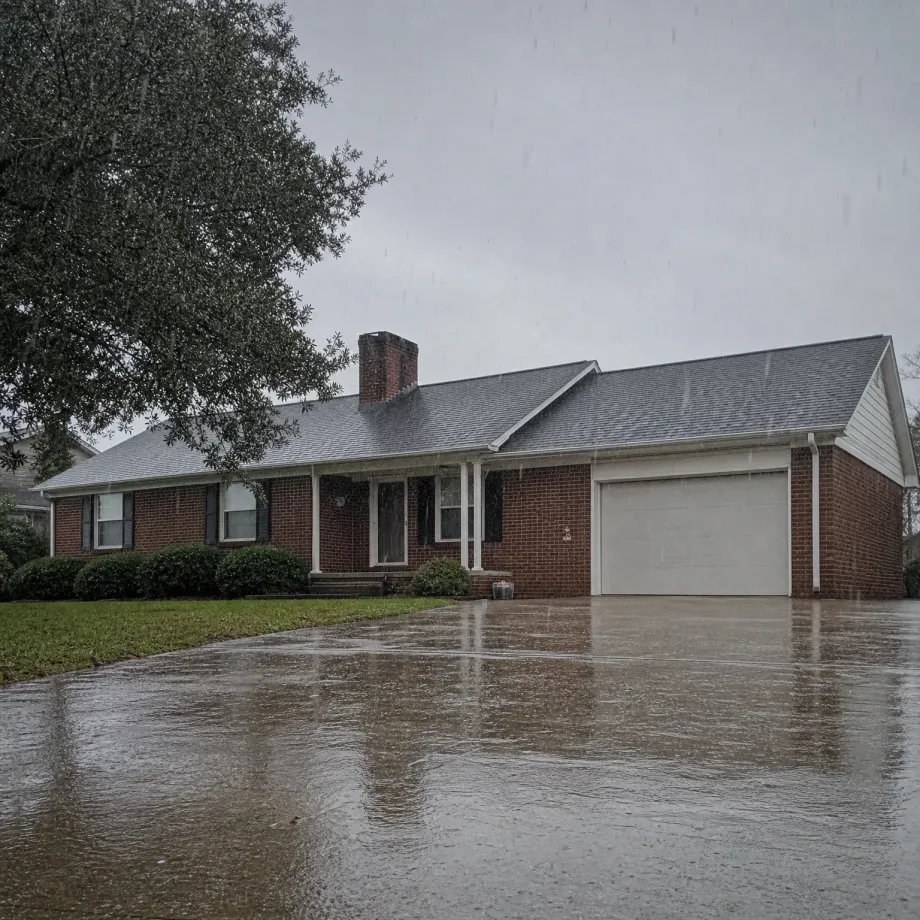
Ductwork and wiring in a house this old were put in for equipment that no longer exists, adapted once or twice since, and are rarely what stops a repair from closing. Half the homes in Wilkes County, Georgia were built in 1977 or earlier (2020-2024 ACS 5-year). What slows a job down is usually what the opened system turns out to need: a capacitor, a contactor, a control board, or a compressor part tied to a production run that ended years before the current owner moved in. A contractor who can identify that gap early changes what gets ordered and how long the house is without cooling.
The Parts of a Central AC a Contractor Checks First
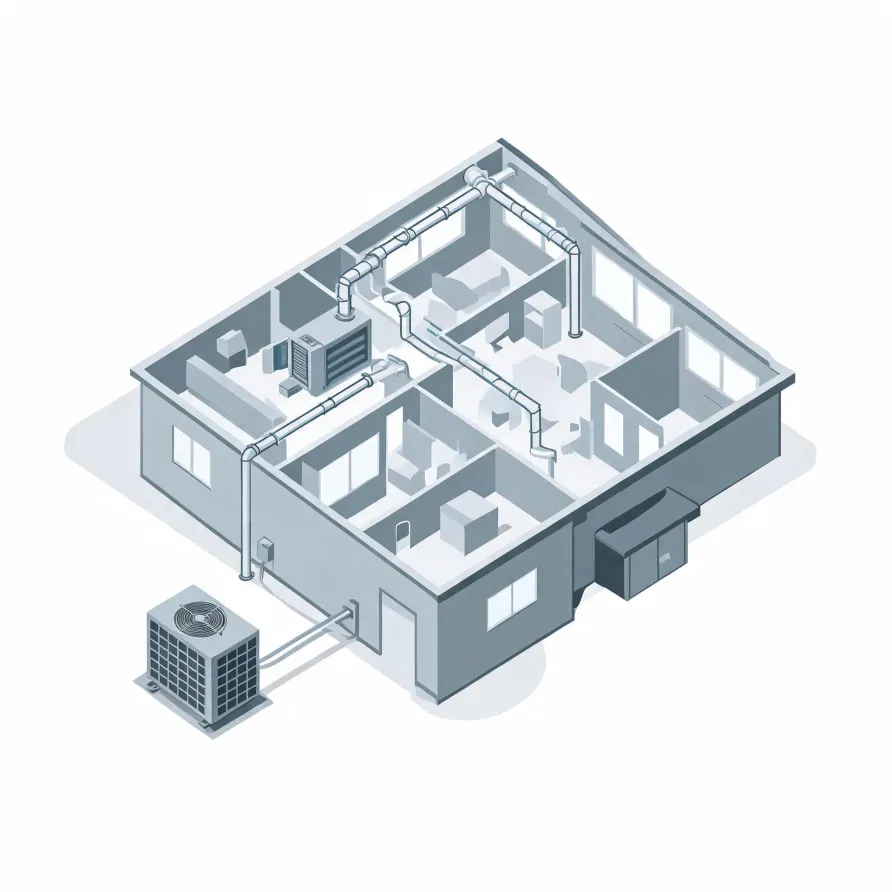
The outdoor condenser unit sits outside the house, usually on a concrete pad against an exterior wall, and it sheds the heat that was pulled from inside. The indoor air handler or furnace sits inside, often in a closet, attic, or basement, and pushes conditioned air through the house. When one of these is the source of the problem, a contractor can usually tell quickly from how the system is behaving.
The evaporator coil lives inside the air handler and is one of the first places a contractor looks when cooling has dropped off or the system is icing over. The refrigerant line connects the two main units and the expansion valve controls refrigerant flow. The thermostat, which the homeowner sees every day, can itself be the fault when everything else checks out.
The drawing shows a typical layout, and a licensed contractor determines which parts and access points apply to your specific home.
Get matched in Wilkes CountyWilkes County, by the numbers
32 severe weather events were recorded in Wilkes County, Georgia between 2015 and 2024.
NOAA National Centers for Environmental Information, Storm Events Database, bulk CSV export, events 2015-01-01 through 2024-12-31.Half the homes in Wilkes County, Georgia were built in 1977 or earlier (2020-2024 ACS 5-year).
U.S. Census Bureau, 2020-2024 American Community Survey 5-Year EstimatesWilkes County, Georgia holds 5,254 housing units (2020-2024 ACS 5-year).
U.S. Census Bureau, 2020-2024 American Community Survey 5-Year EstimatesOwners occupy 66.1% of the occupied homes in Wilkes County, Georgia (2020-2024 ACS 5-year).
U.S. Census Bureau, 2020-2024 American Community Survey 5-Year EstimatesRules & Standards Behind Central AC Repair in Wilkes County, Georgia8 sourced rules and standards
What HVAC Repair Looks Like in Wilkes County
Split-system central air conditioners rated below 45,000 Btu/h manufactured on or after January 1, 2023 must meet a federal minimum of 13.4 SEER2.
Split-system central air conditioners rated at or above 45,000 Btu/h manufactured on or after January 1, 2023 must meet a federal minimum of 13.4 SEER2.
Split-system central air conditioners manufactured between January 1, 2015 and December 31, 2022 had to meet 13 SEER, the metric that preceded SEER2.
Single-package central air conditioners manufactured on or after January 1, 2023 must meet a federal minimum of 13.4 SEER2.
Space-constrained central air conditioners manufactured on or after January 1, 2023 must meet a federal minimum of 11.7 SEER2.
Federal efficiency standards for split-system central air conditioners and heat pumps are set on each certified combination of outdoor unit and indoor coil rather than on the outdoor unit alone.
Residential and light commercial air conditioning and heat pump systems assembled in the field, including mini-splits and unitary systems, may not be installed on or after January 1, 2025 using a refrigerant with a global warming potential above 700.
A field-assembled system whose specified components were all manufactured or imported before January 1, 2025 carries no installation compliance date under the refrigerant restrictions and may still be installed.
Severe Weather Events in Wilkes County
Weather places real demands on cooling equipment. Hard conditions accelerate wear, and a system running through years of them in Wilkes County will show that history in how it performs.
32 severe weather events, 2015–2024. Source: NOAA National Centers for Environmental Information, Storm Events Database.