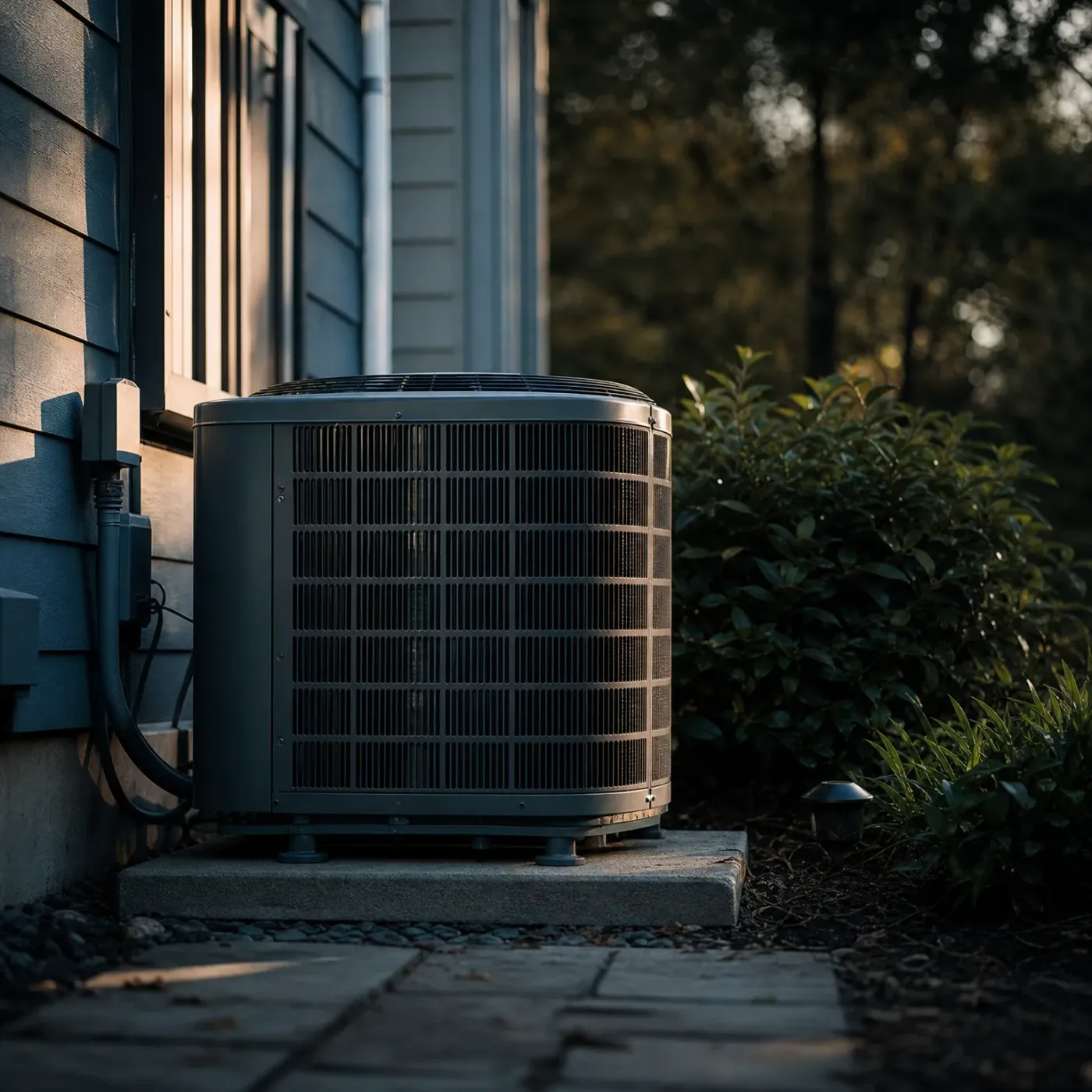







An outdoor air conditioning condenser unit on a concrete pad beside a house with horizontal siding, with an electrical disconnect box on the wall and shrubs to the right in low evening light.

A local pro for your air conditioner installation

Central AC or mini split for a Georgia home

Central air and mini splits both handle Georgia's muggy summers, but which one fits your house depends on your ductwork, your layout and how you heat now. This page walks through how they compare for cooling and for the electric heat most homes here run on. Answer a few questions and a contractor who installs both can look at your home and tell you which one makes sense, so you're not the one weighing it alone.

Get matched

Both central AC and mini splits can cool a Georgia home through a muggy summer, and the better fit comes down to what your house already has. If ducts run through your attic or crawlspace and they're in decent shape, central air uses them and cools the whole house evenly from one thermostat. If you don't have ducts, or you're cooling a room that was added on, a mini split skips the cost and mess of adding ductwork and cools just that space. Since most homes here heat with electric heat, a mini split or heat pump system can also handle winter heating off the same unit, where a central AC setup usually pairs with a separate electric furnace or heat strips. The right choice depends on your layout, your current equipment and whether ductwork is already in place.

A gray-haired bearded man in a dark coat and scarf dusted with snow stands smiling in a dimly lit entryway with a white front door, a side table with a lit lamp, an oval mirror, and a patterned rug.
An older bearded man in a dark snow-dusted coat and gray scarf stands just inside a dimly lit home entry, with a framed picture, lit table lamp, and an adjoining room with a fireplace behind him, and snow visible through the open door.
A gray-haired, bearded man in a dark snow-dusted coat stands smiling in a dimly lit entry hall with a staircase, a lit table lamp, a framed picture, and a living room visible through a doorway.
An older man with gray hair and a beard, wearing a dark jacket dusted with snow, stands smiling in a dimly lit hallway with lamps and a living room visible behind him.
A man seen from behind raises his hand to wave at a woman standing in the open front doorway of a single-story house with gray shingle siding, white columns and a gabled porch entry.

What this decision looks like in your house

If your house already has ducts, pulling them out and switching to mini splits means patching ceilings and walls where the old registers were. Most homeowners in that position stay with central air and replace what's there. A mini split earns its keep in the rooms ducts never reached, a converted attic, a sunroom, a garage turned into living space, where running new ductwork would mean tearing into finished walls.

Either system has to keep up with a Georgia summer and, in most homes here, with winter heat too, since electric heat often runs through the same equipment. Get the sizing wrong and you'll notice it directly: a system too big cools the air fast but leaves the house clammy, one too small runs constantly and still can't keep up on the hottest days. That's a judgment a contractor makes after walking through your specific rooms and your current setup, not something to guess at. Once you know which direction fits your house, the next step is getting matched with a contractor who installs both and can tell you which one yours calls for, rather than you calling around to find out.

A living room corner with a beige upholstered armchair holding navy and striped cushions, a small round wooden side table with a carved bowl and a potted green plant, a framed landscape picture on a pale wall, built-in shelving, and a curtained window.
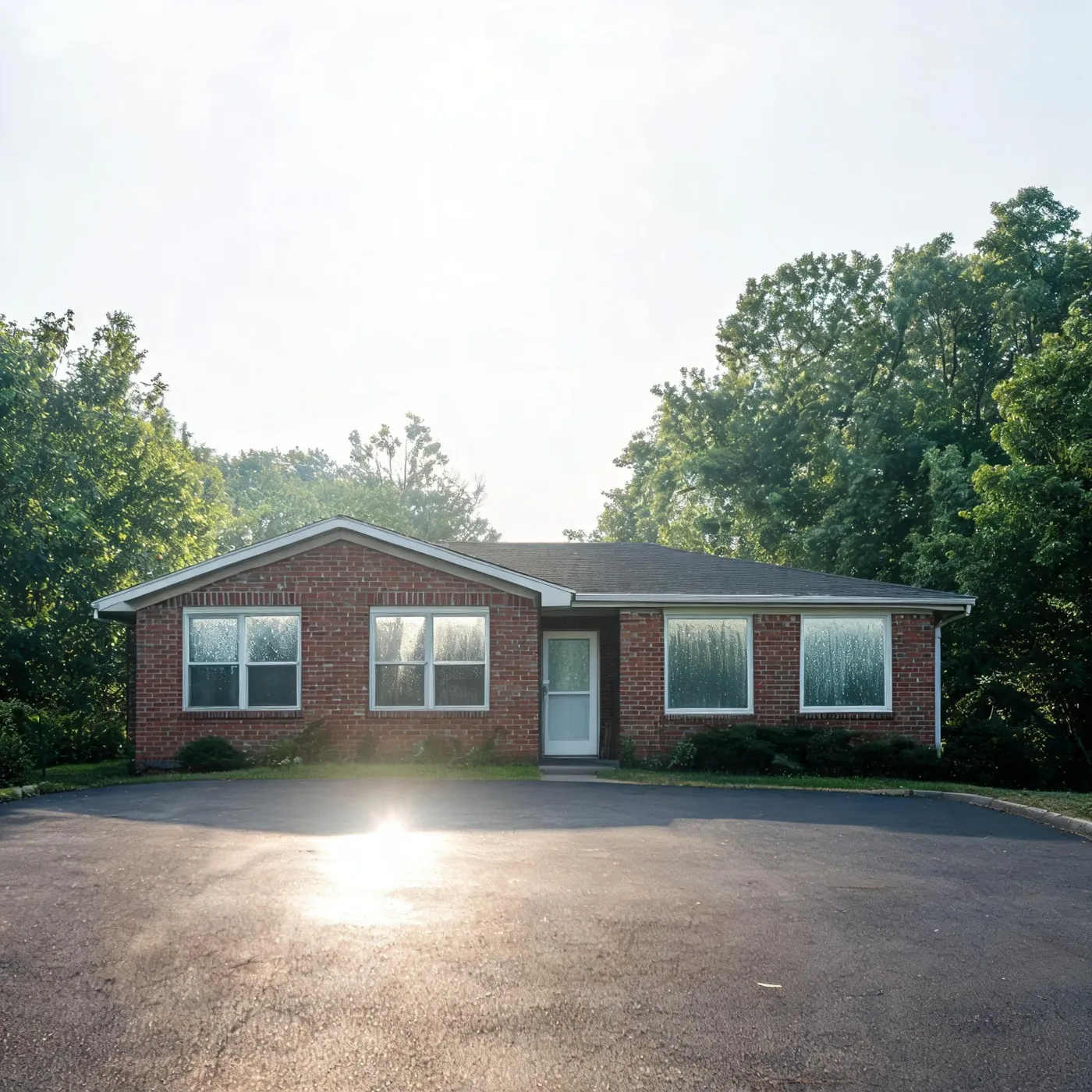
A single-story red brick ranch house with white-framed windows and a white storm door, fronted by a large asphalt parking area and backed by leafy green trees under a bright hazy sky.

The National Weather Service puts the summer dew point across Georgia at an average of 68°F through June, July and August. That's the number that tells you how heavy the air feels, and 68 is the point where your skin stops drying and a room starts to feel sticky even with the AC running. A central system and a mini split both have to pull that moisture out of the air, not just cool it, and a unit sized only for temperature will run long and still leave the house feeling damp. Whichever setup fits your home, getting the sizing right for this kind of humidity matters more here than it does in a drier state. A contractor who works on Georgia homes and knows what 68-degree dew points do to a system can look at your house and tell you which option actually keeps up.

NASA POWER T2MDEW county cells weighted by homes

Get the right pro for your air conditioner

Skip the round of in-home estimates for a new air conditioner.

There's no charge for the request.

If your home already has ducts

Central air uses what's already run through your attic or crawlspace, so installation doesn't mean opening up walls or ceilings. It cools every room off one thermostat, which matters if your house has several bedrooms down a hallway that all need to drop ten degrees by bedtime. The tradeoff is that one system runs the whole house, so if the ducts leak into an unconditioned attic, Georgia's humidity finds its way back in through the same path the cool air left by. A contractor can check the ductwork's condition before you commit either way.
If you're adding or cooling room by room

A mini split skips ductwork entirely, with a line running from an outdoor unit to a wall-mounted head in each room you want cooled. That makes it a fit for a sunroom, a garage conversion, or additions built after the rest of the house, where running new ducts would mean tearing into finished space. Each head has its own setting, so a bonus room that bakes in the afternoon can run colder without changing the temperature everywhere else. The cost is a visible unit on the wall in every room it serves, and no shared ductwork to extend later.

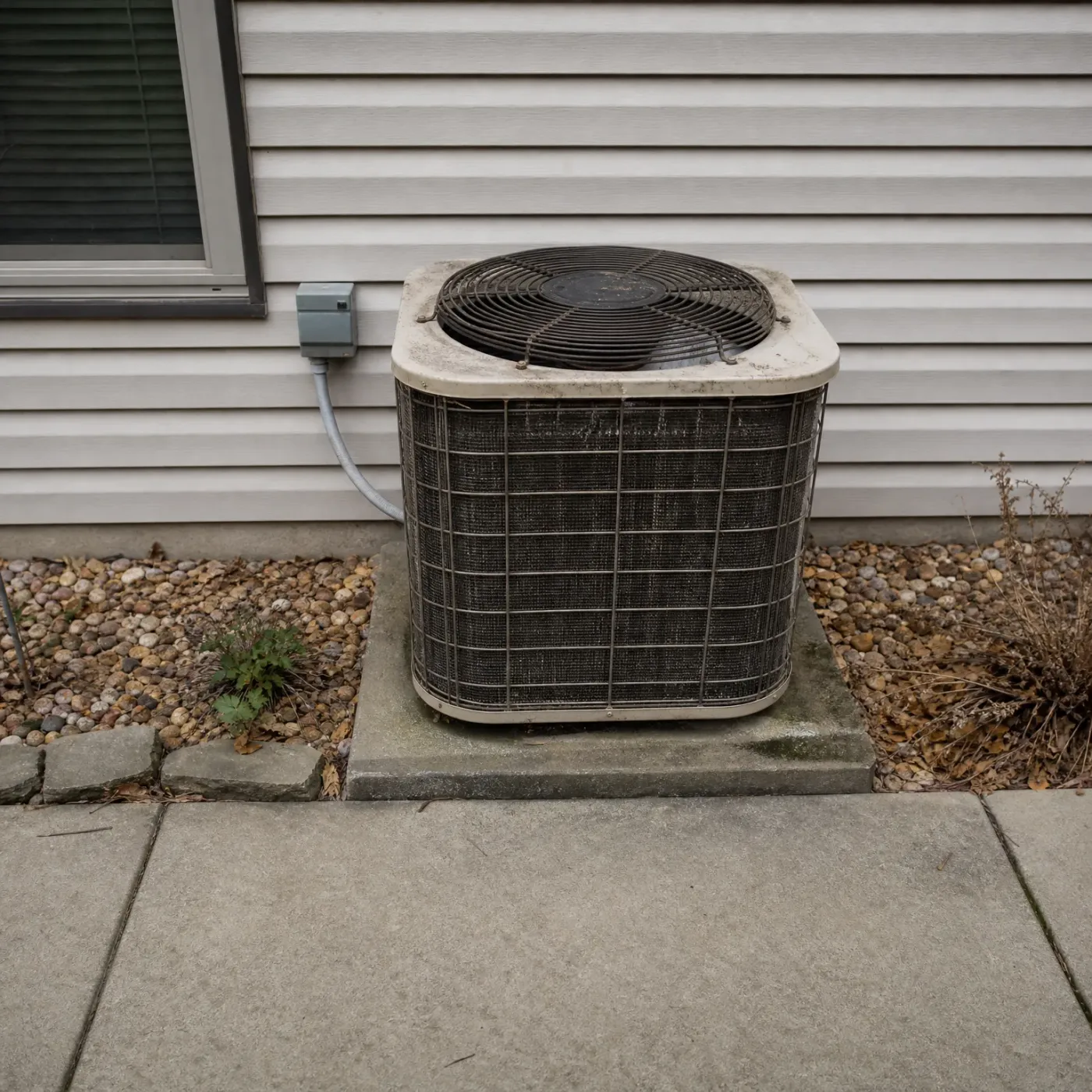
An outdoor air conditioner condenser unit on a concrete pad beside a house with light gray vinyl siding, with a gray electrical disconnect box and conduit on the wall, gravel beds and dried plants nearby, and a concrete sidewalk in the foreground.
Before you get your air conditioner installation
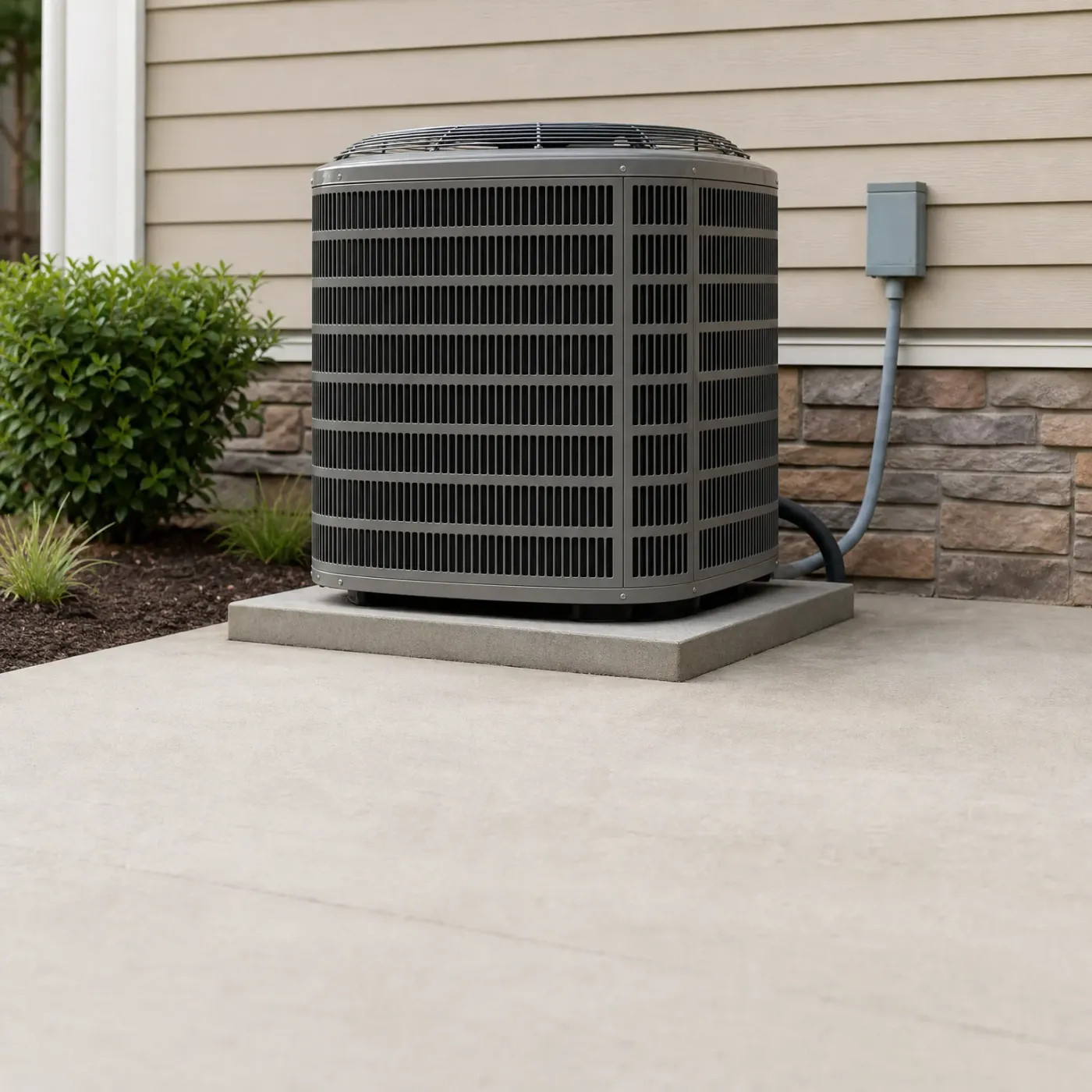
A gray outdoor air conditioning condenser unit on a concrete pad beside a house with horizontal siding and a stone veneer base, with a wall-mounted disconnect box and conduit, next to a shrub bed and a concrete patio.
After you get your air conditioner installation

Which One Fits Your House

  • If ducts run through your attic or crawlspace and are in decent shape, central air usually fits without opening walls.
  • A house with no ducts, or ducts beyond repair, is where mini splits earn their place.
  • Central air cools the whole house off one thermostat, while mini splits let you set temperatures room by room.
  • Georgia's summer dew point averages 68°F from June through August, and either system can handle that humidity if it's sized right.
  • Since most Georgia homes heat with electricity, the same unit that cools your house in July can often carry the heating load in winter.
  • The right choice comes down to what your house already has, not which system cools better.

The ducts already in your house decide more of this than the weather does. If they run through your attic or crawlspace and they're sound, central air uses them as they are and keeps the whole house on one thermostat. If there are no ducts, or what's there has gaps and crushed runs, a mini split skips that problem entirely. It mounts on the wall, runs its own line, and cools that room without touching the rest of the house. Neither system struggles with a Georgia summer. The dew point here averages 68°F from June through August, and that's the number that makes a room feel damp even with the air on. A central system sized right pulls that moisture out as it cools. A mini split does the same, room by room, which also means a bedroom you keep closed off most of the day isn't cooled at the same cost as one that's in use all afternoon. Winter changes the math a little less than you'd expect. Most homes in Georgia heat with electricity, and both systems can carry that load, so the unit you install for summer is usually the same one keeping the house warm from November through February. What decides this for your house is what's already built into it, not which system performs better on paper. A house with good ducts rarely gains anything by tearing them out. A house without them was never going to use central air well in the first place.

A woman wrapped in a thick beige fleece blanket sits on a sofa with an open book on her lap, beside a lit table lamp, with a frost-covered window behind her.
A gray-haired woman in a cream knit sweater stands in a dimly lit kitchen at night, looking to her right, with a round loaf of bread in the foreground and a dark window and potted plant behind her.

Air Conditioner Installation

A pro who works on air conditioners

Describe the project once instead of to every installer.

A black-framed smartphone standing upright against a plain white background, its screen filled with solid green.
Step 1 of 3: Equipment