How to lower your AC bill in a Georgia summer

Send the form, and lining up the air conditioner tune-up stops being yours to chase.

Let a pro reach out

The fastest way to lower your AC bill in a Georgia summer is to keep the system running clean: a fresh filter, clear coils, and a yearly tune-up that catches the small problems before they turn into long ones. Georgia summers push humidity as hard as heat, and a system working against a dirty coil or a weak charge runs longer to do the same job, which shows up on the bill whether you notice the airflow drop or not. Most of that waste isn't a broken part. It's dust on the coil, a clogged filter choking airflow, or refrigerant a little low, all things a tune-up finds before they cost you a full summer of higher bills or an afternoon with no cold air at all. Catching it early is cheaper than fixing it after the system has been straining for weeks. That's the whole point of staying ahead of it.

  1. A dirty filter forces the blower to work harder than it should.

  2. Restricted airflow drops pressure in the system and strains the compressor.

  3. A struggling compressor pulls more electricity to move the same heat.

  4. Dirty coils trap heat that should transfer outside the house.

A smiling man in a gray long-sleeved shirt stands in a kitchen looking to the side, with open shelves of dishes, a white mug on the counter, a potted plant, and a view through a doorway into a living room.
A smiling bearded man in a green sweater sits at a white marble kitchen island with a mug, potted plant and bowl of fruit, in a bright white interior with open shelving and an arched doorway.
A smiling man with dark curly hair and a beard, wearing a dark green knit sweater, stands at a white marble kitchen counter with a dark blue mug, with open shelving, pendant lights and a houseplant behind him.
A smiling man in a green ribbed sweater stands behind a wooden table holding a ceramic mug of coffee in a kitchen with white subway tile, shelves of potted plants, and a bowl of fruit.

Your bill is usually the first sign something is wrong, long before you hear a strange noise or feel a room go warm. In Georgia, the air itself works against your system. Humidity makes the unit run longer to pull moisture out of the air, and a dirty filter or coil on top of that means it almost never gets to rest. You might notice one room staying warmer than the rest of the house, or the outdoor unit running well past when it should have caught up to the thermostat. Sometimes you will see ice on the copper line running to the unit, which means it is cooling less while working harder, not more. None of this fixes itself. A compressor pushed hard all summer wears out faster than one that gets serviced, and a compressor is the most expensive part to replace. Catching a weak capacitor or a slow refrigerant leak in spring means your system runs the way it is supposed to all summer, instead of fighting the heat and losing a little more ground every week.

What a Struggling AC Costs You

  • A system that runs longer than it should will show up on your bill before it shows up as a breakdown.
  • In Georgia's humidity, a clogged filter or dirty coil makes the unit run almost constantly just to hold the house at the thermostat setting.
  • Ice forming on the refrigerant line means the system is struggling, and it will keep running hard even as it cools less.
  • A compressor that strains through a Georgia summer wears down faster, and replacing it costs far more than keeping it maintained.
  • Rooms that stay warmer than the thermostat setting usually mean the system is losing the fight against the heat and humidity outside.
  • A yearly tune-up catches a weak capacitor or low refrigerant before either one forces the system to work overtime all summer.
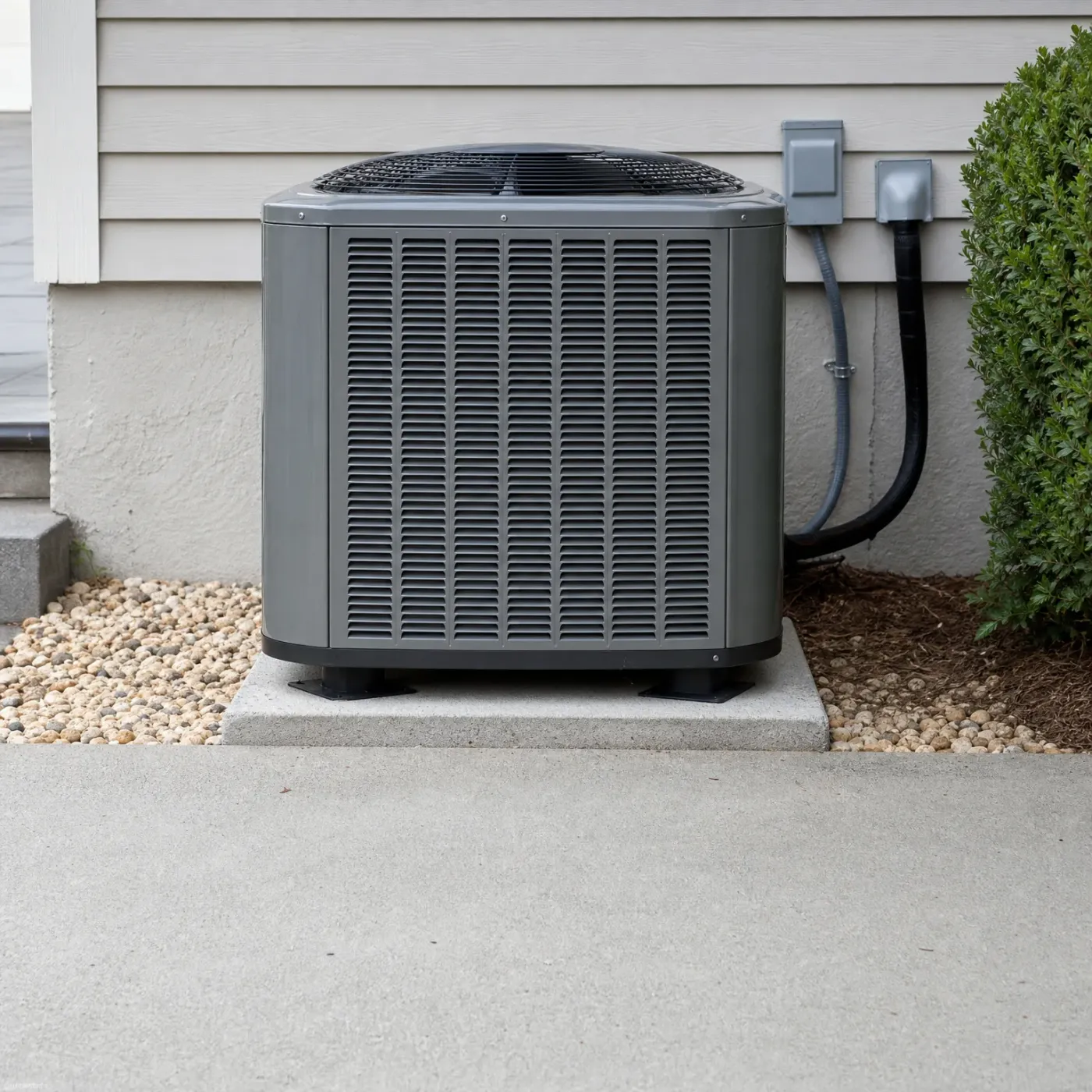
A gray outdoor air conditioner condenser unit on a concrete pad beside a house with horizontal siding and a stucco foundation, with a disconnect box and conduit on the wall, decorative gravel, mulch, and a shrub nearby.
A clean condenser like this moves heat outside the way it's supposed to, so it isn't running longer than it needs to.
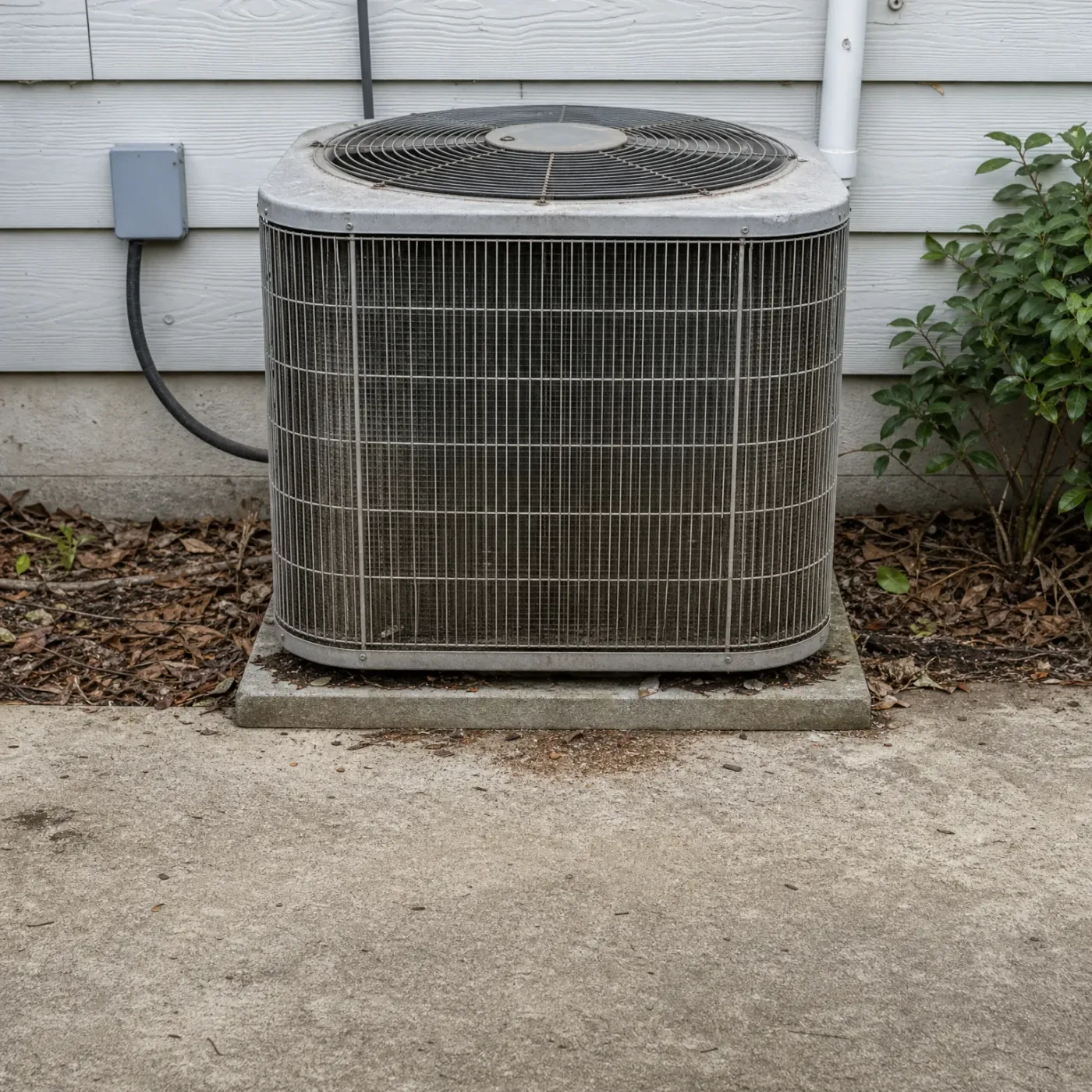
An outdoor air conditioning condenser unit on a concrete pad beside a house with horizontal lap siding, with an electrical disconnect box and conduit on the wall, mulch and a green shrub to the right, and a concrete walkway in the foreground.
Coils caked with dirt and grass clippings trap heat in the unit and drive your bill up even with the thermostat untouched.

Why does your AC run almost nonstop and your bill keeps climbing?

You set the thermostat to 72 and it never seems to get there, or it does and then the unit kicks right back on a few minutes later. You might notice the air coming out of the vents feels weaker than it used to, or the house stays sticky even when the system is running. Outside, the condenser is working loud and long, especially in the afternoon heat. Left alone, a system that runs this hard puts real strain on the compressor, which is the most expensive part to replace. The bill is the early warning. The breakdown, often in the middle of a July heat wave, is what happens if the cause goes unchecked.

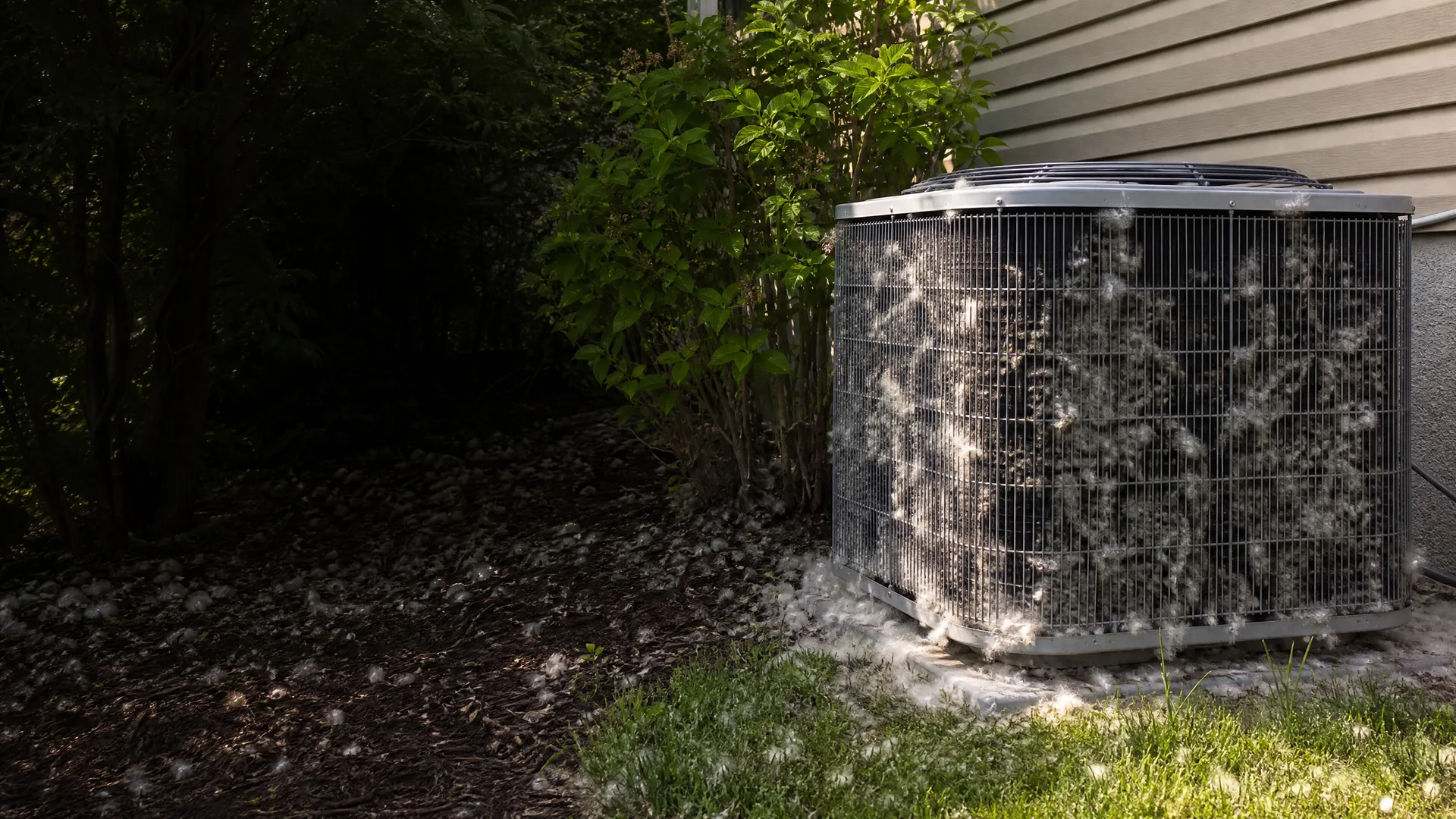
An outdoor air conditioner condenser unit beside a house with horizontal siding and stucco, its coil fins covered in white cottonwood fluff that also collects on the surrounding grass and mulch.

You're out pulling weeds along the side yard in late May when you notice it, a white dusting caught in the condenser fins like someone dumped a bag of cotton on it. Cottonwood fluff, drifted off the trees and packed in tight across the coil. You run a hand over it and the fins feel warm, warmer than the air around them. The unit is humming along, working through another 90-degree afternoon, except now it's pushing air through a coil half-covered in fluff instead of open metal. You make a note to hose it down this weekend, but the bill for this month is already written. It ran today like this, and yesterday, and however many days before you noticed.


Let someone else find the pro

A thermostat that won't budge from 76 no matter how low you set it, a unit that short cycles all afternoon, a bill that climbs even though nobody's touched the dial, these are the kind of problems that get worse the longer a Georgia summer sits on top of them. Every week a coil stays dirty or a filter stays clogged is another week of paying for air you're not getting. A tune-up now catches what's driving the bill before July and August make it worse. Finding a contractor for that shouldn't be its own chore on top of everything else. Send the request and the work of tracking someone down is off your plate. The contractor who gets it is licensed, local, and sees this exact strain on Georgia systems all season, the short cycling, the frozen coil, the compressor working too hard in the heat. You're not stuck fielding calls from a handful of companies trying to win the job. One contractor has it, and you can get back to your afternoon.

A thermostat set to 72 doesn't tell you anything about what your AC is actually spending to get there. The amp draw on a strained compressor does.

A unit pulling extra amps to fight dirty coils or weak airflow shows that cost on the meter all summer, long before it shows up as a repair bill.

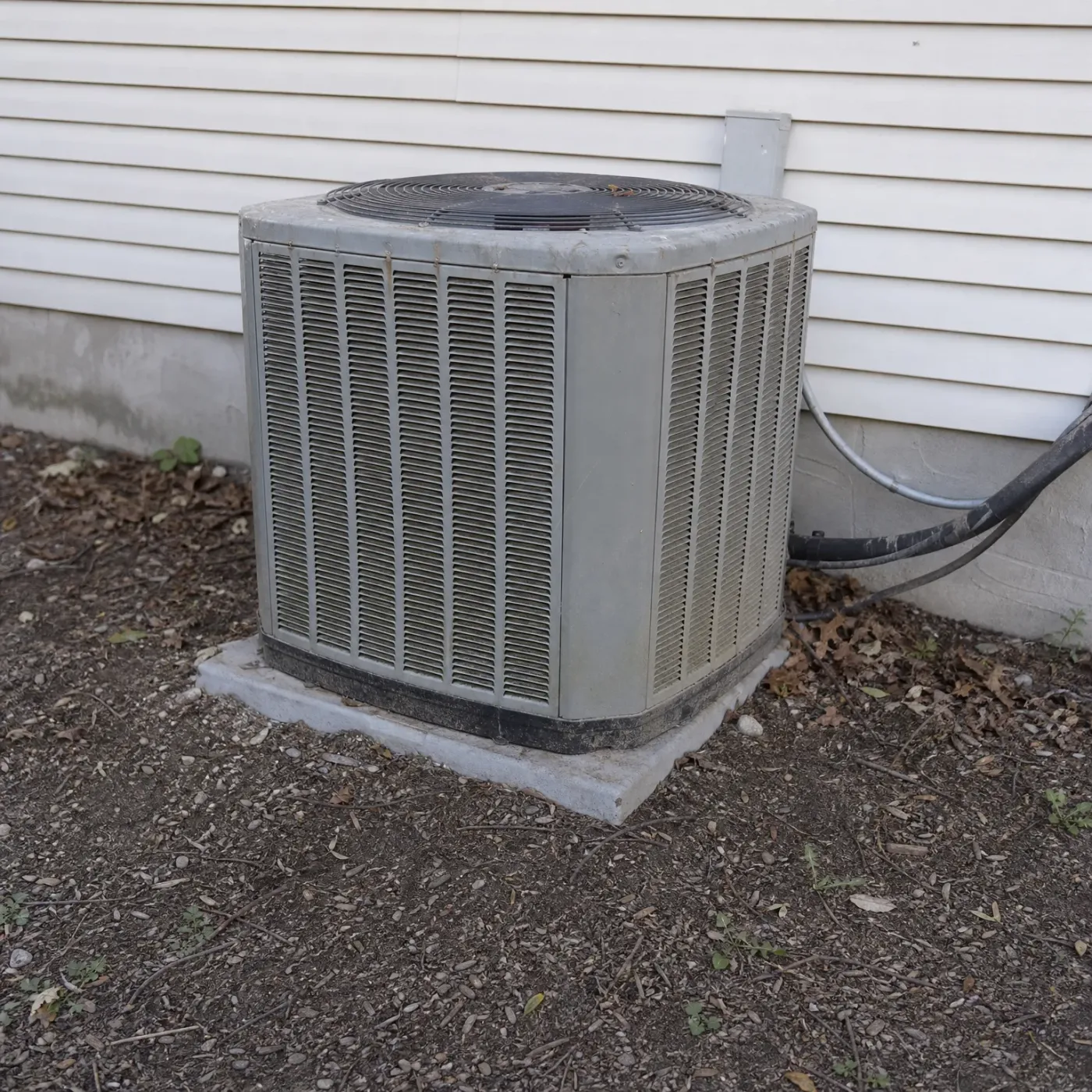
An outdoor air conditioner condenser unit on a concrete pad beside a house with light horizontal vinyl siding, surrounded by bare dirt, gravel and dry leaves, with refrigerant lines and conduit running along the wall.
Before you get your air conditioner maintenance
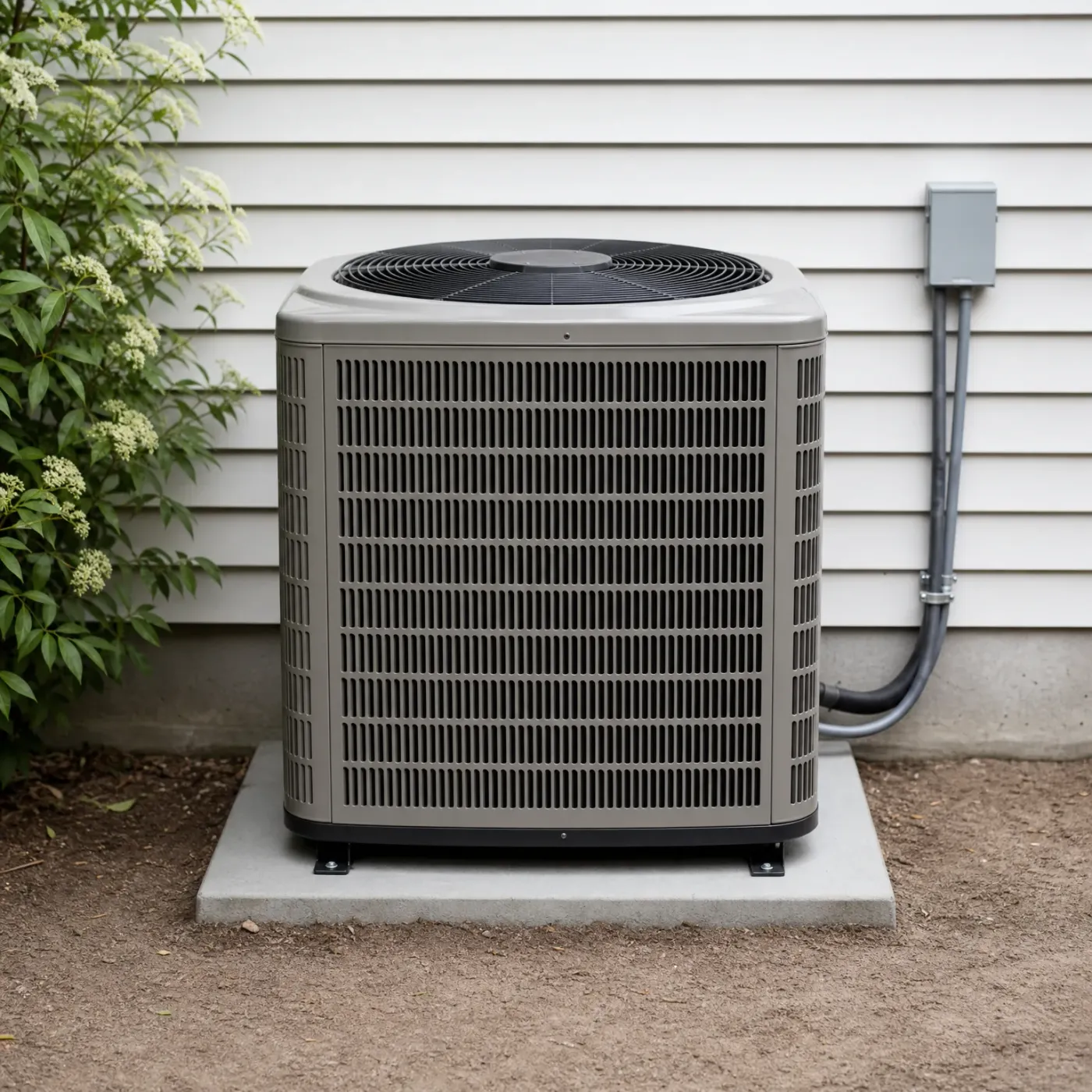
A gray outdoor air conditioner condenser unit on a concrete pad beside a house with horizontal lap siding, with a flowering shrub at left and a disconnect box with conduit on the wall at right.
After you get your air conditioner maintenance
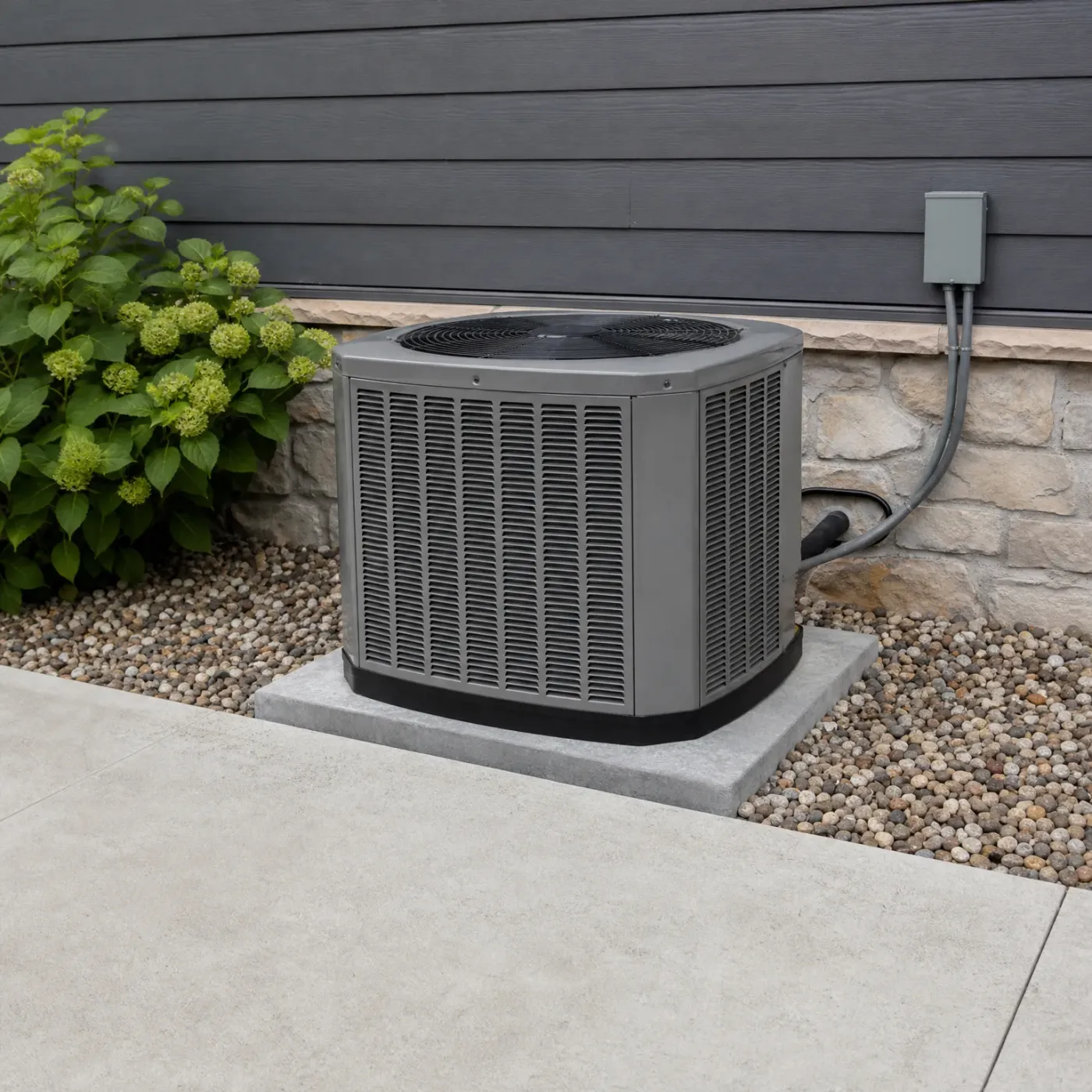
A gray outdoor air conditioner condenser unit on a concrete pad beside a house with dark horizontal siding and a stone base, surrounded by gravel, with a flowering shrub at left and a concrete walkway in front.

Running clean

This condenser sits clear of the siding with open gravel on every side. Nothing is blocking the fins, so the unit pulls air through freely and pushes the heat it collects straight outside. It can cycle off instead of running straight through a July afternoon.

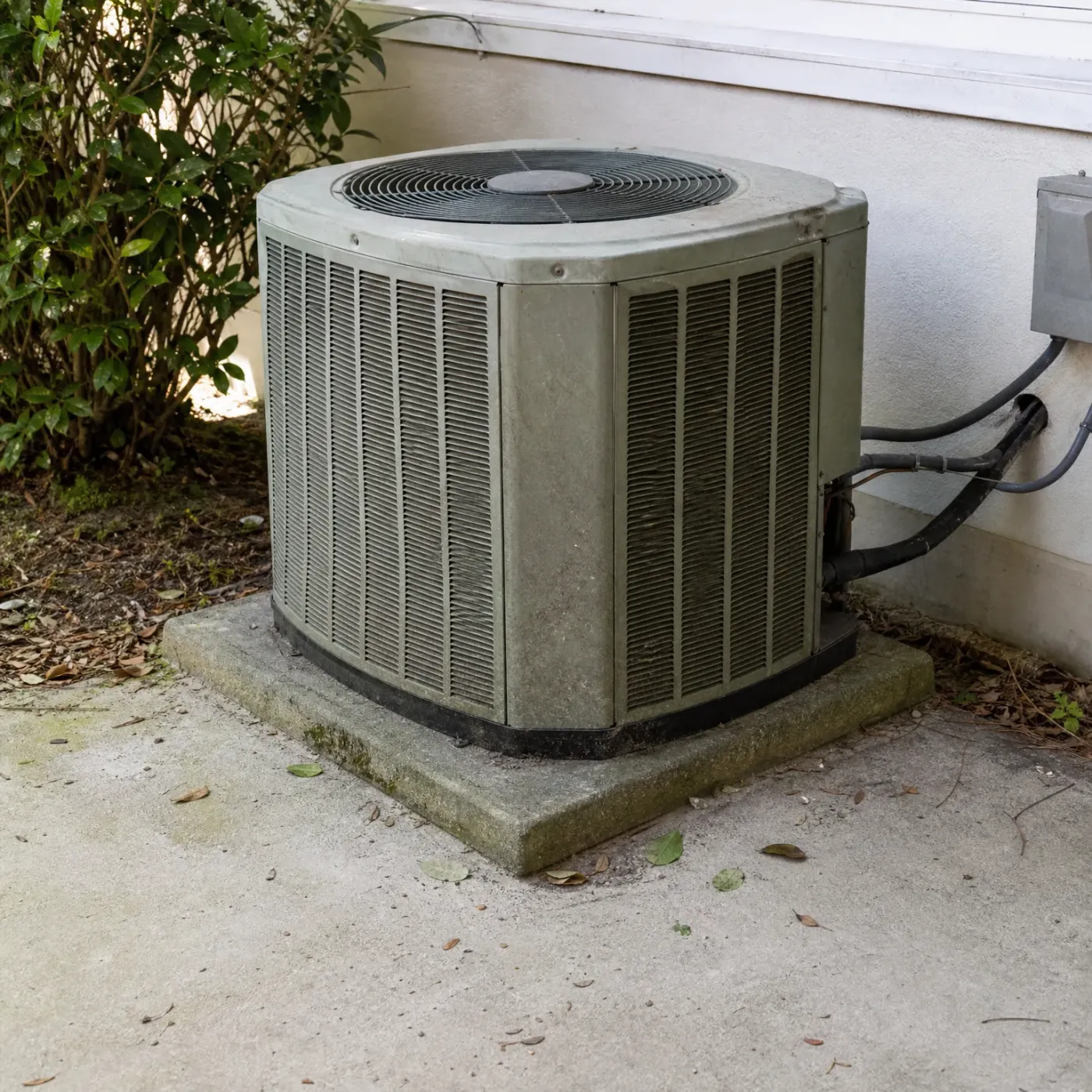
An outdoor air conditioner condenser unit sits on a concrete pad beside a stucco wall, with refrigerant lines and conduit running to the wall and a shrub to the left.

Working against itself

Years of grime have packed into these fins and the casing has gone dull with weather. Heat that should move outside stays trapped in the coil, so the compressor runs longer to reach the same setting on the thermostat. The lines running into the wall are carrying that strain with it.

Power costs 14.74 cents per kilowatt-hour statewide

At 14.74 cents per kilowatt-hour, every extra hour your AC runs to fight a dirty filter or a weak charge lands on next month's bill. A unit kept clean pulls less power to cool the same house, so the rate you pay matters less than how hard the system has to work.

EIA-861 2025 statewide residential average

Keeping Your AC Bill Down

  • A clean system costs less to run all summer than a dirty one costs to limp along.
  • Catching a weak capacitor or a clogged coil before July keeps the unit from working through August on borrowed time.
  • A tune-up now is the same move as checking the filter: deal with it small before it turns into the compressor failing on the hottest day of the year.
  • A local contractor who services this equipment all season knows which parts tend to fail first in Georgia's humidity.
  • Working with one licensed contractor means one visit and one set of answers, not a string of calls to sort through.
  • The system that gets checked before summer peaks is the one that holds your bill steady while the thermostat holds 72.

The answer to a climbing AC bill in a Georgia summer isn't a lower thermostat setting, it's a system that doesn't have to strain to hit the one you already picked. A fresh filter, clear coils, the right charge, these keep the unit from working twice as hard to move the same heat out of a humid house. That's the whole case this page has made, from the dirty condenser packed with cottonwood fluff to the amp draw that climbs when a compressor fights restricted airflow all afternoon.

What catching these problems early buys you is a system that runs the way it was built to, not one limping through August on a weak capacitor or a coil caked with grass clippings. A tune-up before the heat sets in finds that kind of wear while it's still a small fix, not a breakdown on the one day you need the system most.

Getting that tune-up means one call to one contractor, not a round of quotes from companies that don't know your unit or your part of the state. A contractor who works on AC systems all summer in Georgia's humidity has seen which parts give out first here and what that looks like before it becomes a bigger repair. That's the kind of knowledge that's hard to get from someone who isn't local and doesn't see this climate's wear on equipment every season.

Your AC bill reflects how hard the unit has to work. Keep the system clean and serviced, and the bill stays close to what it should be instead of climbing every time the compressor strains to catch up.

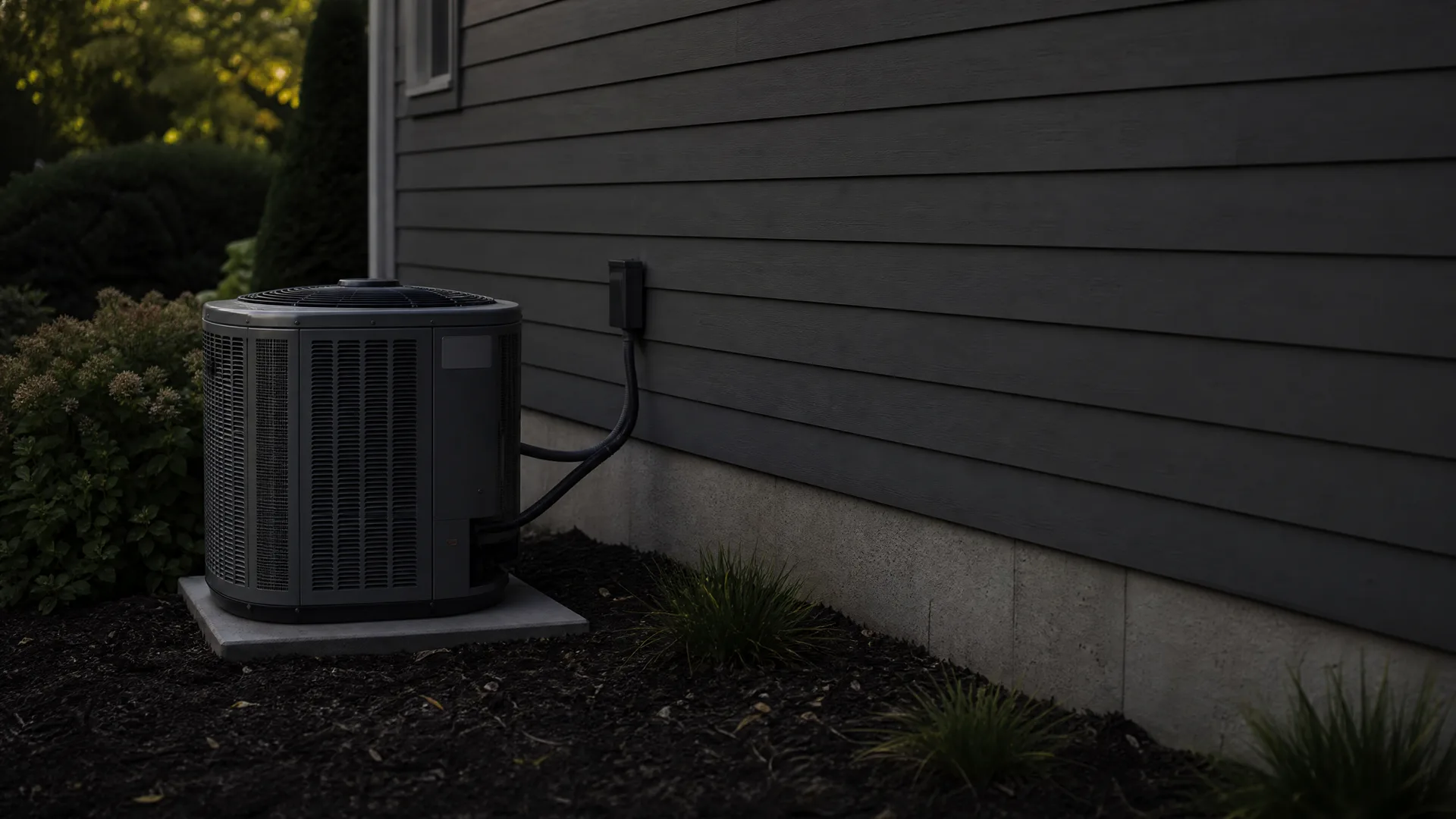
An outdoor air conditioner condenser unit on a concrete pad beside a dark horizontal-lap sided house, with mulch beds, shrubs and ornamental grasses nearby.

One request and it's handed off

Only one pro gets your request, so you hear from one company.

Step 1 of 3: Equipment