Send the form and stop researching installers for the new air conditioner.
A two-stage air conditioner runs on low most of the time and only kicks into high when a July afternoon really calls for it. In Georgia, that matters, because your system isn't facing a few hot weeks a year. It's facing months of heat and humidity, running long hours from spring into fall.
A single-stage unit only has one speed: full blast, then off. It cools the air fast but doesn't run long enough to pull much moisture out of it, so the house can feel cool and still feel damp. A two-stage system runs longer on low, which means more time moving air across the coil and more moisture coming out of it. In a state this humid, that difference is worth something.
Since most homes here heat with electric systems too, a lot of the same ductwork and equipment is working for you year-round. A two-stage AC that's sized and installed right for your house can mean steadier temperatures room to room, instead of the usual swings between too cold right after the unit kicks on and too warm before it kicks on again.
Whether it's worth it for your house depends on things specific to your home: its size, its current ductwork, what's already installed, and what shape that equipment is in. That's not something to guess at from a search result.
If you want a straight answer for your house, the next step is getting a contractor who installs these systems to look at it. You don't have to spend the afternoon calling around, explaining your situation to three different companies, and trying to compare quotes that don't line up. Send the details once, and the legwork of finding someone qualified is off your plate.
Yes, for most homes in Georgia. A two-stage AC runs on its low setting for the long stretch of warm weather, and that low setting pulls more moisture out of the air than a single-stage unit cycling on and off. Georgia summers aren't just hot, they're humid, and a system that runs longer at lower output does more dehumidifying than one that blasts cold air and shuts off. That means a house that feels less clammy at the same thermostat setting, and a system that isn't slamming on and off every few minutes all summer. Since most homes here heat with electric heat pumps or straight electric furnaces, the AC side of your system is working for a good chunk of the year, not just a few weeks. The upfront cost is higher than a single-stage unit. Whether that's worth it to you depends on how long you plan to stay in the house and how much the extra comfort matters to you.
Done looking for an air conditioner pro
Answer a few questions instead of calling shop after shop.
One request ends the search for an air conditioner installer.
How does a two-stage AC actually keep the humidity down?
You've heard the low-setting part already, but what does that have to do with moisture. A compressor sounds like it's about temperature, not humidity, so it's fair to wonder what's actually happening inside the system that makes the air feel less damp instead of just cooler.
It runs longer, so more air passes over a cold coil
A single-stage unit runs at full power until the thermostat is satisfied, then shuts off. That's a short, strong blast of cold air, and the coil barely has time to pull moisture out before the cycle ends. A two-stage unit on low moves less air across the same coil, but it stays on for a much longer stretch. Air passing slowly over a cold coil for twenty or thirty minutes sheds more water than a fast blast does, because the moisture has time to condense and drain off. The compressor only shifts to high when low can't keep up with the heat, which in Georgia usually means the hottest part of the afternoon.
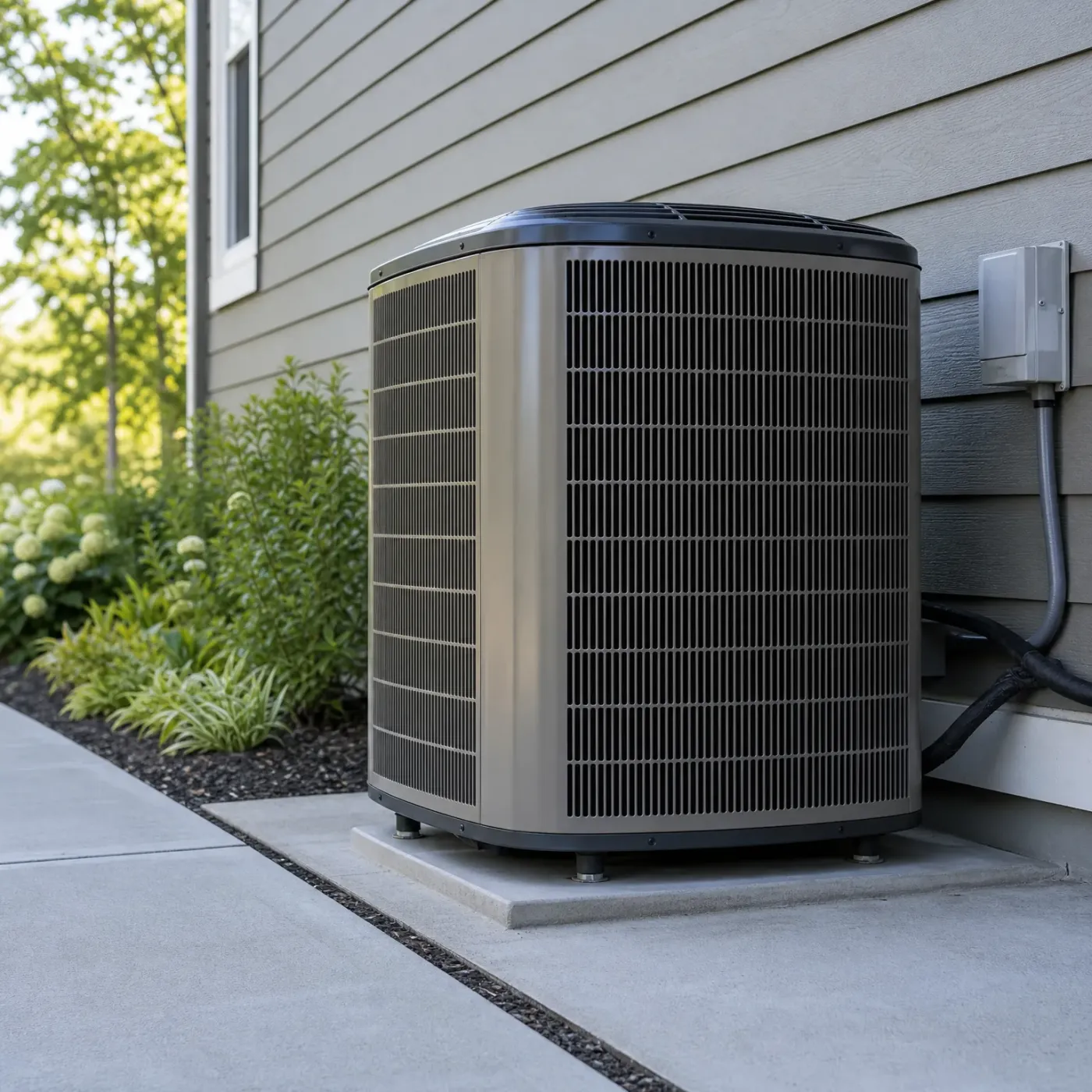
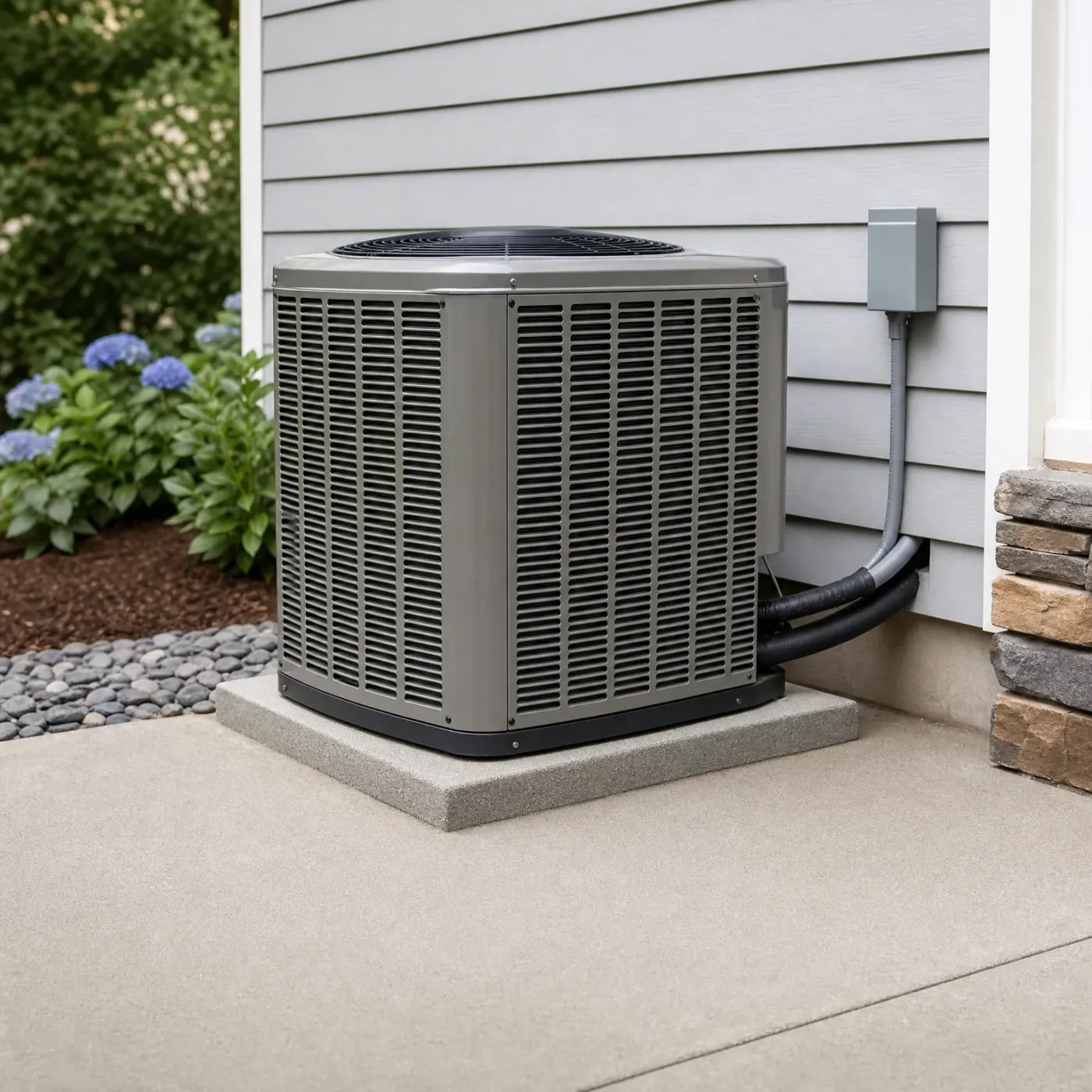
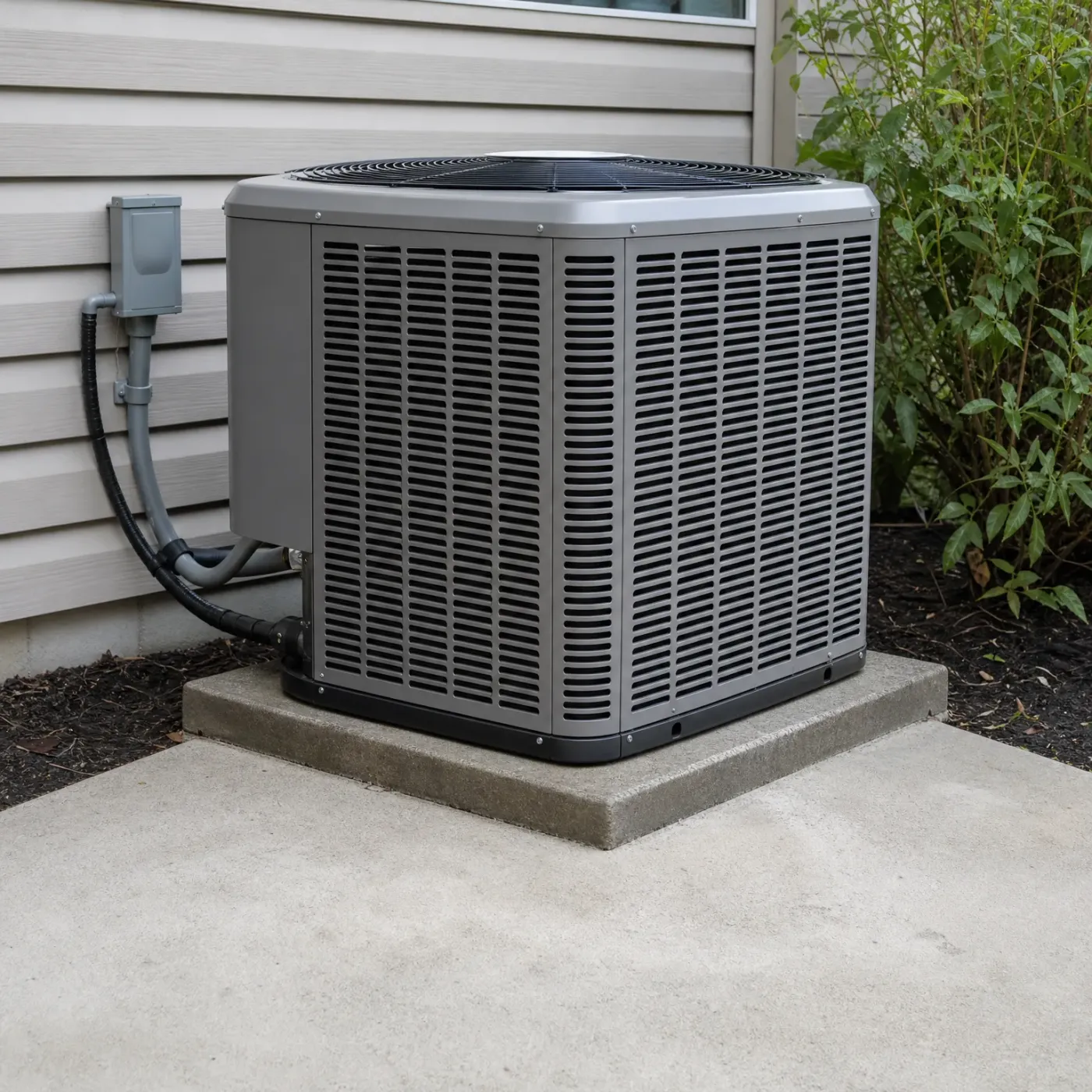
A single-stage unit, running as it should
This is a single-stage condenser doing its job: full blast until the house hits temperature, then off. On a mild day that's fine. On a humid Georgia afternoon it cools the air fast and shuts down before it's pulled much moisture out, so the house feels cold and still damp.
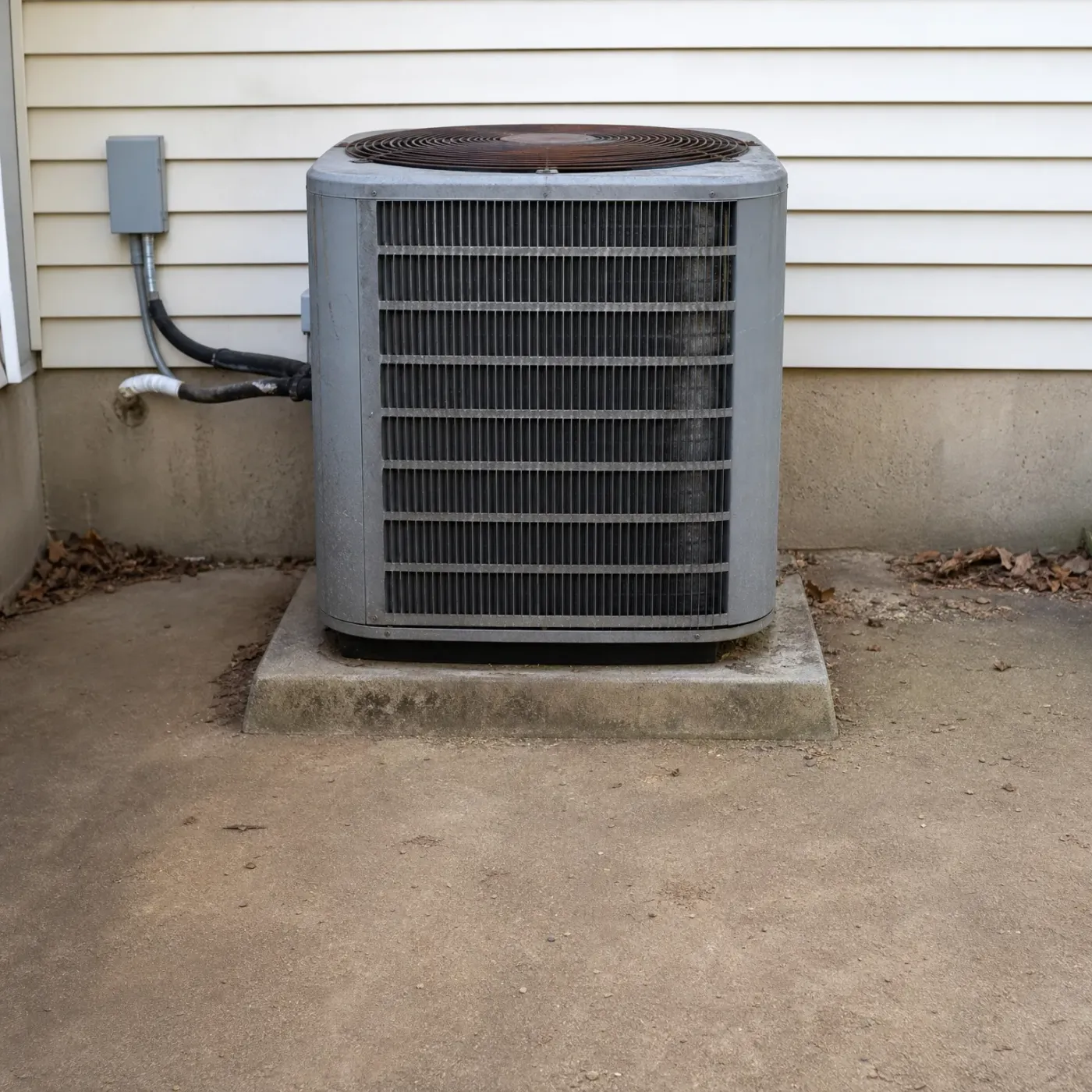
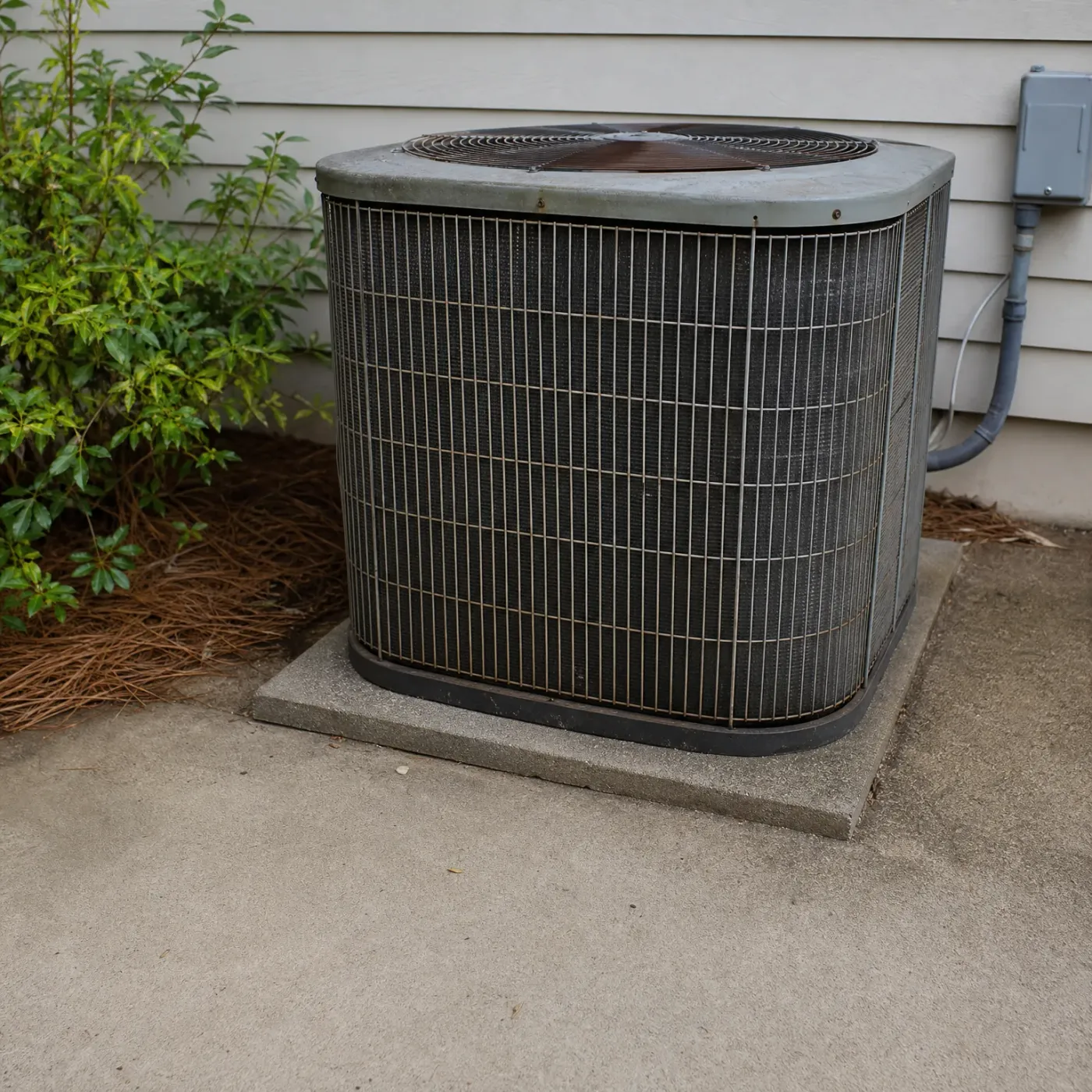
A system worn down by years of that cycling
Years of full-blast starts and stops wear on a unit faster than steady running does. The rust on this shroud and the dirt packed into the fins are what that looks like after enough summers. A two-stage system, cycling less hard, puts less of that strain on the equipment.
1
The thermostat calls for cooling and the compressor starts on low.
2
Low stage runs long cycles, pulling moisture out of slow-moving air.
3
A sensor tracks how fast the house is cooling.
4
If low stage can't keep up, the compressor shifts to high.
Before you get your air conditioner installationAfter you get your air conditioner installation
Power costs 14.74 cents per kilowatt-hour statewide
At 14.74 cents per kilowatt-hour, every hour your compressor runs on high costs more than an hour on low. A two-stage system spends most of a Georgia summer on that low setting, so the rate hits a smaller share of your runtime than it would on a single-stage unit working full blast all afternoon.
EIA-861 2025 statewide residential average
So is it worth it
For a Georgia home, yes. A two-stage system spends the summer working the air low and slow instead of blasting it cold and shutting off, and that's what gets the humidity down along with the temperature. You've seen how the two compare side by side and what the low setting is actually doing while it runs. That's the whole answer.
What's left is finding someone to put one in, and that part is usually the slow part: looking up contractors, calling a few, walking each one through the same details about your house, then sitting with quotes trying to compare them against each other. Send the form and that work is off your plate. You're not left to sort through it alone.
It's off your list after this
Describe your air conditioner job once, to one pro.