Profile view of a bearded man wearing a black baseball cap and a dark gray T-shirt against a plain light background.

Is a variable-speed AC worth it in Georgia

Step 1 of 3: Equipment

For most Georgia homes, yes. A variable-speed air conditioner adjusts its output to match the heat and humidity outside instead of running at one speed until the thermostat is satisfied, then shutting off. That matters here because the air is humid for most of the year, and a system that runs longer at a lower speed pulls more moisture out of the air than one that blasts cold air and stops. The result is a house that feels drier at the same temperature, fewer swings between too cold and too sticky, and less wear from constant starting and stopping. Since most homes here heat with electricity, the same unit often handles both jobs, so the upgrade carries into winter too. It costs more to install than a single-speed system. Where summers run long and muggy, most homeowners find the comfort difference is the whole reason to have air conditioning in the first place.

An outdoor air conditioning condenser unit on a concrete pad beside a house with light blue horizontal siding, with a shrub to the left and a conduit and disconnect box on the wall to the right.
Before you get your air conditioner installation
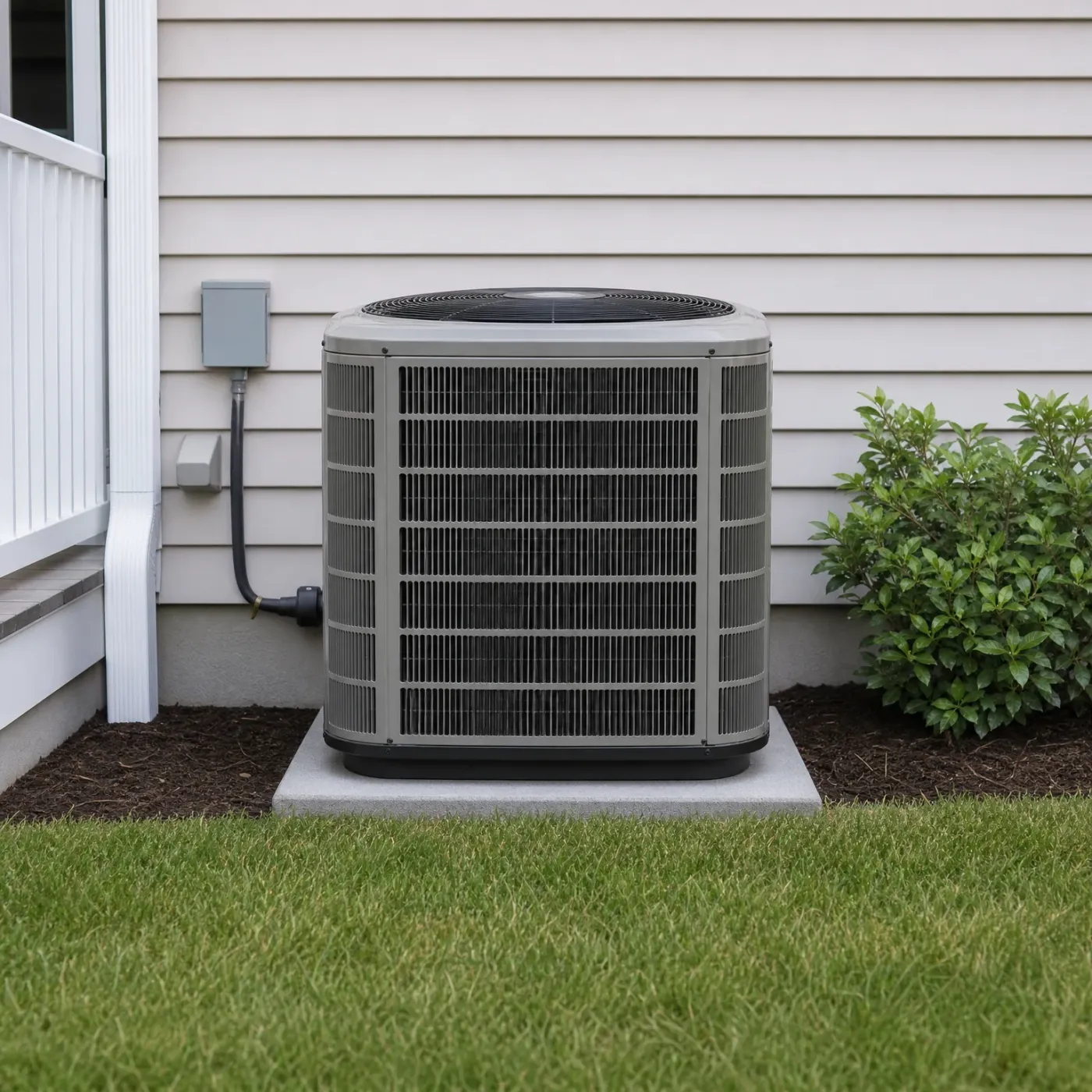
An outdoor air conditioning condenser unit on a concrete pad beside a house with horizontal lap siding, with a gray electrical disconnect box and conduit on the wall, mulch bed and shrub to the right, and mown grass in the foreground.
After you get your air conditioner installation
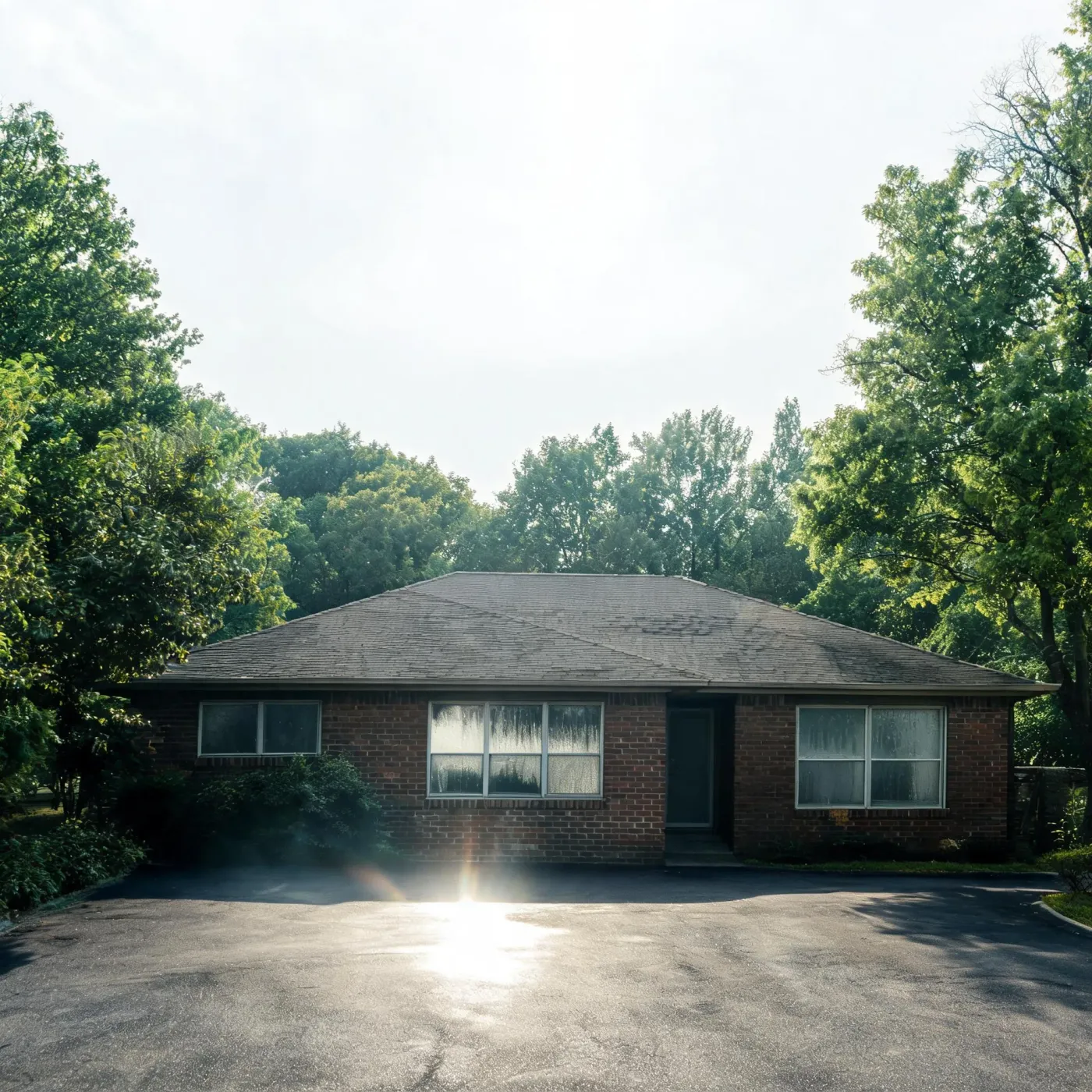
A single-story brick house with a hipped shingle roof, large front windows and a central door, fronted by a wide paved driveway with sun flare, surrounded by green deciduous trees.

Georgia summers average a 68°F dew point across June, July and August, according to NOAA. That's thick, sticky air, the kind that makes a room feel damp even when the thermostat says it's cool enough. A single-speed system cools the air fast, then shuts off before it has pulled much of that moisture out. A variable-speed unit runs longer at lower output, moving air across the coil steadily, so it wrings out more humidity along the way. You'd notice it as a house that feels dry and even, not one that swings from cold and clammy to warm and sticky between cycles.

NASA POWER T2MDEW county cells weighted by homes

Variable-Speed vs Single-Speed AC

Variable-speed

  • Runs at low output for long stretches, which pulls moisture out of the air steadily instead of in short bursts between shutoffs.
  • Holds the house closer to one indoor humidity level all day, so a room doesn't feel damp even when the thermostat says it's satisfied.
  • Costs more to install than a single-speed unit of the same tonnage.
  • Stays quieter most of the time because it spends most of its hours at a low speed, not full blast.
  • Needs a matched thermostat and controls to run its low and mid speeds, so not every existing setup can just be swapped over.
  • Electricity is the main heating fuel in most Georgia homes, so this unit is working against the same power bill the furnace or heat pump already draws on.

Single-speed

  • Runs at full output until the thermostat is satisfied, then shuts off completely until the temperature climbs again.
  • Cycles on and off more often through a muggy Georgia afternoon, and each shutoff stops the moisture removal until it kicks back on.
  • Costs less to install than a variable-speed system.
  • Controls are simpler, so it works with a basic thermostat without special matching.
  • Tends to leave the air feeling cooler but not as dry, since the blast of cold air satisfies the thermostat before humidity catches up.
  • Parts and service are easier to find almost anywhere, since this type has been standard for decades.
A man in a blue sweatshirt reclines with closed eyes in a brown leather armchair in a living room with a bookshelf, houseplant, sofa, window, and a side table holding newspapers and a dark mug.
A bearded man in a gray pullover reclines with closed eyes on a brown leather sofa in a sunlit room with a window, framed picture, potted plant, and a wooden cabinet holding papers and a dark mug.
A man in a gray sweater leans back with closed eyes in a brown leather armchair beside a wooden side table holding a dark mug and a folded newspaper, with bookshelves and a window seat behind him.
A man in a green sweater reclines in an armchair with his eyes closed and a slight smile, beside a window with plants, a small table holding a mug and folded newspaper, and bookshelves behind him.

Does one room always feel muggy no matter what you set the thermostat to

Your old system might satisfy the thermostat fast and shut off before it has pulled much moisture out of the air. You notice it in the room that stays sticky even though the number on the wall says it's cool enough. You might hear it kick on and off all afternoon, especially once the heat sets in for the day. Some homeowners notice the air handler running loud for a few minutes, then going quiet, then starting again soon after. That start and stop is also wear on the compressor over time, and a house that never quite dries out can leave damp spots where mold gets a foothold, in closets or around windows that don't get much airflow.

  1. The compressor reads the heat and humidity outside and picks a speed.

  2. It starts low, often around 25 to 40 percent of full output.

  3. The indoor coil stays cold for long run times instead of short blasts.

  4. Slow airflow across the coil pulls more moisture out of the air.

A closed laptop and a cream mug of coffee on a coaster sit on a dark wooden table, with a potted plant at left and a kitchen counter, tiled backsplash and shelf of ceramics in the background.

What this feels like in your house

Picture August, the thermostat holding at 72, and your living room still feels clammy. That's your single-speed unit doing exactly what it was built to do: cool the air fast, hit the number, shut off. The moisture never gets pulled out because the system isn't running long enough to do it. A variable-speed unit changes that by running longer at a lower output, so the air actually dries out instead of just cooling down.

There's also what it does to your power use. Short bursts at full output draw more power at startup, over and over, all summer. A system that ramps up and down instead avoids that cycling, which matters in Georgia where electric rates are average but AC runs for months at a time. If you're ready to stop guessing and get a system sized and installed for your house, sending the form means you're done calling around, done explaining your attic layout to five different companies, done sorting through quotes that don't match. Someone qualified takes it from there.

A gray upholstered sofa with a textured cushion sits beside a dark round side table holding a vase of green foliage, with a table lamp and sheer-curtained window behind.
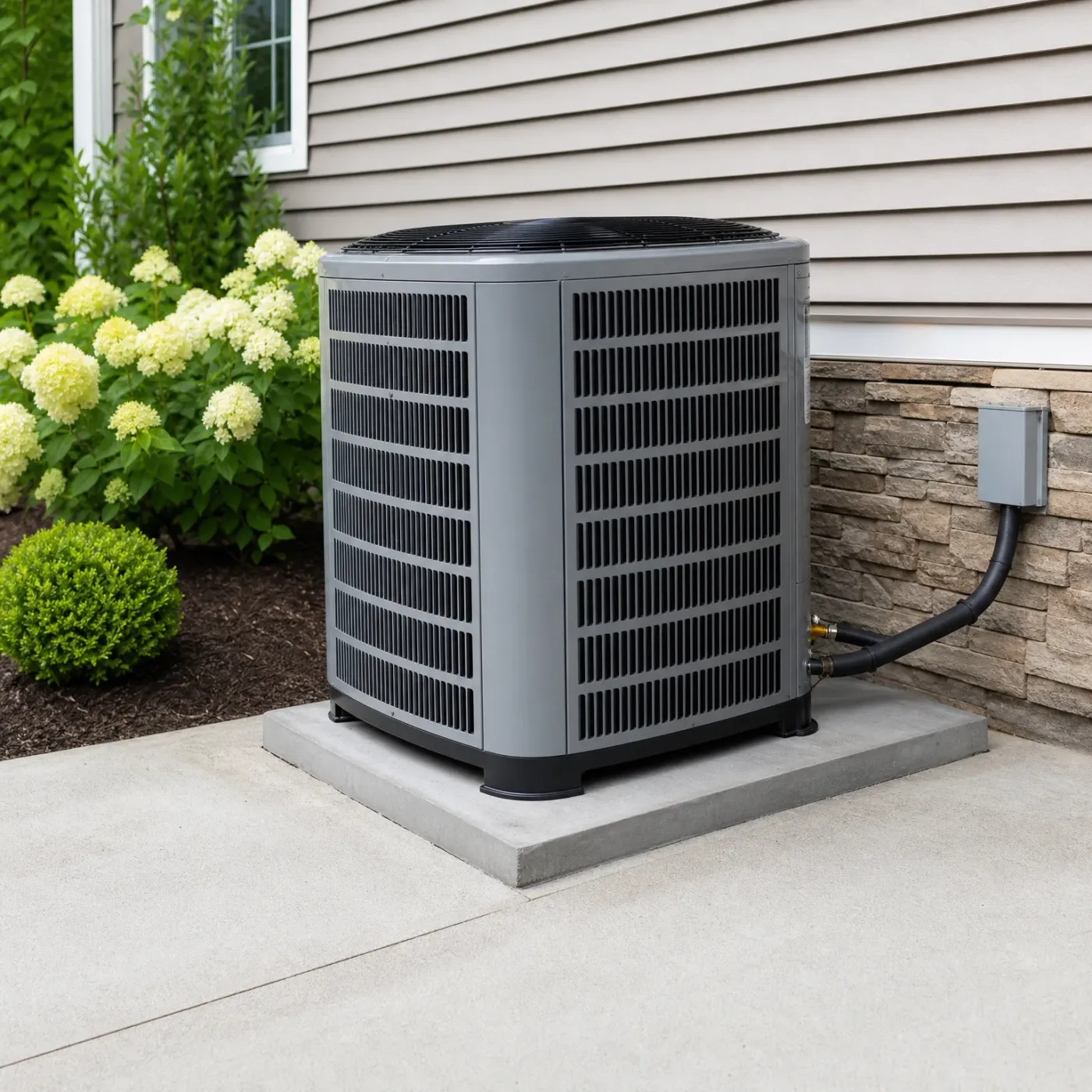
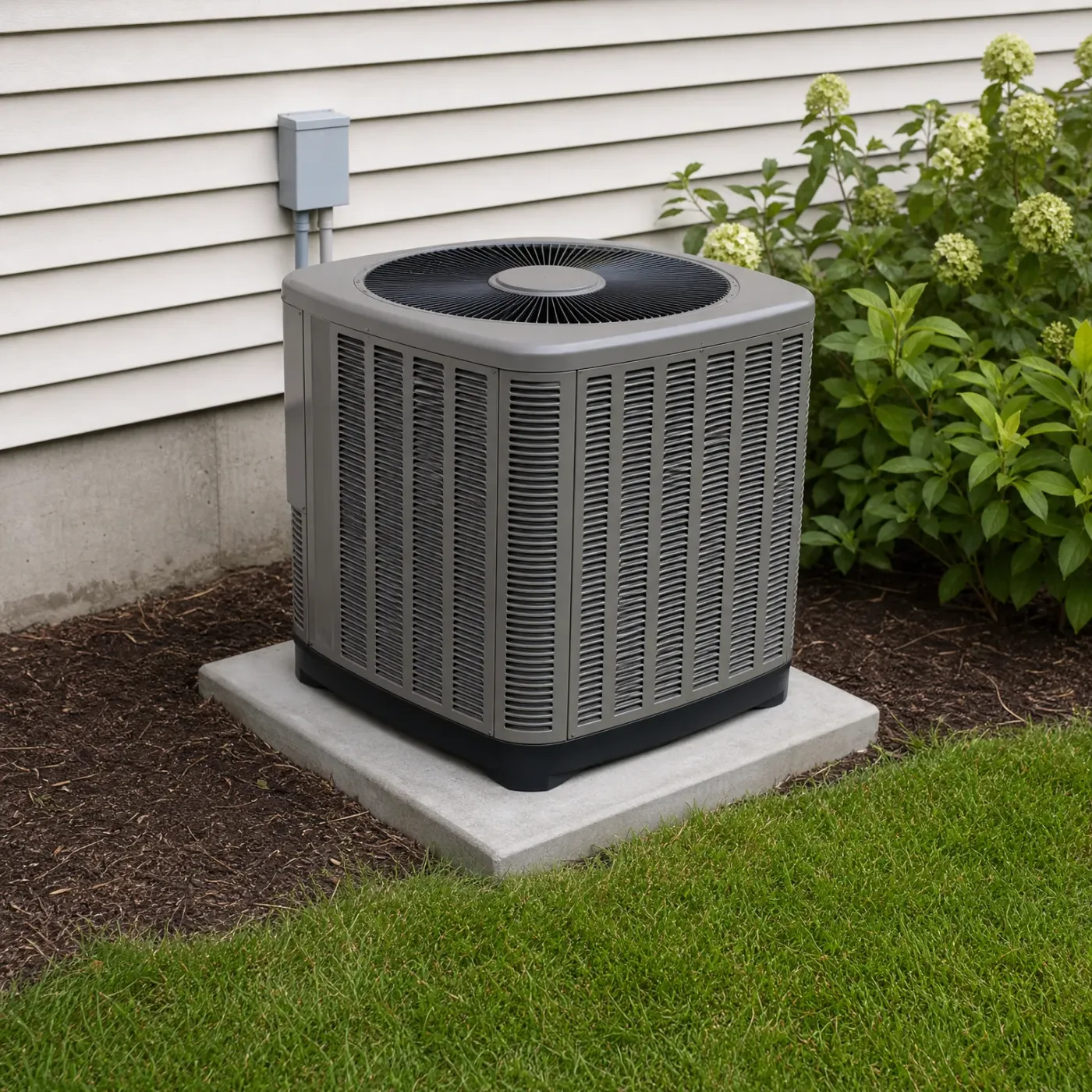
A gray outdoor air conditioning condenser unit on a concrete pad beside a house with horizontal siding and a stone veneer base, with refrigerant line and electrical disconnect box on the wall and flowering shrubs to the left.

A unit running as it should

This is a variable-speed system doing its job, cycling long and low next to the hydrangeas without strain. The fins stay clean, the lines stay intact, and the unit holds the house at one humidity level through a muggy afternoon instead of fighting short bursts of cold air.

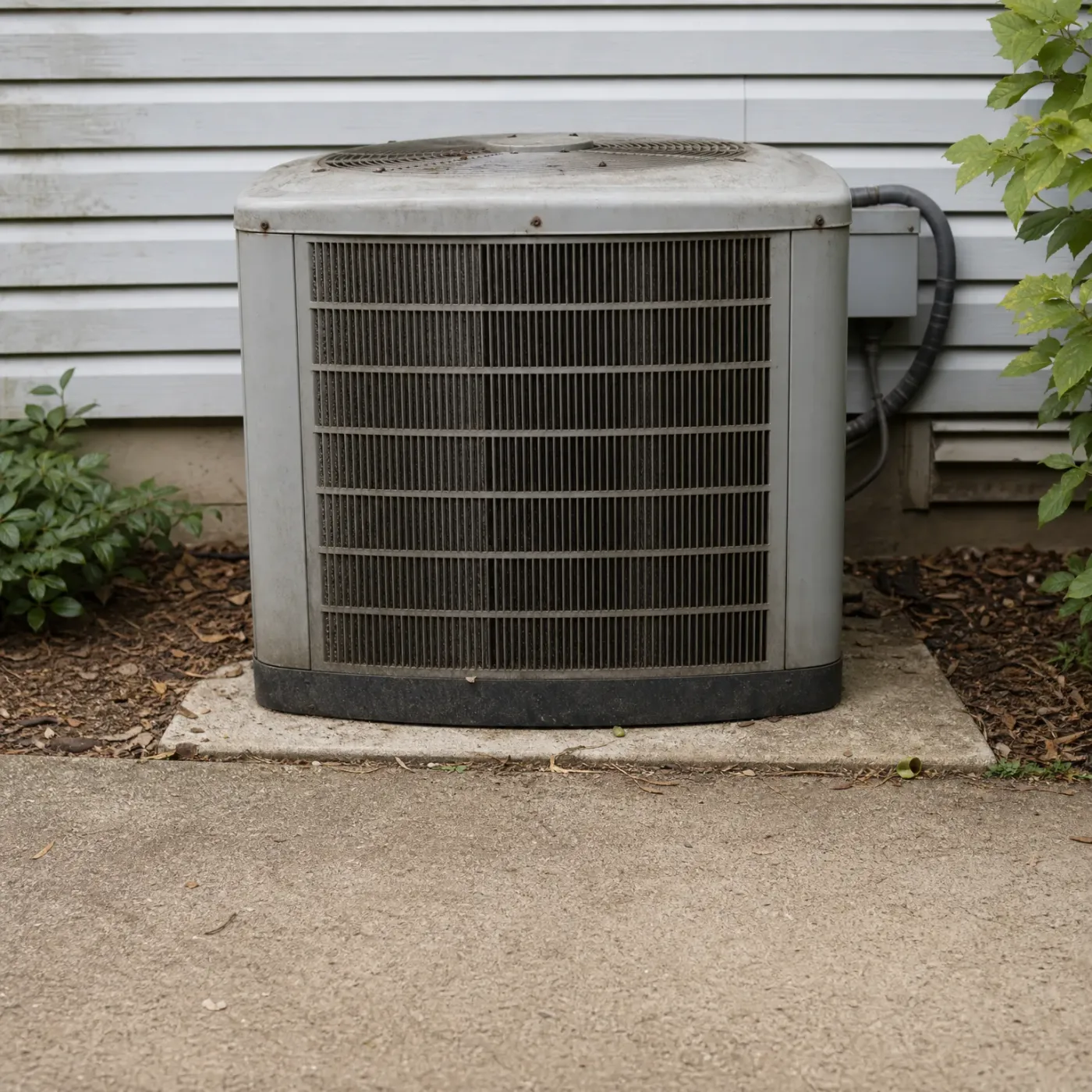
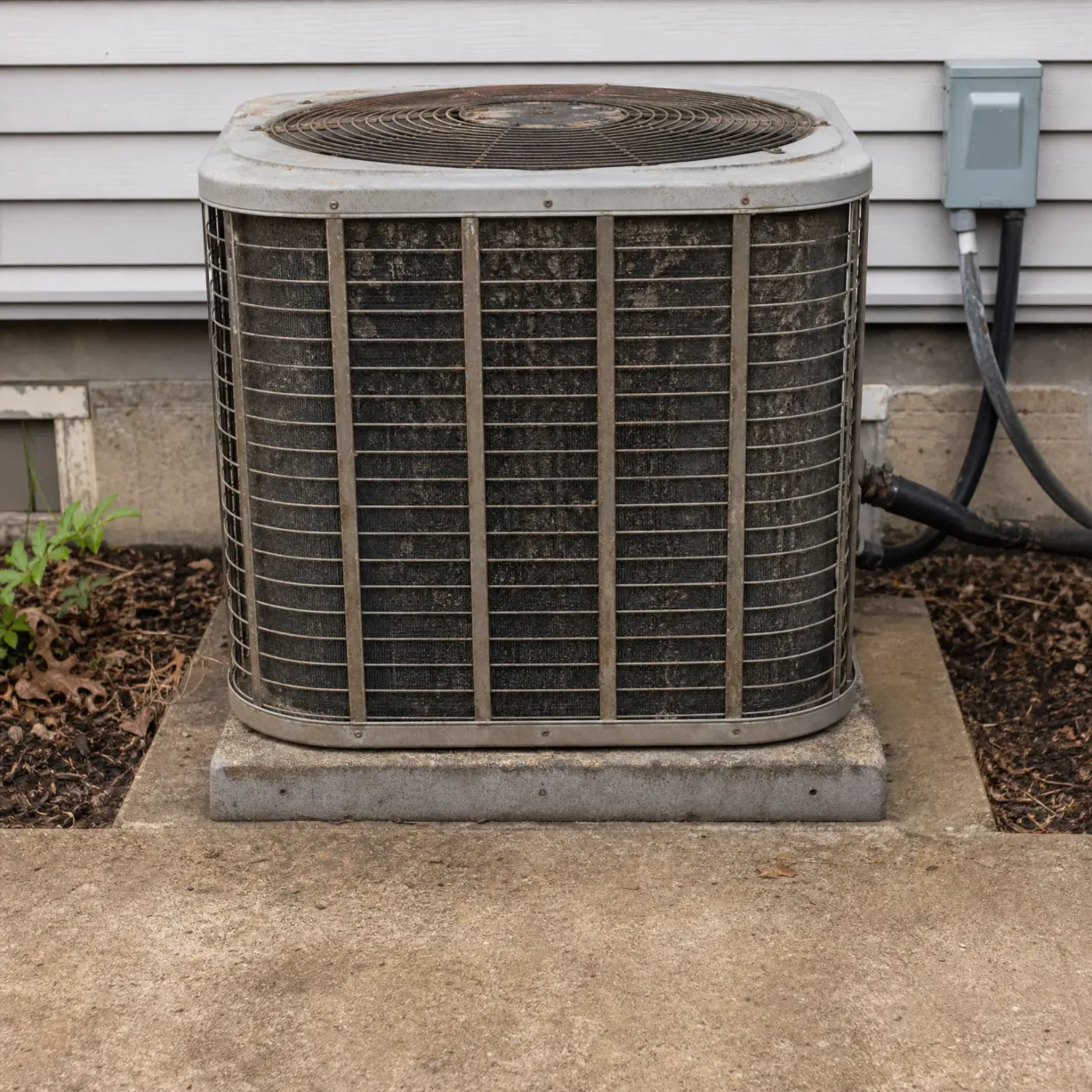
An outdoor air conditioner condenser unit on a concrete pad beside a house with light gray horizontal siding, with mulch and green shrubs on either side and a concrete walkway in the foreground.

A single-speed unit on its way out

Dirt and weathering like this slow the airflow a condenser depends on, and an aging single-speed unit already runs in short, hard bursts to begin with. Add grime to that and summer humidity gets harder to shake, even with the thermostat holding steady.

An older man with gray hair and a beard leans back on a beige sofa with his eyes closed, in a sunlit room with potted plants, a wicker chair and large windows behind him.
A woman in a cream knit sweater sits in an armchair with her eyes closed and a slight smile, beside an open window showing orange autumn foliage, with a mug, books and a lit candle on a small side table.

Send one request and you're done looking

Skip searching for an air conditioner pro and answer a few questions instead.

It costs nothing to send, and you don't have to hire anyone.

A single-speed system cycles off and on 3 to 7 times an hour on a hot afternoon, and the compressor draws the most power in that first jump to full speed.

A variable-speed compressor starts low and stays there, so it avoids most of those jumps, which is where a steady electric bill either holds or climbs.

Power costs 14.74 cents per kilowatt-hour statewide

At 14.74 cents per kilowatt-hour, every degree your old unit overshoots or every short cycle it runs adds up on the meter. A variable-speed system spends more time at low output, so it draws less power to hold the same temperature, and that shows up as a smaller number on your bill.

EIA-861 2025 statewide residential average

A gray outdoor air conditioner condenser unit on a concrete pad beside a house with horizontal vinyl siding, surrounded by mulch, flowering shrubs, and lawn.

Clean coil, steady run

The condenser sits beside the wall, fins open to the air, the pad clear. A unit kept like this breathes freely, so it can hold a long, low speed through a muggy afternoon without working harder than it has to.

A weathered outdoor air conditioning condenser unit on a concrete pad beside a house with light horizontal siding, an electrical disconnect box and conduit on the wall, and mulched soil on either side.

Coil caked in grime

Dirt and debris have packed into the fins and the cage around them. Airflow across a coil this soiled drops, so the unit has to run longer and harder to move the same heat, whether it's single-speed or variable.

How does a variable-speed AC know what speed to run at?

You've seen the steps already: the compressor reads conditions outside and starts low, often 25 to 40 percent of full output. What's not obvious is where that reading comes from. Your old unit never did this. It had one speed, and the thermostat just told it on or off. A variable-speed system is making a decision every few minutes, and that decision comes from somewhere specific.

A sensor on the outdoor unit measures the temperature, and a control board does the rest

The outdoor unit has a sensor that reads the air temperature around it. That reading goes to a control board, inside either the outdoor unit or the air handler depending on the brand, and the board picks a compressor speed to match. As the temperature climbs through a Georgia afternoon, the board raises the speed in small steps rather than jumping straight to full output. Indoors, a sensor at the evaporator coil checks how cold the coil is running and feeds that back to the same board. If the house isn't cooling fast enough at the current speed, the board raises it again. None of this needs you to touch the thermostat. The system is checking itself continuously, the way a single-speed unit never could.

A dim bedroom with an unmade bed beside a window holding a box fan, with sheer curtains, a lamp at right and a large blank wall at left.

It's past nine and still warm enough that the box fan in the window isn't doing much but moving the heat around. The room upstairs holds the day's heat longer than the rest of the house, and tonight it hasn't let go of it yet. You're on top of the sheets, not under them. The air feels heavy, the kind that sits on your skin even after the sun's been down for hours. Downstairs the thermostat reads 71, same as it's read for the last hour, but up here it doesn't feel like 71 feels anywhere else in the house. You can hear the unit outside cycle off. Somewhere past midnight you'll stop noticing the fan and just lie there waiting for it to cool enough to sleep.

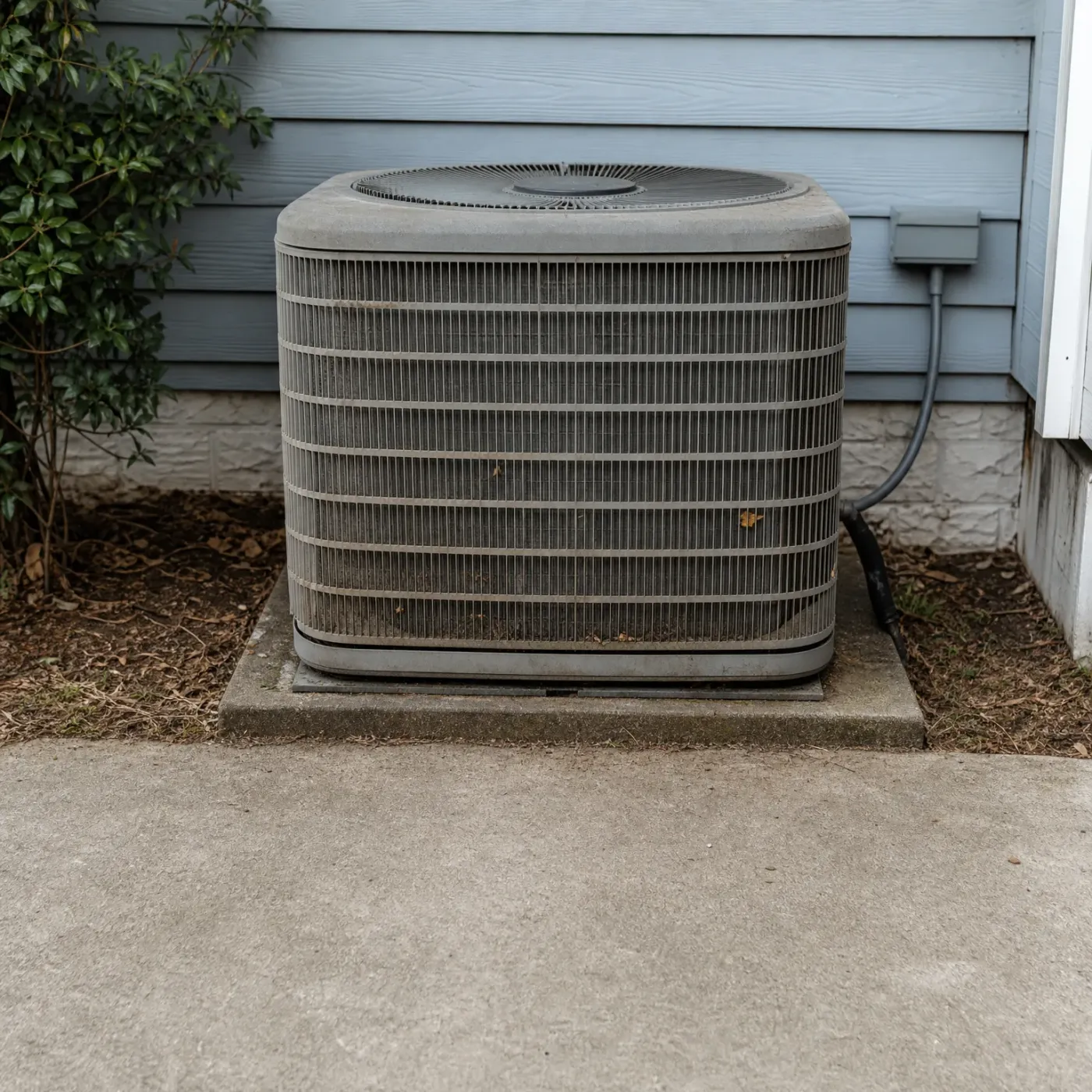
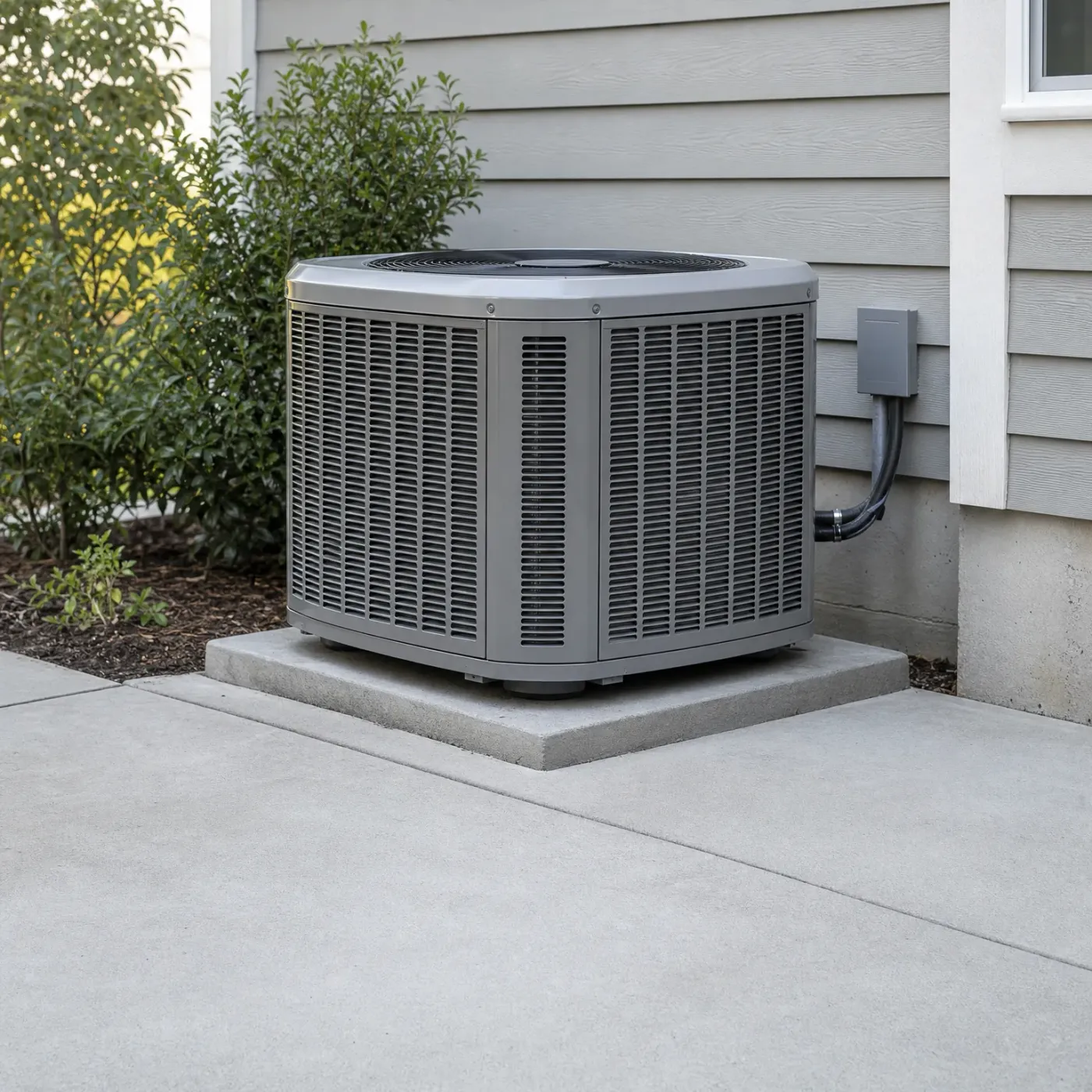
A gray outdoor air conditioner condenser unit on a concrete pad beside a house with horizontal lap siding, with a wall-mounted disconnect box and conduit to its right and shrubs to the left.
A condenser like this holds a long, steady cycle, which is how it keeps a humid Georgia afternoon from feeling damp indoors.
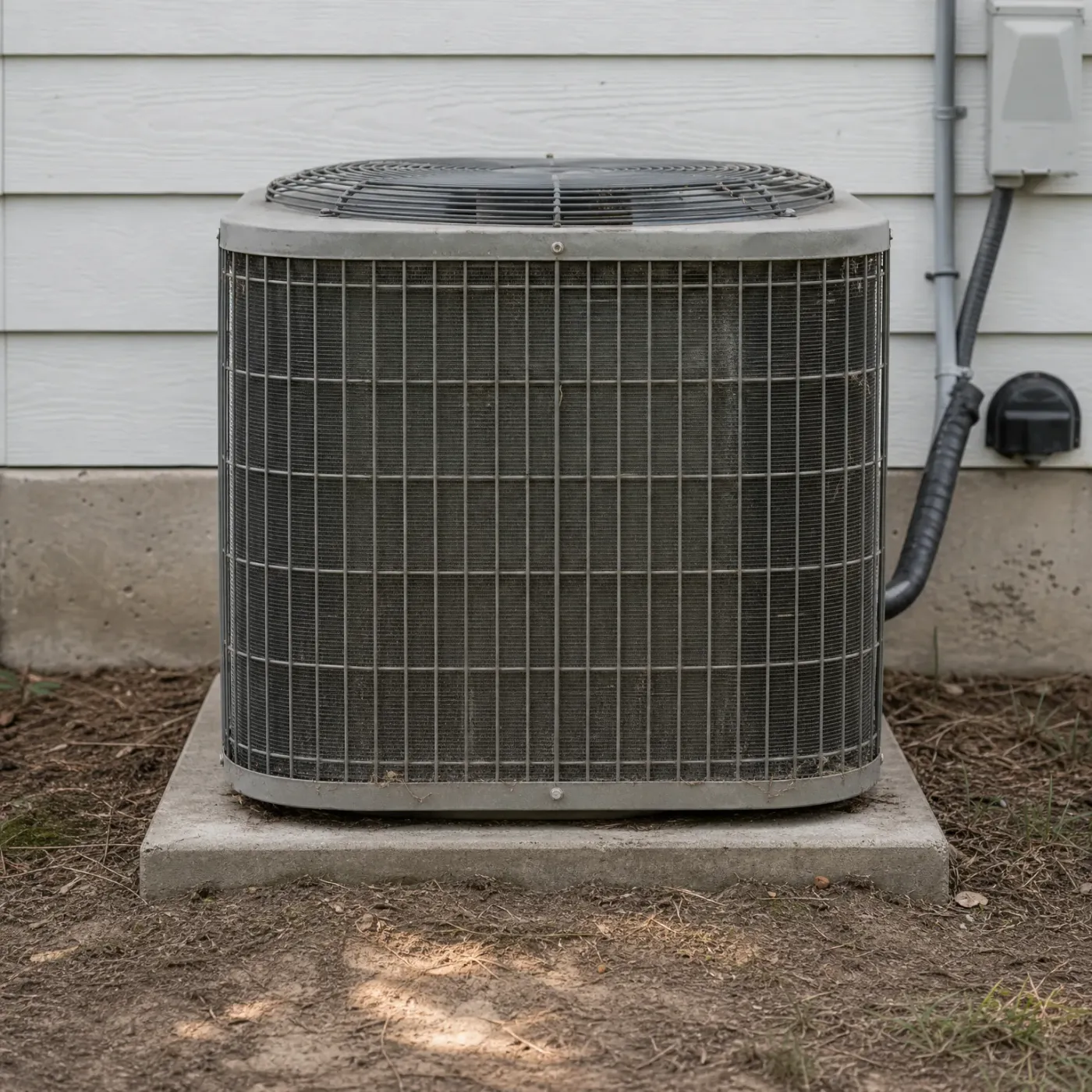
An outdoor air conditioning condenser unit on a concrete pad beside a house with horizontal lap siding, with a conduit and electrical disconnect box on the wall at right.
A coil this dirty makes a single-speed unit work harder for the same cooling, and it still shuts off before the air feels dry.

What this comes down to

  • A variable-speed AC is worth it for most Georgia homes because it runs low and steady through humid stretches instead of shutting off before the air dries out.
  • A single-speed unit can satisfy the thermostat and still leave a room feeling damp, since it cools fast but doesn't run long enough to pull moisture out.
  • Fewer jumps to full speed means less strain at the moment power draw is highest, which is where a single-speed system spends most of its cycle.
  • A dirty coil or a clogged filter cancels out the advantage, so the equipment only holds its long, low cycle when it's kept clean.
  • Once you request installation, you're done calling around, comparing bids and repeating your situation to contractor after contractor.
  • The dew point in a Georgia summer doesn't change based on which system you have, but how much of that moisture ends up indoors does.

A variable-speed air conditioner earns its keep in Georgia because the problem it solves, humid air that lingers after the thermostat is satisfied, is the problem this climate hands you most of the year. A single-speed unit isn't broken when a room still feels damp at the right temperature. It's just built to cool fast and stop, not to run long enough to dry the air out. Variable-speed equipment holds a low, steady cycle instead, which is why the house feels even and why the compressor spends less time at the power draw that costs the most to hit. None of that holds if the coil is dirty or the filter is clogged. The equipment only delivers what it's built for when it's kept clean, same as any system. What changes if you install one isn't the weather. The dew point outside is the same either way. What changes is how much of that moisture makes it indoors before the system catches up to it. Where this actually saves you something is the part that has nothing to do with the equipment. Once you send the request, you're not the one calling three companies, explaining the damp room in the back of the house to each one, and sitting with bids you can't quite compare. That part of it is done. What's left is a contractor who already knows what you're asking for.

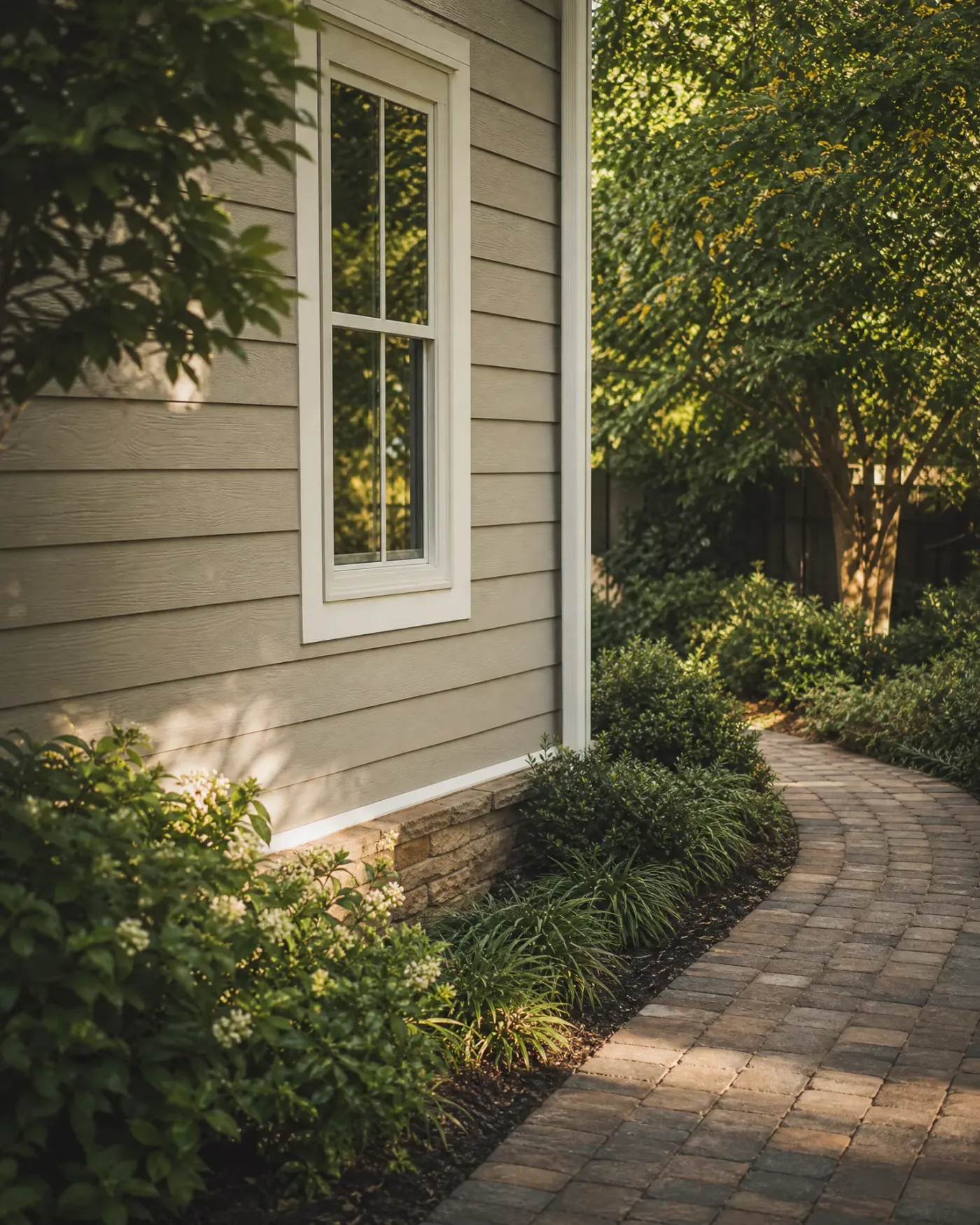
A curving paver walkway runs alongside a house with beige lap siding and a white-trimmed window, bordered by low shrubs, grassy plants, and trees in sunlight.
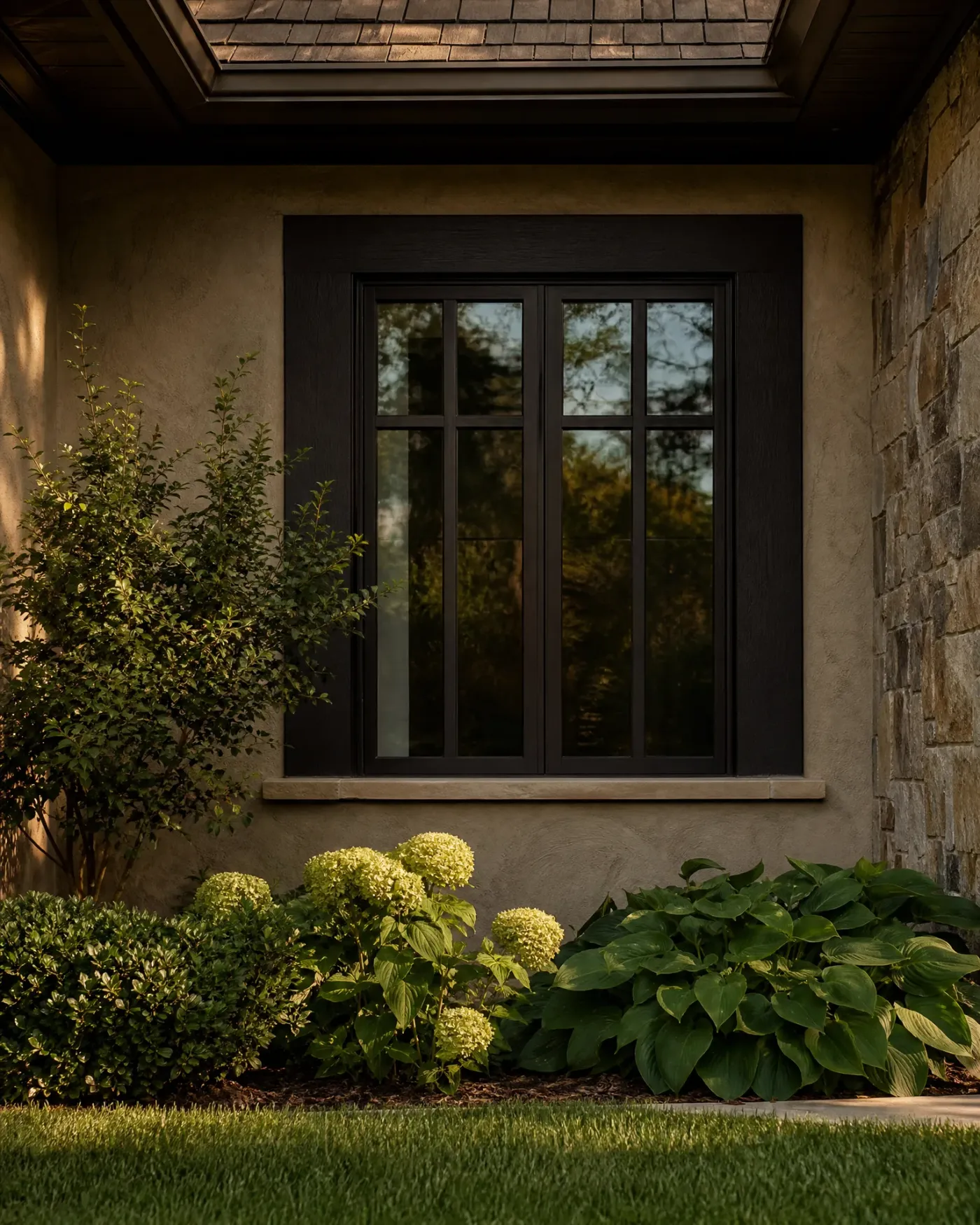
A dark-framed casement window with divided upper panes set in a stucco wall beside a stone-clad section, with hydrangeas, hostas and trimmed shrubs in a mulched bed above a lawn.
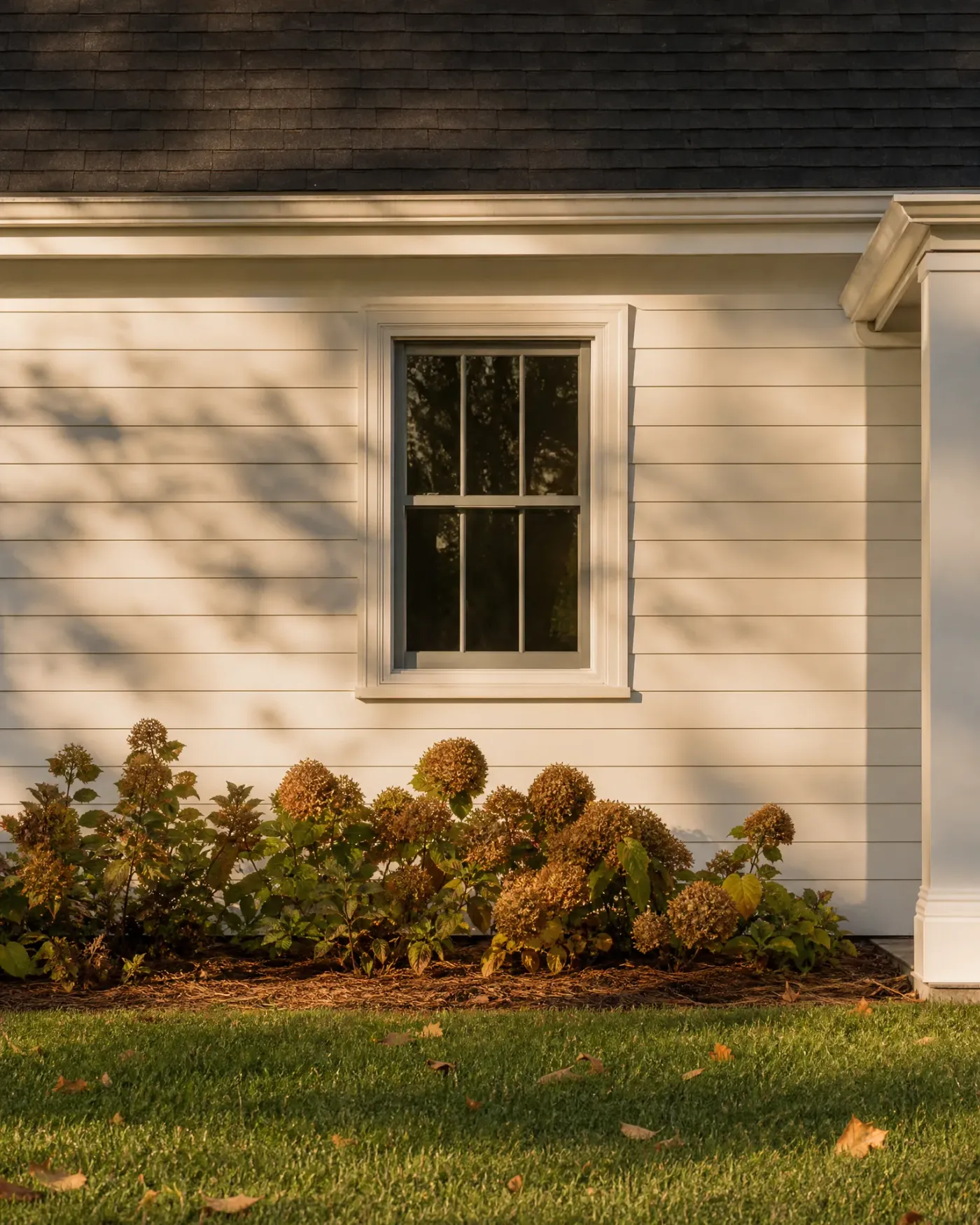
White horizontal lap siding wall with a single six-pane double-hung window, above a mulched bed of hydrangea shrubs with browning blooms, bordered by mown grass in low sunlight.
Interior corner with tan plaster walls, a potted olive tree in a large terracotta urn beside a floor-to-ceiling window, and a wooden bench with a beige cushion on a herringbone brick floor partly covered by a woven jute rug.
A wooden bench beneath a window holds a green linen cushion and a fringed cream throw, with a woven basket stored underneath on a wood plank floor.

Finding a pro stops being your job

One form replaces the calls you'd make to find an air conditioner pro.

Send my request

No charge to send it. You decide if you hire them.