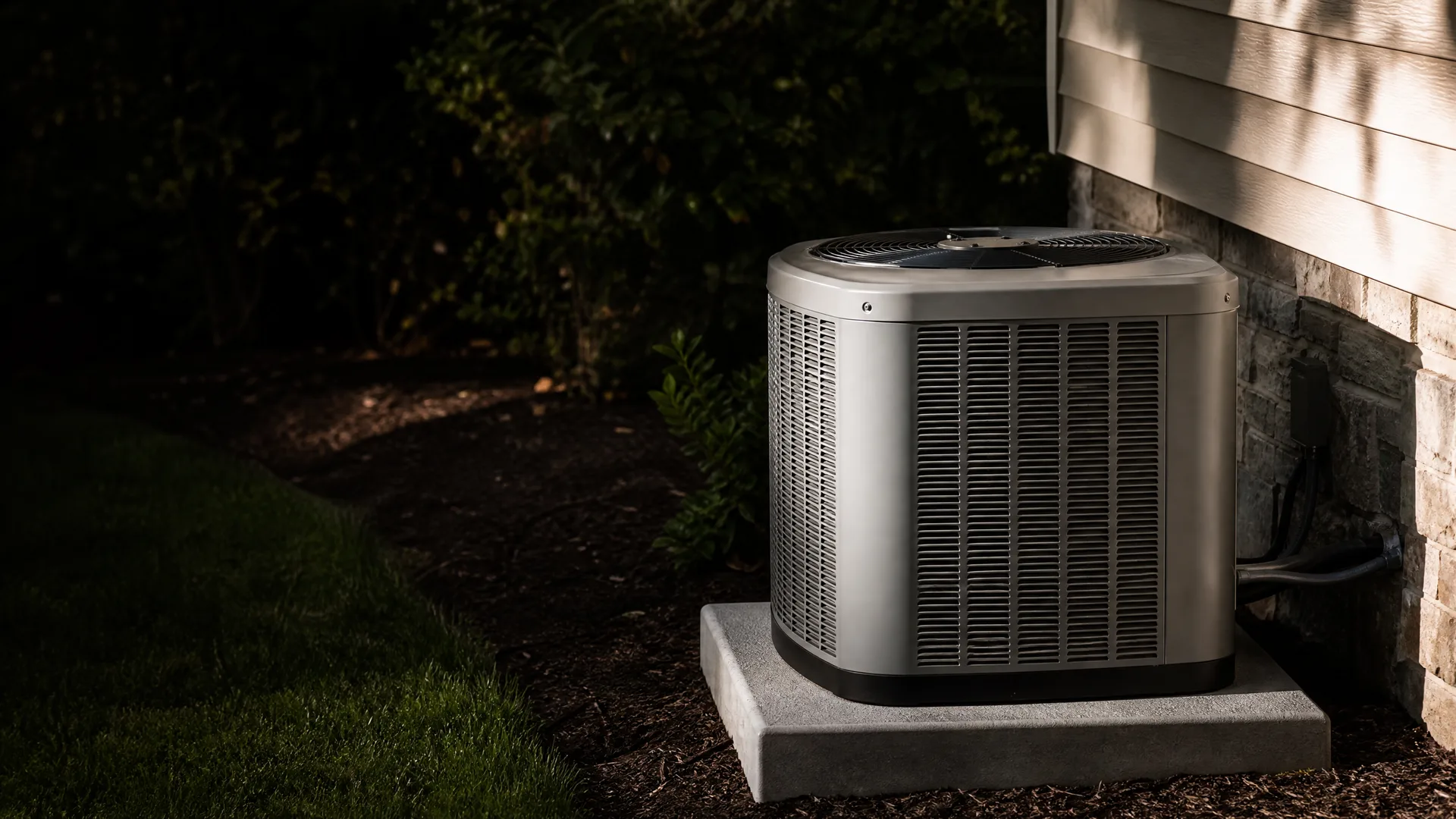
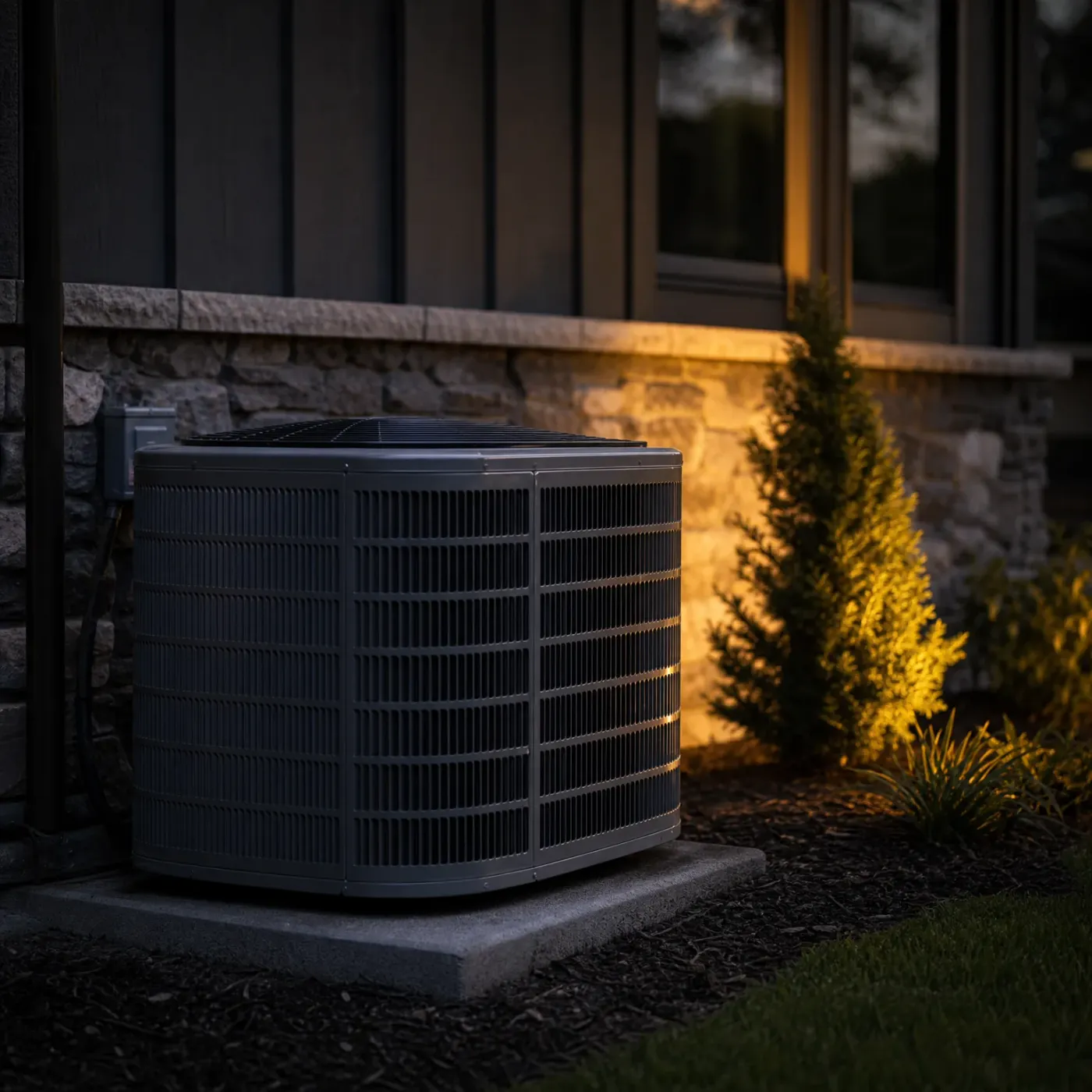
An outdoor air conditioning condenser unit on a concrete pad beside a house with stone veneer and vertical board siding, with a small shrub and mulch bed lit by a ground light at dusk.

A local pro for your air conditioner repair

Why your AC smells like burning in Georgia

A burning smell from your AC in the middle of a Georgia summer gets your attention fast. It can mean dust burning off a coil, a motor strained from running nonstop, or wiring that needs a closer look. This page walks through what causes each kind of smell and what it means for your system. Skip the search for someone qualified to check it, a licensed contractor who handles this can reach out directly.

Find an air conditioner pro

A burning smell from your AC usually means one of two things. Dust and lint sitting on the heating elements or coil can singe when the system kicks on, especially if it has sat idle for a while, and that smell clears up within the first several minutes of a cycle. A smell that doesn't go away is a different problem: a motor bearing wearing out, a belt or fan rubbing somewhere it shouldn't, or wiring and insulation getting hot enough to scorch. In Georgia, your AC runs for months at a stretch without much of a break, and that kind of steady, heavy use is what pushes a strained motor or a loose electrical connection toward failure. A burning smell that lingers past a few minutes, or shows up more than once, means something inside the unit is overheating. Running it in that condition risks a bigger repair, or a fire, so it's worth having someone look at it before you run the system again.

A smiling bearded man in a navy crewneck sweater sits at a dinner table with a glass of red wine, plates and glasses in the foreground, in a dimly lit room with a lamp and framed picture behind him.
A woman in a dark gray sweater reclines on a light sofa with eyes closed and a slight smile, under a textured gray blanket with an open book resting on her lap, with a lit table lamp and plant in the background.

A dust smell fades. An electrical one doesn't, and that difference tells you what you're dealing with. If the odor is more rubbery or like hot plastic, look at the blower motor and the capacitor first. A motor that's worn draws more current than it should, and that extra heat can melt the insulation on the wires running near the housing. A weak capacitor adds to the problem, because the motor has to work harder just to start and keep running, pulling more power than that wiring was ever sized for. Sometimes the smell carries a faint scorched note, almost like smoke. That usually means a wire nut, a connector or the circuit board itself is arcing somewhere it shouldn't be. The outdoor unit isn't exempt either. Georgia summers keep the compressor and fan motor working for hours at a stretch, and windings under that kind of constant load can start to break down. The real tell is whether the smell comes back every time the system cycles on. If it does, something out there is actively overheating, not just burning off a little dust.

When the smell means electrical

  • A rubbery or hot plastic smell usually points to a blower motor or capacitor overheating rather than dust burning off.
  • The blower motor pulls more current as it wears, and that extra heat can melt the wire insulation near the motor housing.
  • A failing capacitor makes the motor work harder to start and run, so it draws more power than the wiring was sized for.
  • An electrical smell that includes a faint smoke or scorched odor means a wire nut, connector or circuit board may be arcing.
  • The outdoor unit can also produce a burning smell if the fan motor or compressor windings are breaking down under constant summer load.
  • A smell that returns every time the system cycles, instead of fading after a few minutes, means something is actively overheating, not just dust.
A smiling woman with dark shoulder-length hair in a cream V-neck sweater sits at a marble counter with a glass of red wine, with a kitchen and softly lit living room behind her.
A woman in a dark green sweater laughs while seated at a marble kitchen island with a glass of red wine, with open shelving, cabinets and a living room visible behind her.
A woman with long dark hair in a cream knit sweater laughs while looking off to the side, seated at a counter with a glass of red wine, in a dimly lit living room with a sofa, lamp, framed pictures and houseplant behind her.
A smiling woman with long dark hair in a beige sweater sits at a marble kitchen counter with a glass of red wine, with a dimly lit living room behind her.

What This Means for Your House

  • If the smell comes back every time the AC cycles on, it's not dust burning off anymore.
  • A burning smell paired with a tripped breaker means a wiring problem, not something to reset and ignore.
  • Running a system with a failing motor or bad wiring can turn a repair into a replacement if it keeps going.
  • Warm, muggy air sitting in the house while the AC is down is its own problem in a Georgia summer.
  • A smell that gets stronger or spreads past the indoor unit into the vents is worth shutting the system off for.
  • Georgia's electric rates don't swing, so a motor pulling extra current to keep running shows up on the bill before you smell it.

Once the smell stops being a one-time thing, it's telling you something about your specific unit. A smell that returns every cycle means the heat causing it is still there, not burned off and gone. If a breaker trips along with it, that's wiring telling you it can't carry the load safely, and resetting the breaker doesn't fix what made it trip. Keep running the system in that state and a motor on its way out or wiring that's been overheating can fail completely, turning what might have been a repair into a full replacement. That matters more in Georgia than it would somewhere mild, because shutting the AC off to be safe means sitting with warm, muggy air for however long it takes to get someone out. There's also the breaker itself: a motor pulling extra current to keep spinning costs more to run before it ever fails outright, and Georgia's power rates are steady enough that you'd notice the difference on a bill if you were looking for it. If the smell spreads past the indoor unit and into the air coming out of your vents, that's no longer a wait-and-see situation. Shutting the system off at that point protects the equipment and, more importantly, means you're not breathing whatever's burning. None of this means panic over a faint smell the first time the AC kicks on after sitting idle. It means paying attention to whether it repeats, whether it's paired with anything electrical, and whether it's getting stronger.

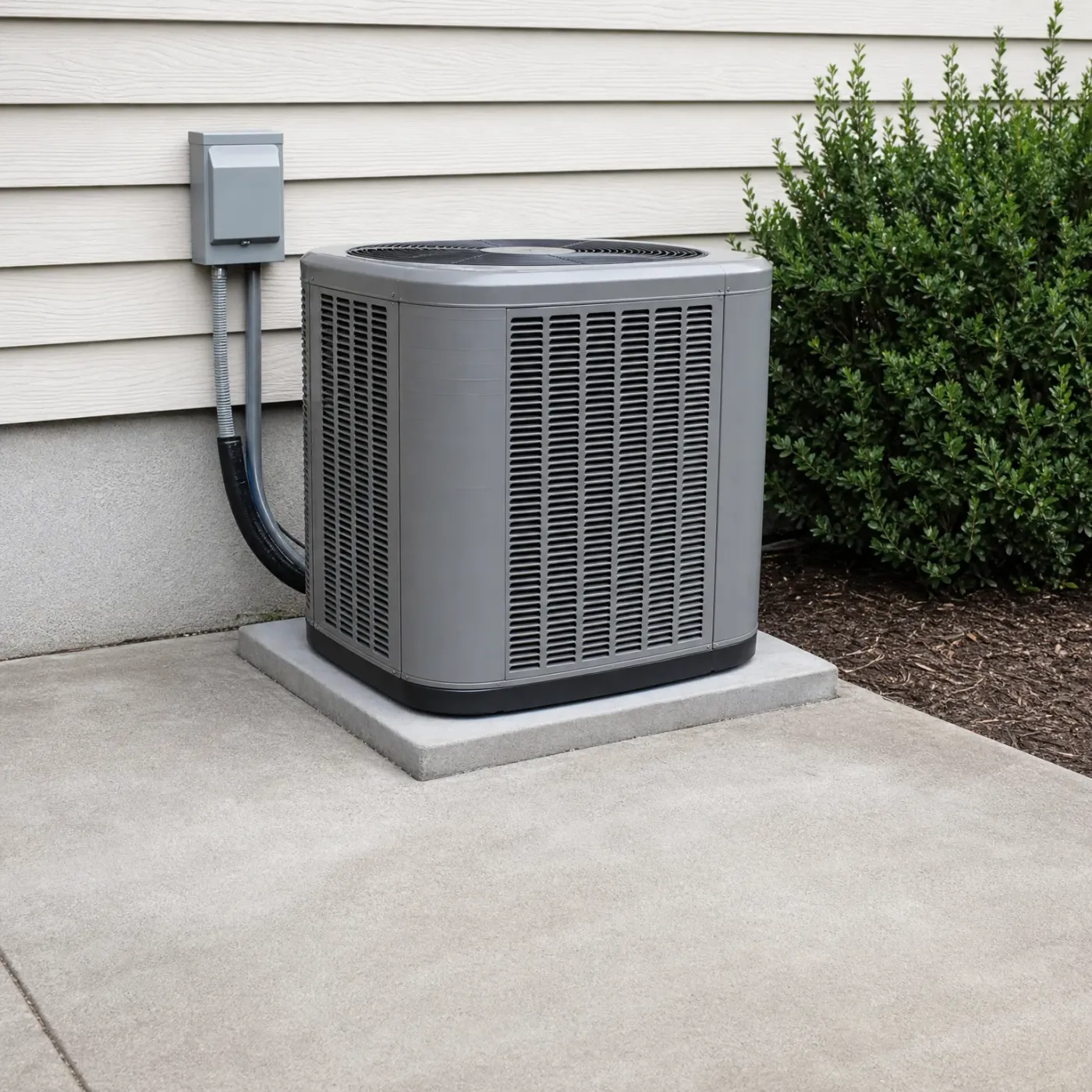
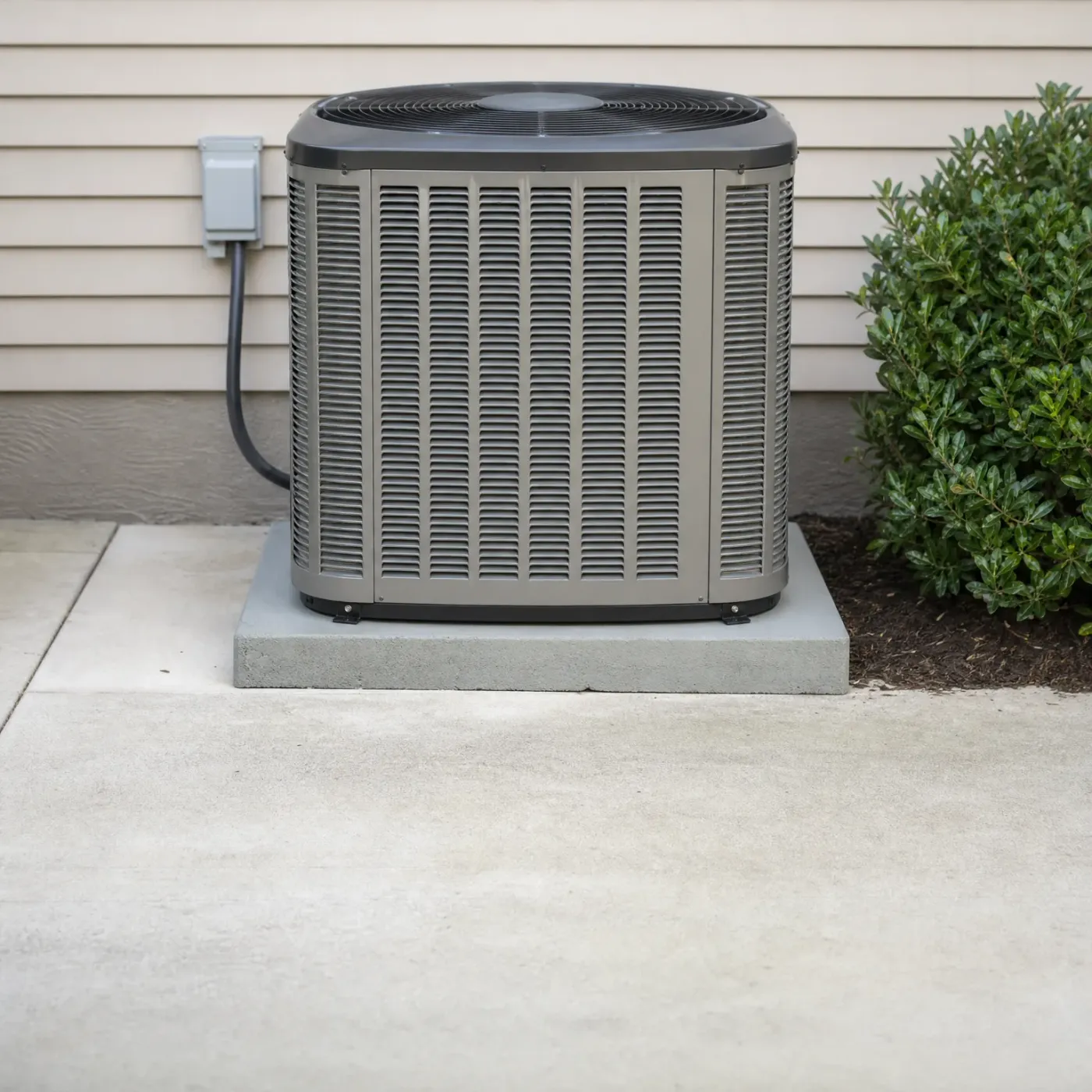
A gray outdoor air conditioning condenser unit on a concrete pad beside a house with horizontal lap siding, with a wall-mounted disconnect box and conduit to the left and a green shrub with mulch to the right.
A clean condenser like this one moves air through the coil without strain, so the motor and wiring inside stay at a normal temperature.
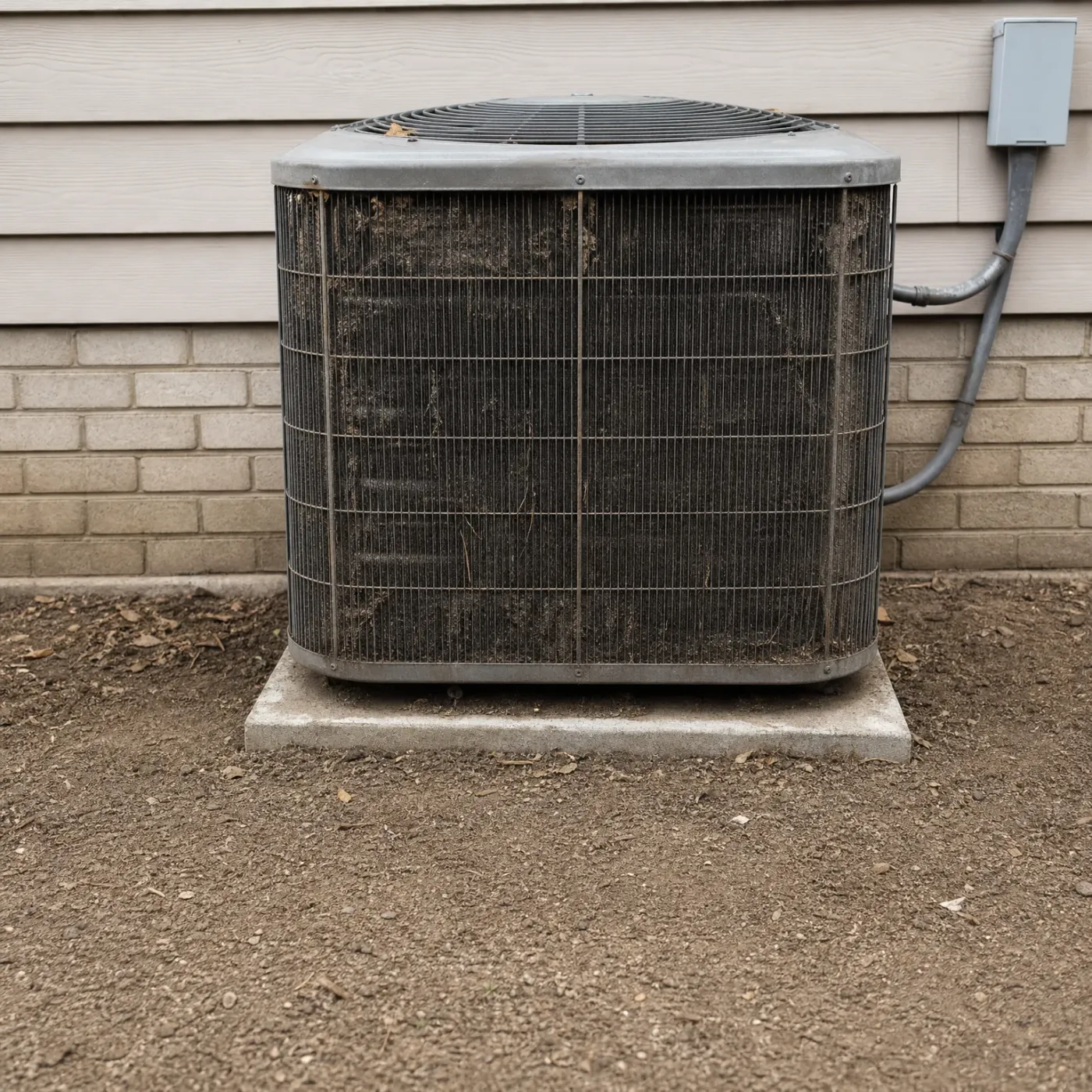
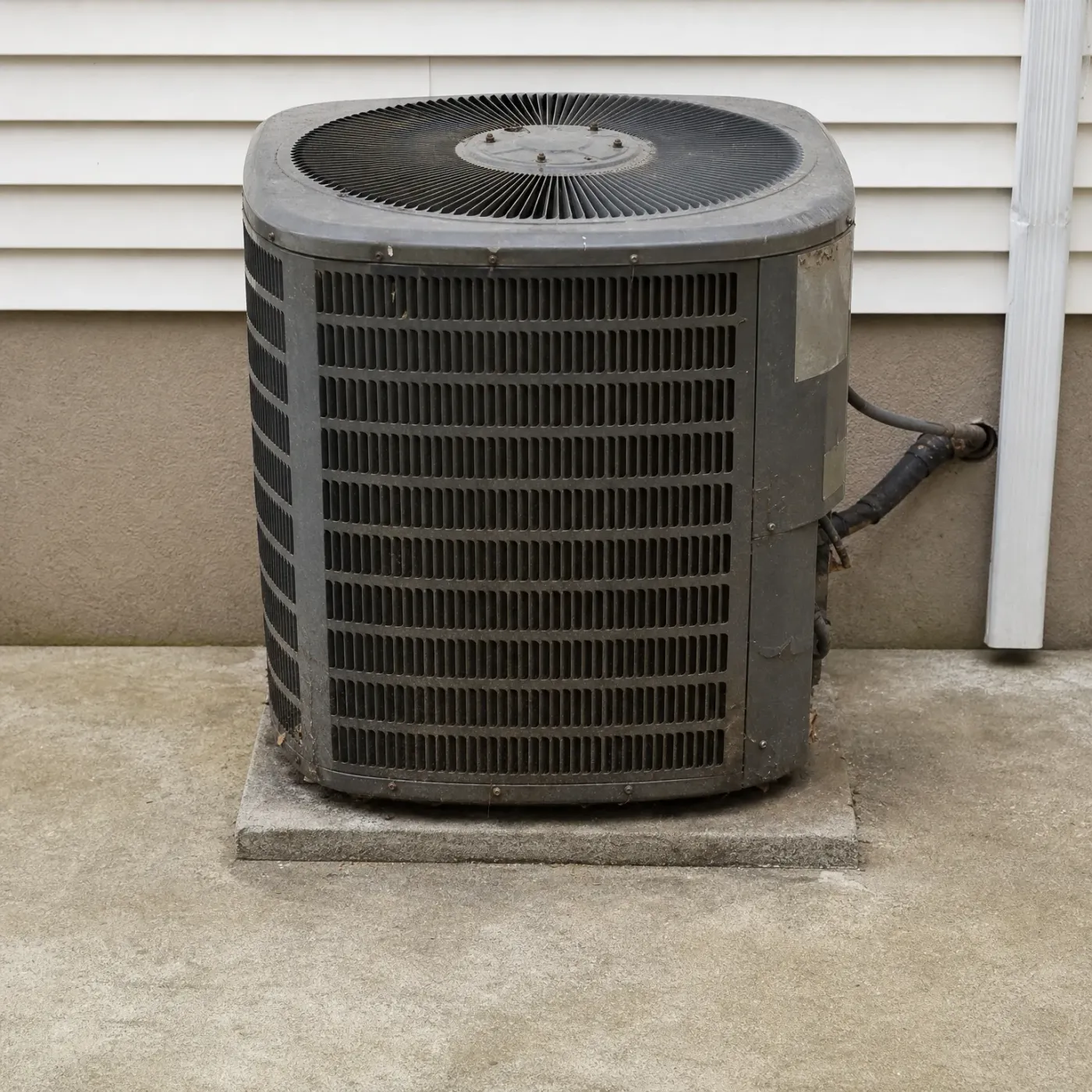
A dirty outdoor air conditioning condenser unit on a concrete pad beside a house wall with horizontal siding above a painted brick foundation, with a gray electrical disconnect box and conduit on the wall.
A coil packed with dirt and grime like this one forces the motor to work harder, and that extra heat is what burns wire insulation.
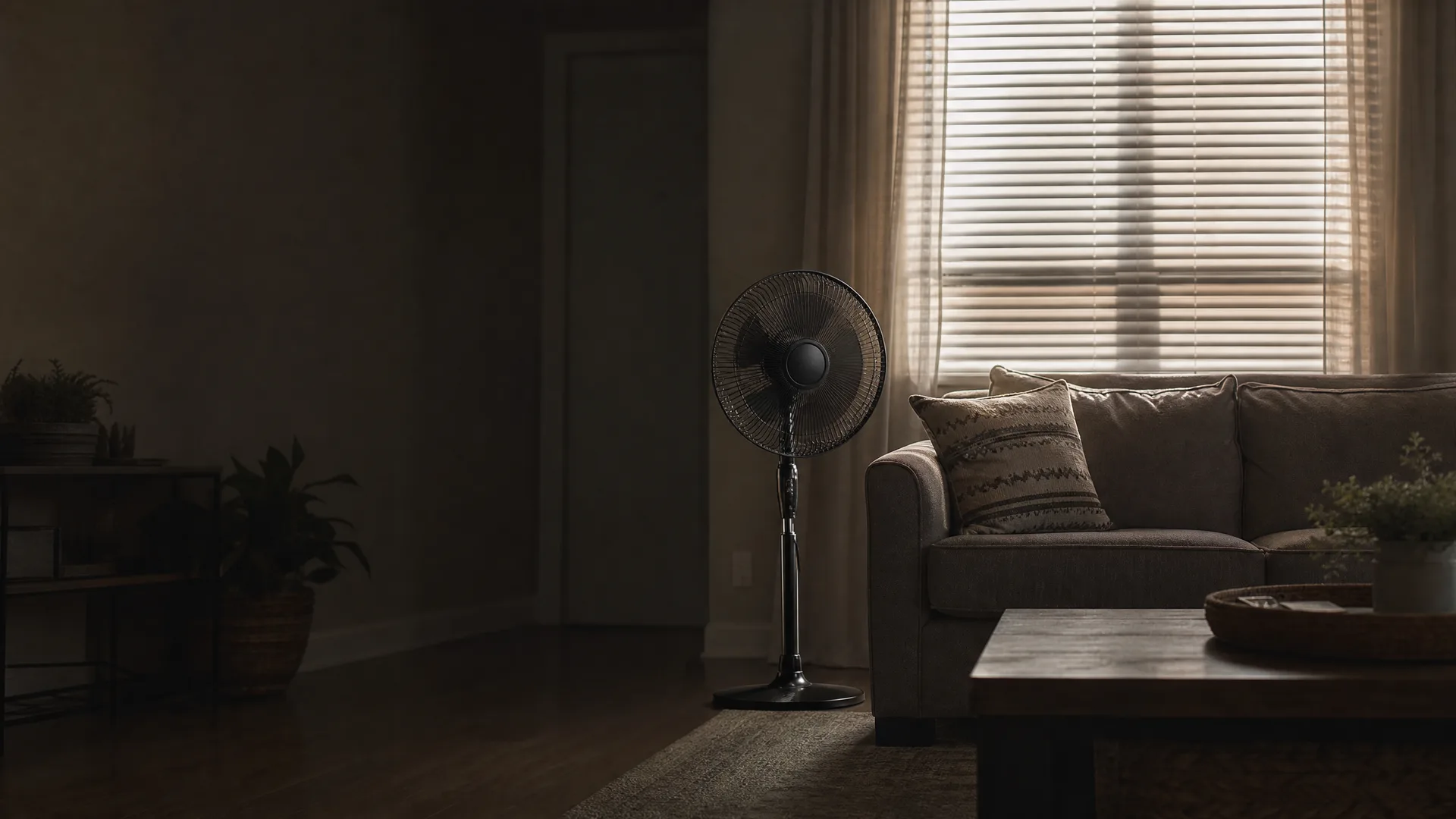
A dimly lit living room with a black pedestal fan on a wood floor beside a gray sofa with a patterned pillow, a wooden coffee table in the foreground, potted plants at left, and a curtained window with blinds behind.

You pulled the blinds shut after lunch, the way you do most July afternoons, and switched the floor fan on beside the couch to push air past you while the AC works. It's been running close to nonstop since late morning. Somewhere around three you catch it, a hot, rubbery smell that wasn't there yesterday. Not strong. Just enough that you stop scrolling your phone and sit up to check if it's coming from the vent by the couch or from somewhere further off. You wait for the unit to cycle off, thinking that might clear it, but you already know you'll be paying attention the next time it kicks back on.

Power costs 14.74 cents per kilowatt-hour statewide

At 14.74 cents per kilowatt-hour, a strained motor or a dirty coil forcing your AC to work harder shows up on the bill fast. A burning smell is a sign the system is already drawing more power than it should, not just a repair issue.

EIA-861 2025 statewide residential average

An outdoor air conditioner condenser unit on a concrete pad beside a house with horizontal siding and a lower concrete foundation wall, with coiled refrigerant lines at right.
Before you get your air conditioner repair
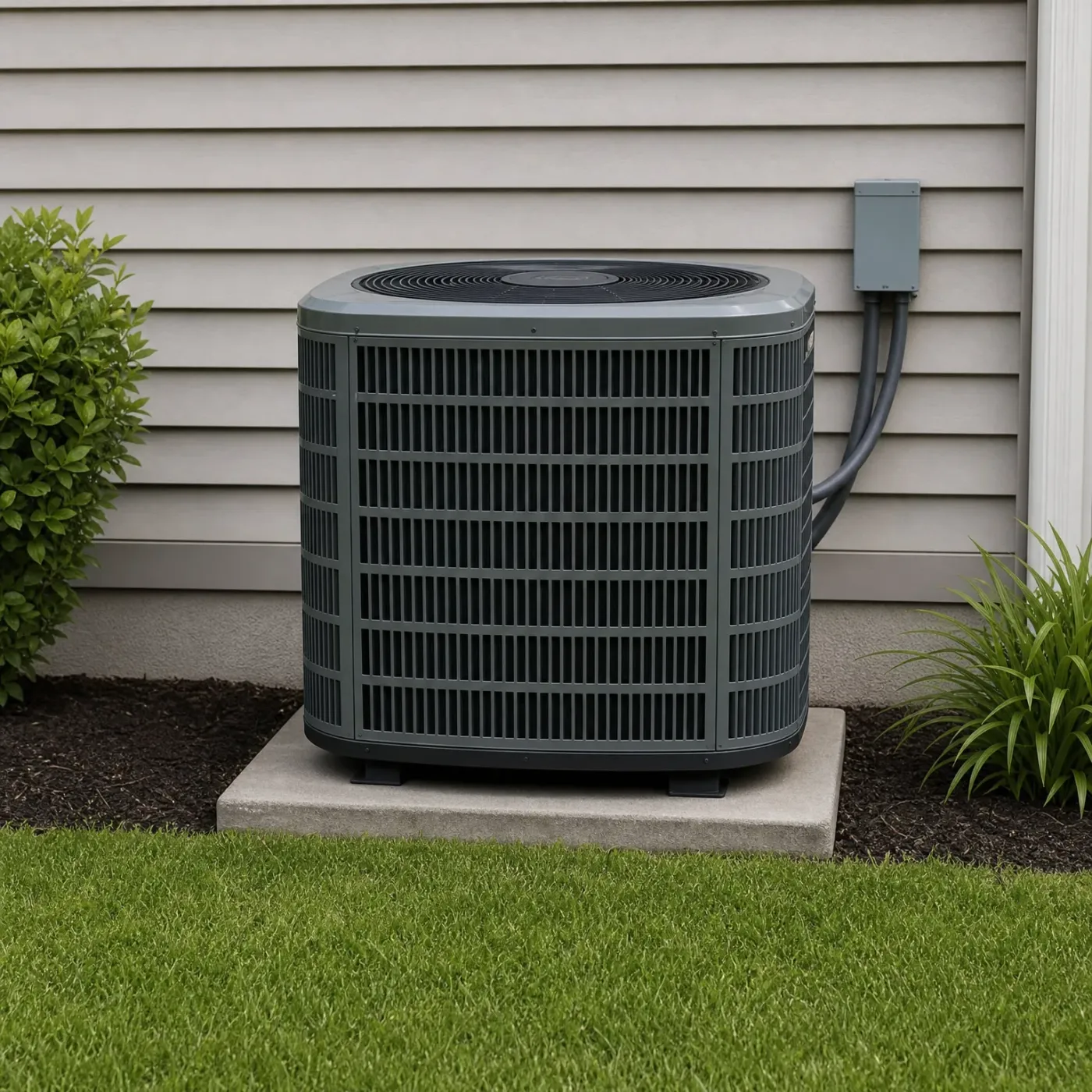
An outdoor air conditioning condenser unit on a concrete pad beside a house with horizontal lap siding, with an electrical disconnect box and conduit on the wall and a green shrub to the right.
After you get your air conditioner repair

Get the right pro for your air conditioner

A burning smell from your AC in a Georgia summer isn't something to sit on and watch. The system runs close to all day for months here, and a motor or a wire that's already stressed won't get a break to cool down on its own. Figuring out whether it's a dirty coil, a tired blower motor, or wiring that needs attention takes someone who can look at the unit in person, and finding that person is its own job. You'd be calling around, explaining the smell and when it happens to each one, then sitting with quotes that are hard to compare because nobody looked at the same thing. Submitting this request means one contractor who covers your area gets your information and reaches out to you directly. No lining up calls, no repeating yourself, no guessing which bid is closer to the truth. The smell is already telling you something is working harder than it should. What's left is getting the right person to look at it.

  1. Dust or dirt sitting on the coil or heating element ignites briefly.

  2. Warm air carries that burning smell through the ducts into your rooms.

  3. A strained motor or failing capacitor starts drawing more current than normal.

  4. Wire insulation near the motor housing heats up and begins to melt.

Why does my AC smell like burning when it first turns on?

You walked past the thermostat and caught a whiff of something burning right as the AC kicked on. It only lasts a minute or two, then fades, so you're not sure if it's something to worry about or just normal. With how often this system runs through a Georgia summer, you want to know before it happens again.

That smell is usually dust burning off, and it should clear fast

If the AC sat off for a stretch, dust settles on the coil and the wiring nearby. When the system starts up, that dust heats up and burns off within the first few minutes. That's the smell you're catching. It shouldn't linger past the first cycle and shouldn't come back once the system has been running a while. If it fades and stays gone, there's nothing to chase down right now. The trouble starts if it shows up again every time the AC cycles on, or if it sticks around longer than a few minutes. At that point it's not settled dust anymore, and something inside is running hotter than it should.

A single-story red brick ranch house with a low shingled roof, white-framed windows and a central door, fronted by a large asphalt parking area with sun glare, surrounded by leafy green trees.

Georgia summers carry a dew point that averages 68°F across June, July and August, and that's the number that makes the air feel heavy even on a day that isn't that hot. Your AC has to pull more moisture out of that air to keep the house comfortable, which means longer run times and a motor working harder than it would on a drier day. That extra strain is exactly what overheats a motor or a capacitor. If the burning smell shows up on the muggiest afternoons first, that's not a coincidence. The humidity is pushing a part that's already struggling closer to failing.

NASA POWER T2MDEW county cells weighted by homes

What are you noticing when the smell hits

You might catch it walking past a vent, or sitting in the room where the air handler lives. Maybe it's faint and only there when the AC first kicks on, or maybe it's strong enough that you've started checking outlets and the breaker panel just in case. Some households notice a haze or a fine dust near the vent. Others hear the AC cycling more than usual alongside the smell, or notice a room that isn't cooling the way it used to. If the smell shows up every cycle, not just the first one after the system sat idle, that's worth paying attention to. Left alone, a motor or wiring problem behind that smell can get worse the longer the system keeps running on it, and in a Georgia summer, that system doesn't get much of a break.

A gray outdoor air conditioning condenser unit on a concrete pad beside a house with horizontal lap siding, with a wall-mounted electrical disconnect box and refrigerant lines, shrubs, mulch and lawn around it.

Running clean

This condenser sits clear of the siding with mulch and low shrubs around it, nothing blocking the fins. Air moves through the coil the way it's built to, so the motor inside isn't working past what it's rated for. No scorched smell, no strain.

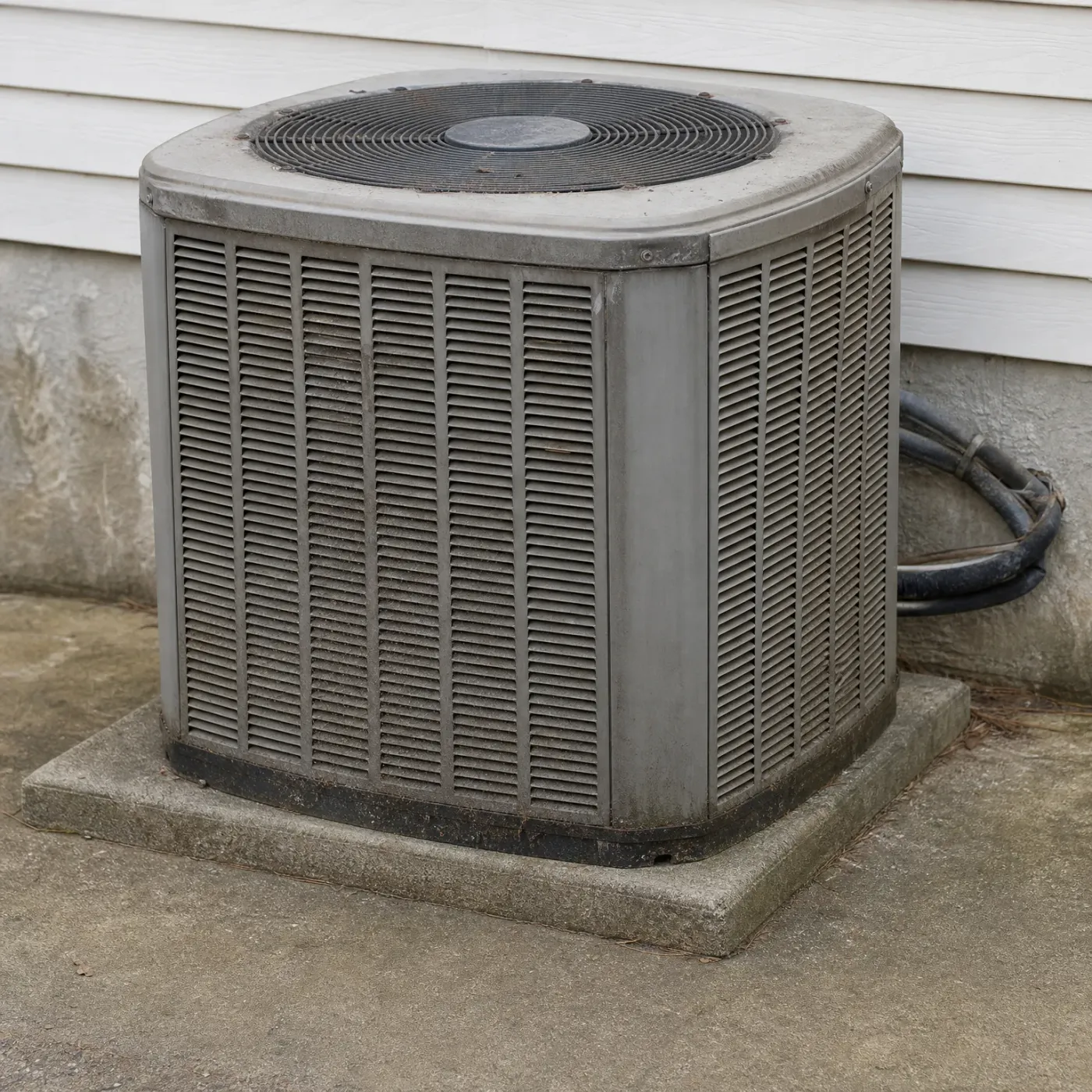
An outdoor air conditioner condenser unit on a concrete pad beside a house wall with stucco lower section, horizontal siding above, and a white downspout to the right.

Working too hard

This one shows years of dirt packed into the fins, and that buildup forces the motor to push harder for the same cooling. The refrigerant lines and housing take the extra heat along with it, and that's often where a burning smell starts.

A woman stands in the open doorway of a white stucco house holding the dark door, facing a man in a black cap and shirt seen from behind in the blurred foreground, with a potted flowering plant beside the entry.

A burning smell means something specific, and it's worth knowing what

A burning smell from your AC is either dust clearing off a coil or a motor and wiring under real strain. The first fades on its own in a few minutes. The second comes back every cycle, and it doesn't fix itself by running longer. Georgia summers keep that system working close to nonstop, so a motor that's already drawing too much current or wire insulation that's already melting doesn't get a break to recover between cycles.

You don't have to figure out which one it is by yourself, or spend an afternoon calling around to find someone who can look at it today. Getting matched with a contractor who handles this in your area means skipping the search, skipping the repeat explanations, and skipping the back and forth of comparing quotes. You describe what you're smelling and when, and the contractor who reaches out already knows what they're walking into.

Interior corner of a living room with a beige upholstered sofa and dark cushion in the foreground, a ceramic vase of leafy branches on a dark side table by a curtained window, a framed picture on the wall, and a wood-surround fireplace at right.
An outdoor air conditioner condenser unit sits on a concrete pad beside a house with horizontal siding and stone veneer, next to mulch, shrubs, and grass.

A pro who works on air conditioners

Step 1 of 3: Equipment